Financing

If you are interested in financing to fund your Bay-Lynx purchase, we recommend that you connect with Easylease Corp., a Canadian-based leasing and finance company that offers premier equipment leasing and financial services. They are focused on making it easier than ever before for companies to overcome cash flow and resource constraints to acquire the assets they need to grow their business.

Leasing through Easylease Corp. can offer several benefits:

  • Conserve Cash Leasing
  • 100% Financing
  • No Pre-Payment of Taxes
  • Preserve Lines of Credit
  • Potential Income Tax Benefits
  • Pay as You Profit
  • Match Revenue with Expenditures
  • Simple, Convenient Process
  • Tailored Payments

Click here for your Canadian instant lease quote >>

For US customers, Click here for your instant lease application >>

Top 10 Volumetric Concrete Lorry Manufacturers Worldwide

A volumetric concrete lorry carries separate ingredients and mixes concrete at the job site. That can reduce waste when schedules shift or pours require different quantities. But the truck is only part of the decision. Buyers also need to consider calibration, service access, operator training, and parts availability.

This guide introduces ten manufacturers serving markets around the world. It compares their equipment and practical strengths without treating one ranking as right for every buyer. No list is perfect. Product ranges change, and a machine suited to a remote road project may not fit a crowded urban site. Look closely at the mixer’s output range, storage capacity, control system, and ability to handle local materials. Those details matter when a crew needs a consistent mix beside a foundation, not merely an impressive brochure figure.

Manufacturer support deserves equal attention. Ask how quickly a dealer can supply wear parts, arrange maintenance, and help diagnose a fault. Check specifications directly with the manufacturer, since configurations can vary by market and model year. A lower purchase price may look attractive, yet downtime and difficult servicing can alter the real cost. This overview is a starting point for comparison, not a substitute for site-specific research. Some distinctions between brands are also less clear than marketing suggests. The best choice depends on the work, the crew, and the support available nearby.
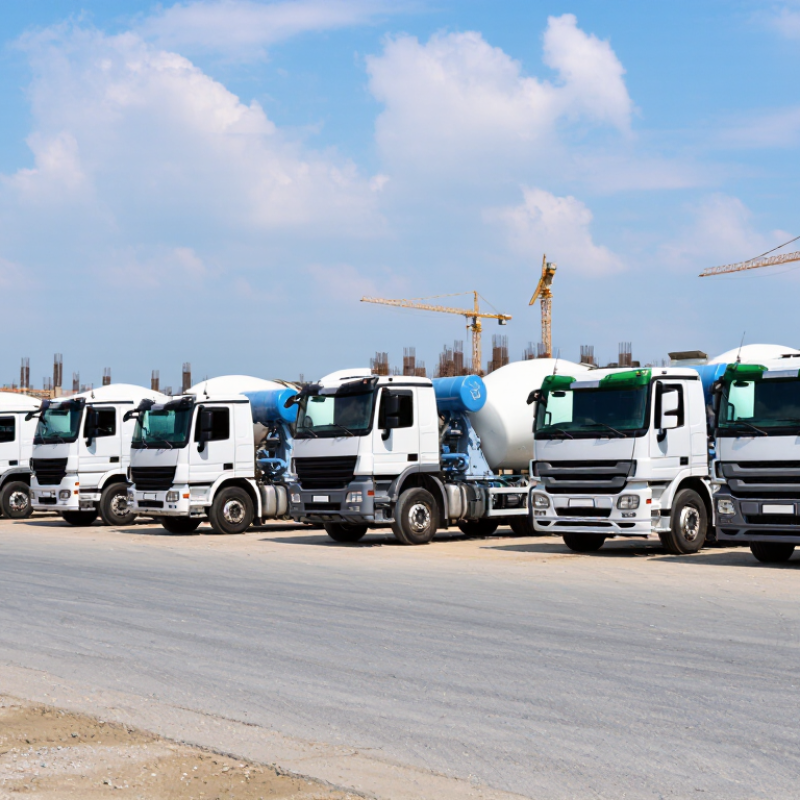
Top 10 Volumetric Concrete Lorry Manufacturers Worldwide

What Volumetric Concrete Lorries Are and How They Work

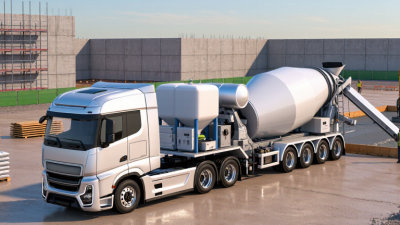
A volumetric concrete lorry carries its ingredients separately instead of transporting a fully mixed load. Its compartments typically hold cement, sand, aggregate, and water. Some also carry admixtures in small tanks. The arrangement varies by vehicle. At the site, calibrated gates and conveyors meter dry materials into a mixing auger. Water is added at a controlled rate, and the auger blends the ingredients as concrete is discharged. Freshly mixed, on demand. The operator can adjust batch size or proportions between pours, which is useful when a job needs several small placements.

Accuracy depends on more than the controls. Damp aggregate can change the effective water content, and worn gates may affect material proportions. Operators need to check calibration, follow the specified mix design, and monitor the process. Appearance alone is not enough. A lorry may reduce leftover concrete, but it cannot remove the need for careful measurement. The setup sounds simple on paper; busy sites are less tidy. Even a small change in moisture or settings deserves attention.
Key Features That Distinguish Volumetric Concrete Lorries

Key Features That Distinguish Volumetric Concrete Lorries

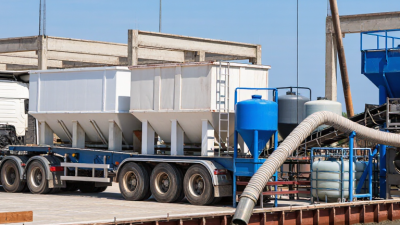
A volumetric concrete lorry carries separate ingredients and mixes them on site. Its onboard bins hold aggregates, while dedicated tanks store water and cement. A screw conveyor or mixing auger feeds material into a continuous mixer. Operators can adjust the mix as work progresses, which helps when a pour needs a different consistency. That matters on site. Metering systems, often supported by scales or calibrated controls, help maintain the chosen proportions. Their accuracy still depends on setup and regular checks.

Unlike a delivery truck carrying one premixed load, a volumetric unit can produce concrete in measured batches. This can reduce leftover material when the required volume changes, though it does not remove the need for careful planning. The chassis must carry substantial weight and remain maneuverable around job sites. Look closely at access to washout points, service panels, and the mixing chamber. Cleaning can be awkward; small buildup may affect later batches. Controls should be clear enough for operators to monitor feed rates and water addition without guesswork.

Tips: Ask how the machine is calibrated and how often checks are recommended. Inspect the auger, seals, and discharge chute. A short demonstration can reveal more than a specification sheet.

Top 10 Volumetric Concrete Lorry Manufacturers Worldwide - Key Features That Distinguish Volumetric Concrete Lorries

Market-wide comparison of common volumetric mixer features. Manufacturer names and brands are omitted; specifications and availability vary by model and market.

No. Anonymous manufacturer profile Distinguishing feature Practical benefit Specification to verify
1 Profile A — continuous-batching specialist Separate aggregate, sand, cement, water and admixture storage with metered feeding. Allows concrete to be batched at the point of placement and adjusted during a pour. Metering accuracy, calibration procedure and supported mix designs.
2 Profile B — high-capacity mobile-system builder Larger material bins and high-throughput conveying and mixing arrangements. Can suit projects with sustained demand, subject to vehicle and site constraints. Rated output, payload, axle limits and replenishment requirements.
3 Profile C — compact-vehicle configurator Reduced-footprint chassis layouts for access-constrained work sites. May improve maneuverability on narrow roads and smaller construction sites. Overall dimensions, turning circle, gross vehicle weight and local road rules.
4 Profile D — advanced-control-system integrator Electronic controls and operator displays for setting and monitoring material feed rates. Can support repeatable batching and help operators track production settings. Data logging, calibration access, fault diagnostics and operator training.
5 Profile E — multi-admixture-system specialist Dedicated tanks and dosing equipment for one or more chemical admixtures. Enables controlled addition of compatible admixtures as part of the mix design. Tank capacity, dosing range, material compatibility and cleaning instructions.
6 Profile F — remote-jobsite system designer On-board storage and mobile batching intended to reduce dependence on nearby ready-mix supply. Can be useful where delivery distances or changing pour quantities complicate conventional supply. Storage capacity, resupply logistics, water needs and operating time per load.
7 Profile G — multi-mix application specialist Controls and material compartments designed to support different mix recipes in sequence. Offers flexibility for varied placement requirements without relying on a single fixed batch. Recipe controls, changeover procedure and prevention of cross-contamination.
8 Profile H — serviceability-focused equipment builder Accessible wear components and straightforward maintenance points around conveyors and mixers. May simplify routine inspection, cleaning and replacement of wear parts. Parts availability, maintenance intervals, warranty terms and service coverage.
9 Profile I — discharge-and-placement configuration specialist Options for directing discharged concrete to suit different placement conditions. Can help position freshly mixed concrete where truck access is limited. Discharge reach, chute or conveyor configuration, site clearance and cleaning needs.
10 Profile J — export and market-adaptation supplier Vehicle and equipment configurations adapted to differing chassis, electrical and regulatory requirements. Can help buyers match equipment to local transport rules and operating conditions. Local certification, emissions compliance, language support and after-sales service.

Criteria for Comparing Manufacturers Worldwide

Comparing volumetric concrete lorry manufacturers requires more than checking rated output. Test each unit with the same mix design, aggregate moisture, and operating conditions. Record batch accuracy, discharge consistency, cleanout time, and fuel use per cubic metre. ASTM C685/C685M provides a reference for concrete produced by volumetric batching and continuous mixing; it does not replace practical field trials. Consistency matters most.

Capacity and support deserve equal attention. The Global Cement and Concrete Association’s 2021 industry roadmap describes annual concrete use at roughly 14 billion cubic metres, underlining the scale of demand. For buyers, that makes dependable parts supply, technician training, and clear calibration records useful comparison points. Inspect the water system, aggregate bins, and controls in person. A neat brochure cannot show a leaking valve on a wet jobsite.

Emissions and lifecycle costs also belong in the scorecard. The International Energy Agency’s 2023 cement analysis estimates that cement production accounts for about 7% of global CO2 emissions. That figure is not a truck comparison, but it supports asking manufacturers for fuel-use data and emissions specifications. I would still question headline productivity claims: site layout, operator skill, and material variability can change results sharply. A fair ranking should disclose its test conditions.

Top 10 Volumetric Concrete Lorry Manufacturers Worldwide

A credible comparison of the top 10 volumetric concrete lorry manufacturers worldwide should start with performance, not headline capacity. These trucks batch concrete on site, so buyers should check whether operators can adjust mix proportions accurately and keep water, cement, and aggregate feeds calibrated. A practical test is simple: ask for batch records from a real pour, then compare them with the specified mix. Small errors matter.

There is no single audited global ranking for this specialist market, so any top-ten list should explain its criteria. Look for usable output, compartment capacity, cleaning access, parts support, and service response times. Inspect the discharge auger closely; dried concrete around its housing can slow a job and complicate maintenance. The International Energy Agency’s 2023 cement-sector tracking report estimates that cement production accounts for about 7% of global CO2 emissions. That figure is not a truck comparison, but it makes accurate batching and reduced rejected loads worth examining. Still, claims of lower waste need project records to prove them. The weak point in many comparisons is limited public data. Ask suppliers for measured fuel use and batch consistency, not just brochure figures.

How to Select a Manufacturer for Different Project Needs

A volumetric concrete lorry suits projects where pour size or timing changes during the day. Match its output rate and material storage to your workload, not just the largest job on your schedule. For urban repairs, check the vehicle’s turning radius, width, and access to narrow streets. Remote sites may need greater storage capacity and dependable support for calibration or repairs. Ask how the manufacturer verifies mixing accuracy under changing weather and load conditions.

Tips: Request a demonstration using your intended mix. Check cleaning access around the auger and discharge chute. Ask for written details on training, spare parts, and service response times.

Compare shortlisted manufacturers against the same project requirements. Review technical documents, warranty terms, and references from operators with similar working conditions. A high production rate can be less useful if the lorry cannot reach the pour point or be cleaned quickly between loads. If possible, inspect a working vehicle and observe controls, noise, and material flow. Don’t rely on a brochure alone. I would also leave room for uncertainty: site access and crew habits can differ from plans, so confirm key assumptions with the people who will operate the truck.

Top 10 Volumetric Concrete Lorry Manufacturers Worldwide — How to Select a Manufacturer for Different Project Needs

Compare your project’s required concrete output with these unit-conversion reference points when evaluating equipment options. They are not manufacturer rankings or guaranteed production rates.

The chart converts reference output rates from cubic yards per hour to cubic metres per hour (1 yd³ ≈ 0.7646 m³). Actual output depends on the machine, mix design, materials, and operating conditions; confirm rated capacity with the manufacturer for your project.