Financing

If you are interested in financing to fund your Bay-Lynx purchase, we recommend that you connect with Easylease Corp., a Canadian-based leasing and finance company that offers premier equipment leasing and financial services. They are focused on making it easier than ever before for companies to overcome cash flow and resource constraints to acquire the assets they need to grow their business.

Leasing through Easylease Corp. can offer several benefits:

  • Conserve Cash Leasing
  • 100% Financing
  • No Pre-Payment of Taxes
  • Preserve Lines of Credit
  • Potential Income Tax Benefits
  • Pay as You Profit
  • Match Revenue with Expenditures
  • Simple, Convenient Process
  • Tailored Payments

Click here for your Canadian instant lease quote >>

For US customers, Click here for your instant lease application >>

How to Choose a Volumetric Concrete Lorry in 2026?

Choosing a volumetric concrete lorry in 2026 requires more than comparing drum size and purchase price. The machine must match your concrete demand, delivery distances, site access, and daily operating conditions. A poor match can leave crews waiting beside a half-finished foundation.

The International Energy Agency reports that cement production creates about 2.5 gigatonnes of direct CO2 emissions annually. It also identifies efficiency, material optimisation, and low-carbon production as important decarbonisation measures. The Global Cement and Concrete Association’s 2050 Roadmap reinforces this direction. Therefore, fuel consumption, engine performance, and accurate material dosing deserve serious attention when selecting a volumetric concrete lorry.

Capacity matters. A high-output lorry may appear attractive, but narrow entrances, soft ground, or short pours can reduce its real productivity. Measure the access route carefully. Check axle loads, chute reach, mixing speed, aggregate bins, water storage, and discharge control. A typical project may need only six cubic metres per visit, not the largest available unit.

Automation can improve consistency, especially when digital batching records support quality checks. However, technology does not replace trained operators. Maintenance access, spare-part availability, calibration support, and local technical service often determine long-term value. Do not overlook them.

The right choice is rarely obvious. A lower purchase price may hide higher downtime, fuel use, or cleaning costs. Industry reports provide direction, but your own pour records provide stronger evidence. Review actual volumes, waiting times, rejected batches, and seasonal conditions before committing to a volumetric concrete lorry. That reflection may reveal that the most powerful vehicle is not the most practical one.
How to Choose a Volumetric Concrete Lorry in 2026?

What Is a Volumetric Concrete Lorry?

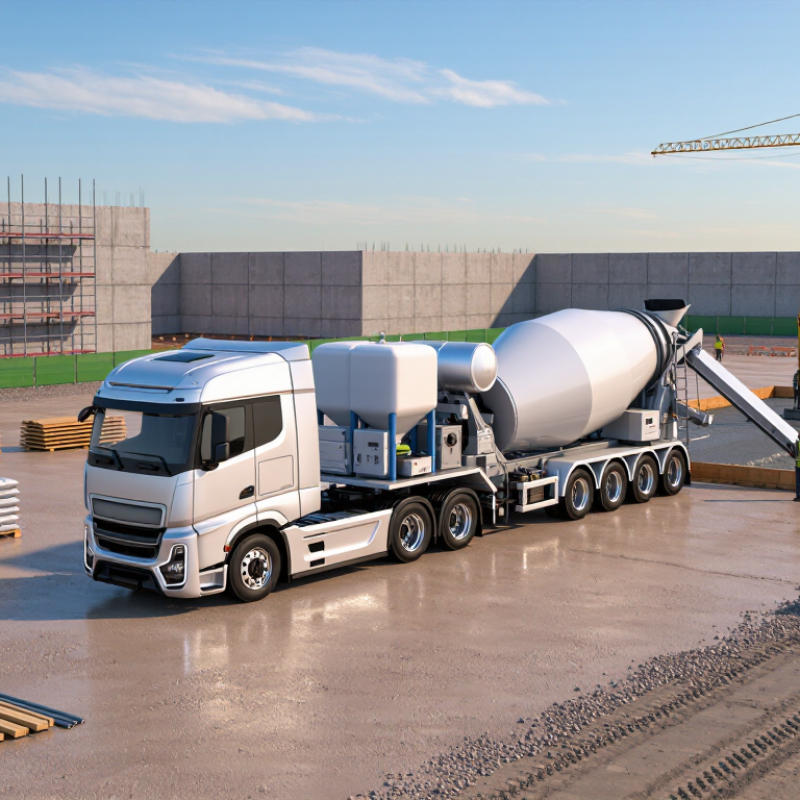
A volumetric concrete lorry is a mobile batching plant on wheels. It carries cement, sand, stone, and water in separate compartments. The machine measures and mixes these materials at the worksite, producing fresh concrete when needed. Unlike a traditional mixer, it does not usually transport one complete batch from a fixed plant. This reduces waiting time and may limit unused concrete.

During a typical pour, an operator adjusts the mix ratio through onboard controls. A conveyor moves the aggregates, while a mixing chamber combines them with cement and water. The process can continue for several hours, depending on material capacity and site access. Freshly mixed concrete should still be checked for consistency, temperature, and workability. Visual judgment alone is not enough.

Choosing a volumetric concrete lorry requires more than checking its advertised output. Review its aggregate storage, water measurement system, discharge speed, and cleaning arrangement. Ask for calibration records and evidence of operator training. A narrow access road may matter more than maximum production. So may uneven ground.

It is not a magic solution.

On a small project, this equipment can reduce waste and support changing pour quantities. However, incorrect calibration can affect strength and finish. I would also inspect the machine before hiring it, especially around hoses, augers, and control sensors. Small faults can become expensive delays. Local concrete specifications and site conditions should guide the final choice.
Which Project Requirements Should Guide Your Choice?

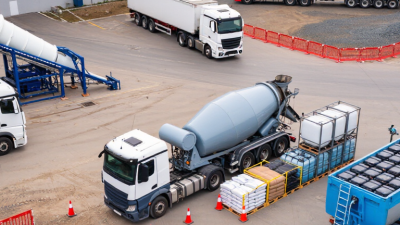
Choosing a volumetric concrete lorry in 2026 starts with the project, not the vehicle. Estimate the pour volume, placement rate, and required strength before comparing equipment. A small driveway may need precise batching, while a slab demands steady output for several hours. Access decides everything. Measure gate width, overhead clearance, ground bearing, and reversing space at the actual site. Wet weather can turn a simple entrance into a serious delay.

Match the lorry’s production capacity to your crew, pump, and finishing team. Excess capacity may increase cost, but insufficient output can create cold joints and rushed finishing. Ask how accurately the machine meters cement, water, aggregate, and admixtures. Calibration records, moisture compensation, and batch tickets provide useful evidence of consistent concrete quality. Confirm the operator’s experience with your mix design and local site conditions. The strongest specification means little if the crew cannot control discharge speed.

Consider transport distance, power requirements, washout arrangements, and space for aggregate storage. Check whether the supplier can provide test cubes, delivery records, and current maintenance information. These details support traceability and help resolve disputes if strength results disappoint. Do not choose on hourly output alone. I have seen schedules fail because access was assumed, not measured. A practical plan leaves time for calibration checks, weather changes, and unexpected stoppages. Keep a margin. It may feel inefficient, yet that margin often protects the pour and the finished surface.

How to Choose a Volumetric Concrete Lorry in 2026?

Which project requirements should guide your choice?

How to use this chart: Match the lorry’s practical production capacity to the project’s planned daily concrete demand. These planning benchmarks represent typical working requirements rather than fixed limits.

  • Choose a smaller, highly manoeuvrable unit for residential work and restricted access sites.
  • Prioritise higher hourly output, larger material storage and longer operating autonomy for commercial, road and infrastructure projects.
  • Check aggregate and cement compartment capacity, water storage, discharge reach, site access, washout arrangements and local weight restrictions before purchasing.

How to Compare Lorry Capacity, Mixing Systems, and Output

Choosing a volumetric concrete lorry begins with your daily demand, not its brochure capacity. A 10-cubic-metre lorry may suit housing work, while larger projects need fewer refills. Ask how much concrete is actually required per pour. Leave space for access delays and changing site conditions. A full drum is not useful if the vehicle cannot reach the slab. I have seen teams select maximum capacity, then lose time finding a safe discharge position.

Mixing systems deserve close inspection. Auger, paddle, and twin-shaft designs can produce different mixing speeds and consistency. The important question is not which system sounds advanced. Check how evenly it blends cement, water, sand, and aggregate. Ask for calibration records, moisture-control methods, and cleaning procedures. A reliable system should maintain the specified mix when aggregate moisture changes. That detail is easy to overlook. It should not be.

Output figures need practical testing. Advertised rates often describe ideal conditions, with prepared materials and an experienced operator. On site, output can fall because of traffic, cold weather, poor aggregate flow, or frequent mix changes. Compare hourly production under similar conditions. Also inspect the discharge control, weighing accuracy, and operator visibility. Fast output is not always better. In my experience, steady production with consistent slump is more valuable than a brief peak rate. I would still challenge my own assumptions: a smaller lorry may perform better where access is difficult and pours are intermittent.

What Safety, Compliance, and Maintenance Features Matter?

How to Choose a Volumetric Concrete Lorry in 2026?

Safety should lead the buying decision, not engine size. On site, inspect visibility, access steps, handrails, reversing alarms, cameras, and emergency stops. Guarded augers and door interlocks reduce contact risks during loading and cleaning. The UK Health and Safety Executive recorded 138 worker deaths in 2023/24, showing why vehicle movement controls remain essential. A low-entry cab may also reduce slips when operators climb down repeatedly.

Compliance details deserve closer checking. BS EN 12609 sets safety requirements for truck mixers, but local road, emissions, axle-weight, and inspection rules still apply. Request conformity documents, roadworthiness records, operator training evidence, and calibration certificates for water and aggregate systems. The Federal Motor Carrier Safety Administration reported 168,320 large trucks involved in police-reported crashes in 2022. That figure is not mixer-specific, yet it highlights the value of reliable brakes, tyres, lighting, and stability controls.

Maintenance features often decide uptime. Choose accessible grease points, corrosion-resistant washout areas, protected hydraulic hoses, and clear service diagnostics. Concrete hardens where nobody looks. Check the auger blades, discharge gates, drum components, and water system after every shift. A documented preventive-maintenance schedule should record torque checks, fluid changes, safety-device tests, and calibration dates. The uncomfortable truth is simple: a polished lorry can still hide neglected hydraulics. Ask to see several months of service records, then inspect one machine after a real production day.

How to Evaluate Costs, Suppliers, and Long-Term Value

How to Choose a Volumetric Concrete Lorry in 2026?

Purchase price is only the visible cost. Request a five-year total-cost model covering finance, insurance, tyres, servicing, calibration, fuel, and resale value. Include washing and water use. A heavy-duty diesel engine can consume about 0.8 gallons per hour while idling, according to U.S. Environmental Protection Agency SmartWay guidance. That matters on congested sites. Ask suppliers for documented fuel figures, mixer output, maintenance intervals, and repair response times. Do not rely on polished demonstrations.

Supplier quality deserves equal attention. Request references from comparable fleets, not only large contractors. Check parts availability, technician training, software support, and warranty exclusions. The lowest quote can age badly. A useful test is simple: ask how quickly a failed hydraulic pump could return the lorry to work. Get the answer in writing. I would also compare three-year operating records, although real conditions rarely match spreadsheets perfectly.

Long-term value comes from dependable production, accurate batching, and fewer rejected loads. McKinsey Global Institute reported that construction productivity grew by roughly 1% annually over two decades, far below manufacturing. Better equipment cannot fix every site problem, but it can reduce avoidable delays. IEA reports that cement production contributes about 7% of global carbon dioxide emissions, making material efficiency commercially and environmentally relevant. Choose telematics, operator training, and calibration support carefully. They sound minor. They are not. The honest weakness is uncertainty: resale prices, fuel costs, and workload may change before the lorry pays for itself.

How to Choose a Volumetric Concrete Lorry in 2026? - How to Evaluate Costs, Suppliers, and Long-Term Value

Evaluation Dimension What to Check Typical 2026 Benchmark Cost or Value Implication
Purchase price: new unit Compare the mixer body, chassis, control system, discharge equipment, safety equipment, and delivery specification. Approximately £180,000–£300,000 before tax, depending on capacity and specification. A higher initial price may be justified by better fuel efficiency, warranty coverage, uptime, and resale value.
Purchase price: used unit Review age, engine hours, drum and auger wear, service records, corrosion, hydraulic condition, and inspection history. Approximately £70,000–£180,000, with condition and age creating significant variation. A lower purchase price can be offset by refurbishment, downtime, limited warranty, and higher maintenance risk.
Production capacity Confirm aggregate storage, cement storage, water capacity, admixture tanks, and actual discharge rate under site conditions. Common configurations carry about 8–12 m³ of raw materials and produce roughly 8–20 m³ of concrete per hour. Capacity should match average order size; excessive capacity increases capital, payload, and operating costs.
Legal payload and vehicle weight Check plated gross vehicle weight, axle limits, local road restrictions, and the loaded weight of cement, aggregate, and water. Many units operate near a 26–32 tonne gross vehicle weight range, subject to the selected chassis and jurisdiction. A legally compliant payload protects against fines, forced offloading, road damage, and avoidable downtime.
Fuel consumption Request tested fuel data for urban delivery, highway travel, idling, loading, and on-site mixing. A fully loaded vehicle may use approximately 25–45 litres per 100 km, depending on terrain, traffic, load, and operating method. Fuel savings should be calculated from annual mileage, working hours, fuel price, and expected production volume.
Maintenance and wear parts Inspect the auger, blades, discharge chute, hydraulic pump, bearings, water system, load cells, and control valves. Planned maintenance commonly ranges from £8,000–£20,000 per year, excluding major component failure. A clear replacement schedule and accessible wear parts can reduce unplanned downtime and repair costs.
Calibration and mix accuracy Verify calibration procedures for cement, aggregate, water, and admixture dosing, plus digital batch records. Target repeatable batching within the tolerances required by local concrete standards and project specifications. Accurate dosing reduces material waste, rejected loads, claims, and inconsistent strength results.
Supplier support and parts Assess response times, technician coverage, stock of critical parts, training, software support, and roadside assistance. Prefer documented service response targets and access to commonly needed parts within 24–72 hours. Support quality often has a greater effect on lifetime cost than a small difference in purchase price.
Warranty and service contract Separate coverage for the chassis, mixer body, hydraulic system, electronics, and wear components. New equipment commonly includes about 12–24 months of basic warranty; exclusions vary significantly. Check labour, travel, consumables, consequential losses, and maximum claim values before comparing offers.
Driver and operator requirements Confirm licensing, site induction, concrete handling, washout, calibration, and safe operation training. Allow approximately 1–3 days for initial equipment training, followed by supervised practical operation. Better training improves batching accuracy, safety, fuel efficiency, and equipment life.
Environmental performance Review engine emissions compliance, idle reduction, water recycling, washout management, and material waste controls. Select an engine meeting the applicable emissions stage for the intended operating region. Lower waste and idling can reduce operating cost while supporting environmental and tender requirements.
Financing and total cost of ownership Include deposit, interest, insurance, road tax, fuel, wages, tyres, servicing, depreciation, and resale value. Evaluate the full 5–8 year ownership period rather than comparing monthly finance payments alone. A practical comparison is total ownership cost per operating hour and per cubic metre of concrete produced.
Break-even workload Estimate billable cubic metres, working days, average delivery distance, utilisation, and average contribution per cubic metre. A high-utilisation operation should model at least 1,200–2,000 productive operating hours per year. Low utilisation can make outsourced concrete supply cheaper than owning and operating a lorry.
Resale and long-term value Keep complete service records, calibration certificates, inspection reports, and evidence of proper washout and storage. Resale value is strongest for well-maintained units with moderate hours, compliant emissions equipment, and documented history. Good documentation can shorten the sales process and reduce the discount required by future buyers.
Indicative 2026 benchmarks are provided for comparison only. Actual figures vary by country, vehicle specification, duty cycle, financing terms, tax treatment, materials, and local operating conditions.