If you are interested in financing to fund your Bay-Lynx purchase, we recommend that you connect with Easylease Corp., a Canadian-based leasing and finance company that offers premier equipment leasing and financial services. They are focused on making it easier than ever before for companies to overcome cash flow and resource constraints to acquire the assets they need to grow their business.
Leasing through Easylease Corp. can offer several benefits:
Click here for your Canadian instant lease quote >>
For US customers, Click here for your instant lease application >>
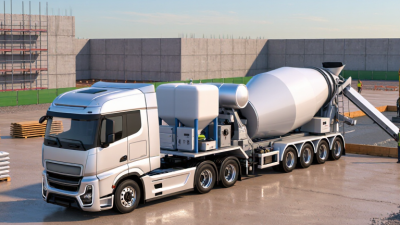
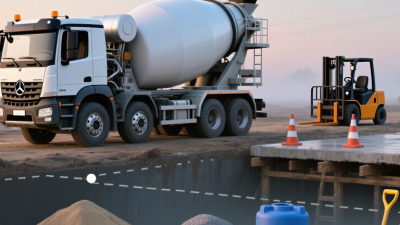
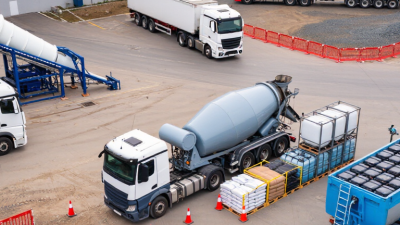
A volumetric truck is more than a concrete delivery vehicle. It is a mobile batching plant, carrying cement, aggregates, water, and admixtures in separate compartments. The materials are measured and mixed at the worksite, producing fresh concrete when needed. As Steve Crompton, a volumetric-truck specialist, explains, “A volumetric mixer is a mobile batching plant.” That simple description captures its main advantage: production travels with the truck.
Industry data shows why this equipment matters. The Global Cement and Concrete Association’s 2050 Industry Roadmap reports that cement production contributes roughly 7–8% of global carbon dioxide emissions. The National Ready Mixed Concrete Association also identifies concrete as the world’s second-most consumed substance after water. These figures make efficiency more than a marketing claim. Accurate batching can help reduce unused concrete, although results depend on operator skill, mix design, travel distance, and site planning.
The process is practical. Separate aggregate bins feed a calibrated conveyor. Cement enters the mixing chamber. Water and admixtures are added under controlled settings. Within minutes, fresh concrete reaches the pour point.
That promise is not automatic.
A poorly calibrated volumetric truck can create inconsistent mixes, delays, or material waste. Weather, moisture content, and maintenance also influence performance. This guide examines what a volumetric truck is, how its components work, and where its real advantages—and limitations—appear on modern construction sites.
What Is a Volumetric Truck and How Does It Work?
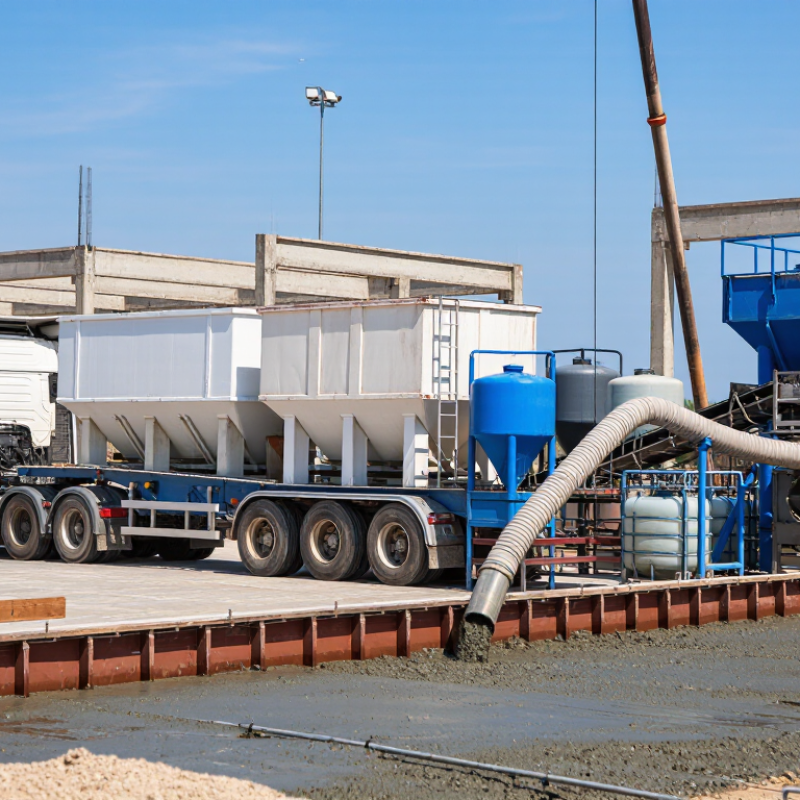
A volumetric truck is a mobile concrete batching plant. It carries cement, aggregates, water, and admixtures in separate compartments. Common 8–12 m³ on-site batching capacity suits driveways, foundations, floor slabs, and repair work. The exact output depends on mix design, moisture, and operating conditions.
Inside the truck, calibrated compartments feed materials into a mixing chamber. A conveyor or auger controls the flow of sand and stone. Water enters at a measured rate, while cement blends with the aggregates. The operator can adjust the proportions during production. This helps deliver fresh concrete close to the placement area, often within minutes.
On a typical site, the operator checks aggregate moisture before batching. Even a small moisture change can affect workability and strength. Slump should be monitored, not guessed. The truck also needs level positioning for reliable measurement. The process is efficient, but it is not foolproof. Poor calibration, rushed adjustments, or uneven material loading can reduce consistency. Experienced crews record batch quantities and test samples when quality matters. A single 8–12 m³ load may be enough for a small project, while larger pours require steady, carefully scheduled production.
Common 8–12 m³ On-Site Batching Capacity: Key Specifications, Components, and Operating Process
| Data Dimension | Typical Value or Range | Explanation |
|---|---|---|
| Equipment Definition | Mobile volumetric concrete mixer | A truck-mounted machine that stores cement, aggregates, water, and admixtures separately and measures them before mixing concrete at or near the placement site. |
| Common Aggregate Storage Capacity | Approximately 8–12 m³ | This is the commonly referenced combined storage volume for aggregate compartments. It represents material carried on the truck, not one single concrete batch. |
| Typical Aggregate Compartments | 2–4 separate bins | Separate compartments commonly hold combinations of sand, fine aggregate, and coarse aggregate so that the mix proportions can be adjusted for different concrete grades. |
| Cement Storage | Typically about 1.5–4.0 tonnes | Cement is usually carried in a dedicated sealed hopper or silo. The actual quantity depends on the hopper design, required mix proportions, and allowable vehicle payload. |
| Water Storage | Typically about 500–1,500 litres | A built-in water tank supplies controlled water to the mixing chamber. Additional water may be available from an external source when the job site permits it. |
| Admixture System | Usually 1–3 liquid dosing lines | Metering pumps can add products such as plasticizers, set retarders, or accelerators. Dosage should follow the material supplier’s technical instructions. |
| Mixing Method | Continuous auger or screw mixer | Measured ingredients enter a horizontal mixing chamber, where rotating paddles or an auger blend them continuously while fresh concrete is discharged through the outlet chute. |
| Usable Concrete Output | Commonly about 10–30 m³ per hour | Actual production depends on the machine configuration, material flow, mix design, loading time, moisture content, operator settings, and discharge conditions. |
| Practical Production Advantage | Small, medium, or variable quantities | The truck can produce only the quantity required for the current task, which can reduce unused concrete when project demand changes or placement is interrupted. |
| Batching Location | Directly at the work site | Concrete is proportioned and mixed close to the point of use, reducing dependence on a fixed batching plant and helping limit transport time before placement. |
| Proportioning Control | Calibrated aggregate, cement, water, and admixture meters | Material feed rates are adjusted to follow the selected mix design. Regular calibration is essential for maintaining consistent proportions and concrete quality. |
| Typical Concrete Applications | Slabs, footings, paths, repairs, and small structures | Volumetric trucks are useful where concrete demand is intermittent, access is difficult, different mix designs are needed, or a fixed batching plant is not convenient. |
| Mix Design Flexibility | Multiple designs during one delivery | Because the materials are stored separately, the operator can generally change mix proportions or produce different concrete grades without returning to a central plant, subject to proper calibration and testing. |
| Moisture Compensation | Required for accurate proportioning | Aggregate moisture affects both the water–cement ratio and the delivered mass of aggregate. Moisture readings or regular field checks are needed to adjust the water feed correctly. |
| Concrete Quality Factors | Mix design, calibration, materials, and testing | Consistent quality depends on accurate metering, suitable aggregates, correct cement and water quantities, adequate mixing time, and compliance with the applicable concrete standard. |
| Discharge Reach | Generally a few metres from the outlet | The standard discharge chute places concrete close to the truck. Longer placement distances may require wheelbarrows, pumps, conveyors, or other site equipment. |
| Transport and Payload Considerations | Limited by road regulations and chassis rating | The advertised storage capacity does not always equal the legal payload. Aggregate, cement, water, equipment, and fuel must remain within the permitted gross vehicle weight. |
| Basic Operating Sequence | Load → calibrate → meter → mix → discharge | Aggregates, cement, water, and admixtures are loaded; the meters are checked; materials are proportioned; the mixer blends them; and fresh concrete is discharged as required. |
| Main Benefit | On-demand concrete production | The system combines material transport and on-site batching, offering flexible production for projects that do not need a full truckload from a conventional ready-mix plant. |
| Main Limitation | Requires careful calibration and material management | Inaccurate scales, inconsistent aggregate grading, poor moisture control, or inadequate maintenance can cause variations in workability, strength, and yield. |
Note: Values are typical industry ranges for general reference. Actual capacity, output, payload, and component configuration vary by truck design, road regulations, mix design, aggregate density, and operating conditions.