If you are interested in financing to fund your Bay-Lynx purchase, we recommend that you connect with Easylease Corp., a Canadian-based leasing and finance company that offers premier equipment leasing and financial services. They are focused on making it easier than ever before for companies to overcome cash flow and resource constraints to acquire the assets they need to grow their business.
Leasing through Easylease Corp. can offer several benefits:
Click here for your Canadian instant lease quote >>
For US customers, Click here for your instant lease application >>
Choosing the right volumetric mixer truck requires more than comparing prices or browsing attractive product photos. Contractors must examine output accuracy, chassis strength, mixing performance, and service support. A truck that looks efficient in a brochure may struggle on steep sites, narrow roads, or extended work shifts. Real project conditions matter.
This guide reviews leading volumetric mixer truck manufacturers and suppliers through practical, industry-focused criteria. It considers production capacity, material measurement systems, hydraulic components, automation, fuel efficiency, and operator access. It also examines customization options, spare-part availability, warranty terms, and technical training. These details often influence long-term operating costs more than the initial purchase price.
Experience remains important. Suppliers with proven field applications can explain how their equipment performs in changing weather, remote locations, and demanding construction schedules. Reliable manufacturers should provide clear specifications, responsive support, and evidence of consistent quality. However, no supplier is perfect. Some may offer advanced controls but limited regional service, while others provide simpler machines with easier maintenance. That trade-off deserves careful thought.
Site needs come first.
The best choice depends on concrete volume, travel distance, crew skills, and local regulations. Buyers should request demonstrations, inspect maintenance points, and speak with current users whenever possible. Independent verification is valuable. This overview helps decision-makers compare respected manufacturers and suppliers with greater confidence, while recognizing that equipment performance can vary between models, applications, and operating environments.
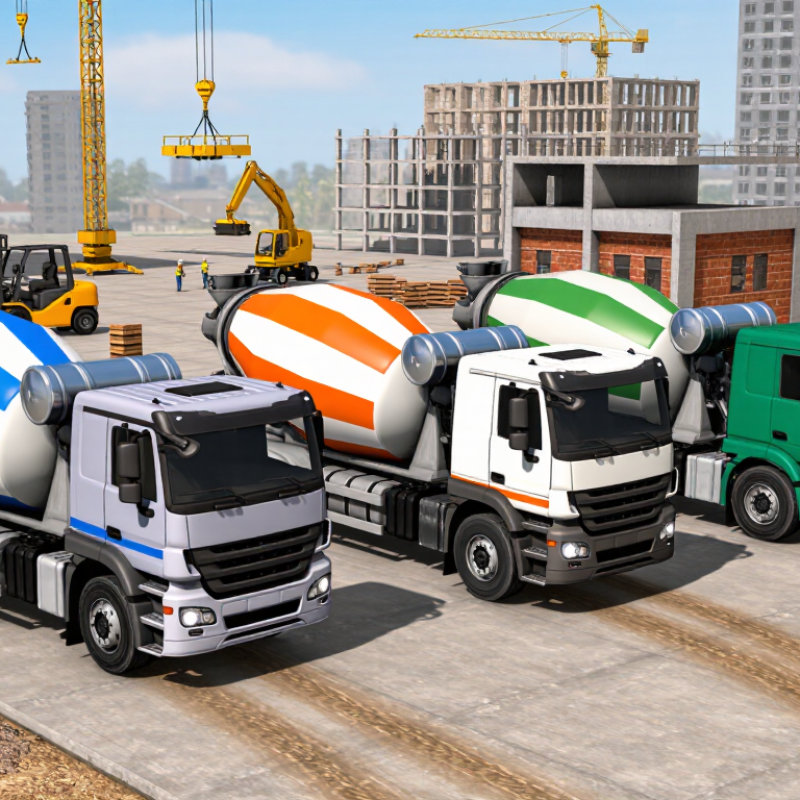
A volumetric mixer truck is a mobile batching plant. It stores cement, aggregates, water, and admixtures in separate compartments. Unlike a traditional drum mixer, it measures ingredients at the jobsite. Concrete is produced only when needed. This design can reduce waste and support changing pour sizes. However, accurate calibration remains essential. Small moisture changes in sand can alter the mixture noticeably.
The operating principle is practical. Discharge gates release aggregates onto a conveyor or auger. Cement enters through a controlled screw system. Water flows through a metering device, while admixtures require careful dosing. These materials meet inside a continuous mixing chamber. The operator adjusts production speed and mix proportions from the control panel. In field use, clean sensors and steady material flow matter more than impressive output figures. The system is efficient, but not foolproof.
Tips: Check calibration before each major pour. Inspect belts, augers, and water lines daily. Keep aggregate bins free from hardened material. Confirm moisture readings after rain. Review the first batch for texture and slump. A short test can prevent a costly correction. Supplier guidance is useful, but site records should guide final adjustments. Mistakes happen, and some operating assumptions deserve another look.
This chart illustrates cumulative concrete production over one hour at a representative continuous production rate of 30 m³/h. Volumetric mixer trucks measure and combine aggregates, cement, water, and admixtures on demand, allowing concrete to be mixed at the point of placement.
When comparing volumetric mixer truck manufacturers, examine output consistency before advertised capacity. A large hopper does not guarantee reliable production. Check the aggregate bins, cement storage, auger design, and discharge rate. Each component should support accurate proportioning during long shifts. Ask for test data using materials similar to your local sand, stone, and cement. Moisture changes can affect mix quality more than many buyers expect.
Control systems deserve close attention. Compare calibration methods, sensor placement, and the ease of adjusting mix proportions at the jobsite. Clear displays help operators monitor water, cement, and aggregate flow without leaving the cab. Manual backup controls are valuable when electronic systems fail. They are easy to overlook. Also inspect the water tank, pump capacity, hose protection, and cleaning access. A narrow washout area may save space, but it can slow daily maintenance.
Chassis strength, axle capacity, and maneuverability should match the working environment. A truck used on rural roads needs different suspension and clearance from one serving dense urban projects. Review service response times, spare-part availability, training, and warranty limits from each supplier. Ask who performs repairs and how quickly technicians can arrive. It is tempting to choose the lowest purchase price, yet downtime can become more expensive than the initial saving. One imperfect assumption remains common: buyers often compare machines without calculating fuel use, operator hours, calibration checks, and maintenance over several years.
Volumetric mixer truck manufacturers differ less by paintwork than by measurable product strengths. In field trials, operators often notice batching accuracy before engine power. A reliable unit stores cement, aggregate, water, and admixture supplies onboard. This design supports fresh concrete production at changing pour locations. Strong manufacturers also engineer calibrated gates, protected sensors, and accessible inspection points. Small details matter.
Product strength begins with metering control. Independent hydraulic systems can adjust output while the drum keeps turning. Digital controls help crews record mix proportions, water additions, and production volume. Yet screens alone do not guarantee accuracy. Suppliers should provide calibration procedures, service training, and clear test records. I would ask for evidence from uneven sites, not only showroom demonstrations. Mud, slopes, and rushed loading expose weaknesses quickly.
Chassis integration is another practical differentiator. Balanced weight distribution improves maneuvering on narrow roads and reduces operator fatigue. Corrosion-resistant bins, reinforced discharge chutes, and easy-clean mixing chambers can lower downtime. Fuel efficiency matters, but lifecycle support matters more. Parts availability, response times, and technician competence deserve written commitments. No machine is perfect. Even a well-built truck may struggle with extreme aggregate moisture or poor maintenance. Buyers should compare verified capacity, tolerance ranges, warranty terms, and local support before choosing a supplier.
| Product Strength | Typical Mixer Configuration | Typical Output Capacity | Material Bins and Components | Key Product Advantages | Common Applications | Important Selection Criteria |
|---|---|---|---|---|---|---|
| High-Volume Production | Multi-bin volumetric mixer with continuous aggregate, cement, water, and admixture metering | Approximately 10–12 m³ per hour, depending on mix design and operating conditions | Three to four aggregate compartments, cement hopper, water tank, and liquid-admixture system | Suitable for sustained production, reduced material interruptions, and large pours | Road construction, foundations, slabs, commercial projects, and remote infrastructure | Aggregate storage volume, conveyor or auger throughput, hydraulic capacity, and chassis payload |
| Compact and Urban Operation | Compact chassis-mounted mixer with a reduced footprint and simplified material storage | Approximately 2–6 m³ per hour | Two or three aggregate bins with integrated cement and water delivery systems | Improved maneuverability, easier access to restricted sites, and lower space requirements | Residential construction, repairs, alleys, narrow roads, and small commercial sites | Overall vehicle width, turning radius, gross vehicle weight, and local road restrictions |
| Off-Road and Remote-Site Mobility | Heavy-duty mixer body mounted on an all-wheel-drive or high-clearance chassis | Approximately 4–10 m³ per hour | Multiple aggregate bins with reinforced conveyors, augers, and protected hydraulic components | Better traction, ground clearance, and operational flexibility on undeveloped terrain | Mining, utilities, agricultural infrastructure, rural roads, and remote foundations | Drive configuration, axle ratings, tire selection, suspension, ground clearance, and service access |
| Accurate Mix Proportioning | Computer-controlled volumetric metering with calibrated aggregate, cement, water, and admixture systems | Usually 3–10 m³ per hour, depending on material characteristics and calibration | Separate material compartments with adjustable gates, augers, flow meters, or belt systems | Supports repeatable mix production and on-site adjustment of water-cement ratio and admixtures | Structural concrete, repair work, paving, and projects requiring frequent mix changes | Calibration procedure, sensor quality, control-system data logging, and operator training |
| Rapid Mix Changeover | Independently controlled material feed systems with programmable mix recipes | Approximately 2–8 m³ per hour, with output varying by recipe and aggregate grading | Separate bins and metering controls that permit proportion changes during production | Allows production of different concrete grades or performance mixes without returning to a central plant | Maintenance work, staged pours, utility projects, and sites with changing specifications | Recipe management, control interface, cleaning time, material cross-contamination control, and calibration records |
| Low-Waste On-Demand Batching | Volumetric mixer designed to batch concrete only when and where it is required | Approximately 2–10 m³ per hour | On-board aggregate, cement, water, and admixture storage sized for the intended work cycle | Can reduce unused concrete caused by fixed-load delivery and support smaller batch quantities | Small pours, construction repairs, emergency work, and sites with uncertain concrete demand | Material shelf life, storage replenishment, washout management, and total operating cost per cubic meter |
| Integrated Concrete Pumping | Volumetric mixer combined with a trailer or truck-mounted concrete pump | Mixer output commonly ranges from 3–10 m³ per hour; pump output depends on pump design and concrete properties | Mixer compartments plus pump hopper, delivery line, valves, and cleaning equipment | Combines batching and placement functions, reducing the number of machines required on site | Walls, footings, retaining structures, foundations, and difficult-to-reach placements | Pump pressure, maximum aggregate size, hose length, washout procedure, and chassis payload |
| Digital Monitoring and Fleet Management | Mixer equipped with electronic controls, production counters, diagnostic tools, and optional telematics | Output varies by mixer size; digital systems mainly improve monitoring rather than mechanical capacity | Electronic sensors for material flow, water delivery, engine status, and production volume | Improves traceability, preventive maintenance planning, production reporting, and fleet utilization | Multi-vehicle contractors, quality-controlled projects, rental fleets, and distributed operations | Data connectivity, cybersecurity, software compatibility, sensor calibration, and after-sales support |
Note: Capacity figures are typical industry ranges and can vary with aggregate size, moisture content, mix design, calibration, vehicle configuration, and site conditions.
Evaluating volumetric mixer truck suppliers requires more than comparing listed prices. Study their technical experience with different aggregates, climates, and construction conditions. A reliable supplier should explain drum capacity, hourly output, material compartments, and calibration procedures clearly. Ask for operating data from projects similar to yours. Field experience matters.
Inspect the truck’s weighing system, hydraulic components, discharge controls, and washout design. Request a live demonstration with sand, cement, water, and aggregate. Watch the mixture discharge steadily without excessive segregation.
Check whether the calibration remains accurate after repeated loading. Small errors can affect every batch. They can become expensive.
Supplier reliability also depends on support after delivery. Review maintenance schedules, spare-part availability, technician response times, and warranty terms. Ask for service records and contactable customer references. Independent test reports and documented safety compliance strengthen credibility.
A polished brochure is not proof. During evaluation, insist on written performance figures and clear delivery conditions. I have found that suppliers sometimes promise maximum output under ideal conditions, while real sites face uneven ground, dust, and changing material moisture. Leave room for doubt, and test the equipment before signing.
Purchasing a volumetric mixer truck requires more than comparing advertised output. Ask suppliers for measured production rates under local aggregate moisture and temperature conditions. Request service records from comparable fleets. A clean demonstration can hide inconvenient details. Check hopper capacity, auger wear parts, calibration controls, chassis payload, and washout access. Inspect welds and hydraulic lines in person when possible. Confirm whether replacement components are stocked locally, not merely listed online. Price matters, but downtime usually costs more.
Maintenance planning should begin before delivery. Operators need practical training on calibration, moisture adjustment, lubrication points, and safe cleaning. Record mix settings after each pour. These notes expose drift early. Inspect conveyors, seals, hydraulic fittings, and discharge gates at fixed intervals. Washout water and hardened concrete can damage overlooked areas. I have seen small leaks become expensive failures because inspections were rushed. That experience is easy to repeat. A digital checklist helps, although workers may skip it during busy shifts.
After-sales support deserves written detail. The supplier should state response times, warranty limits, remote diagnostic options, and technician availability. Ask who handles emergencies after normal business hours. Request a realistic parts lead-time chart. A reliable service team explains failures without hiding uncertainty. That honesty matters. Review support performance every few months using downtime records and repair invoices. A supplier may look responsive during sales, yet slow service later can undermine the entire purchase.