If you are interested in financing to fund your Bay-Lynx purchase, we recommend that you connect with Easylease Corp., a Canadian-based leasing and finance company that offers premier equipment leasing and financial services. They are focused on making it easier than ever before for companies to overcome cash flow and resource constraints to acquire the assets they need to grow their business.
Leasing through Easylease Corp. can offer several benefits:
Click here for your Canadian instant lease quote >>
For US customers, Click here for your instant lease application >>
Choosing an industrial concrete mixer in 2026 requires more than comparing motor power and drum size. The Global Cement and Concrete Association reports that more than 14 billion cubic metres of concrete are produced globally each year. That scale makes equipment selection a production, quality, and sustainability decision.
The International Energy Agency identifies cement as responsible for roughly 7% of global CO2 emissions. Therefore, an efficient industrial concrete mixer should reduce wasted batches, excessive idling, and unnecessary energy use. Buyers should examine mixing uniformity, discharge speed, wear resistance, automation, and cleaning access. A 3,000-litre mixer may appear impressive, but it can become inefficient when daily batches are small or aggregate moisture changes frequently.
Field experience matters here. Inspect the mixer beside the actual loading area. Check whether a loader can feed the hopper without striking the frame. Listen for gearbox vibration. Watch the discharge gate open under a realistic load. These details often reveal more than a polished brochure.
Technical references also deserve attention. ACI 304R discusses concrete batching, mixing, and transporting practices, while ASTM C94 addresses ready-mixed concrete requirements in the United States. These documents do not select equipment for you, but they clarify performance expectations.
A practical comparison should include lifecycle cost, not only purchase price. Calculate electricity, liners, blades, lubrication, downtime, labour, and spare parts. Ask suppliers for test-batch results and maintenance records. Some advertised capacities are theoretical. That distinction is easy to miss.
No universal mixer fits every plant. The best choice may still require compromise between speed, flexibility, and maintenance simplicity. A careful decision begins with your materials, climate, production rhythm, and quality targets.
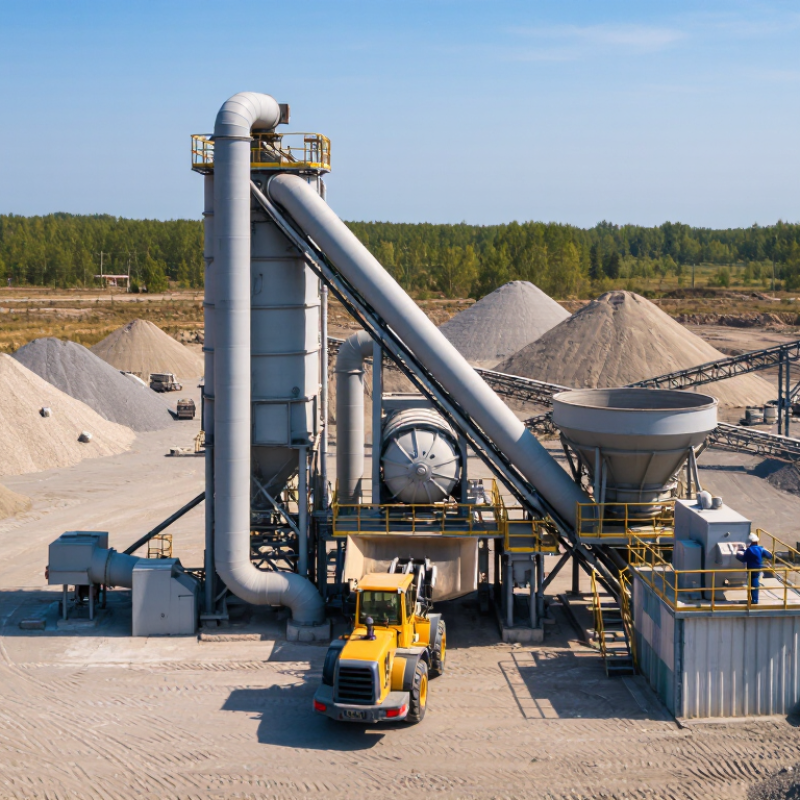
Define the concrete mixing requirements before comparing mixer specifications. Record required output per hour, batch volume, aggregate size, slump range, and available power. A small mismatch can create costly waiting time.
The U.S. Geological Survey’s Mineral Commodity Summaries 2025 reports about 87 million metric tons of U.S. cement production in 2024. That scale reflects sustained demand for reliable concrete production. Meanwhile, the International Energy Agency identifies cement production as responsible for roughly 7% of global energy-related emissions. Mixing efficiency therefore matters, but output alone is not enough. Select a mixer that delivers consistent homogeneity without excessive cycle time or power consumption.
Review the concrete recipe carefully. High-strength mixes may need intensive mixing, while fiber-reinforced concrete can bridge around poorly shaped blades. A twin-shaft mixer often suits demanding industrial batches, but a pan mixer may offer better control for smaller, specialized volumes. Check discharge height, cleaning access, moisture sensors, and spare-part availability. ACI 304R also emphasizes controlled batching, mixing, and handling practices.
Do not trust brochure capacity blindly. Actual output falls when operators change recipes, wash equipment, or handle wet aggregates. I would test the intended mix at the real site. That trial may expose an uncomfortable problem: the cheapest mixer is not always the lowest-cost choice. Performance records should include batch uniformity, cycle duration, water adjustment, and rejected loads. These details support a defensible purchase decision.
Define the concrete mixing requirements for your industrial project by comparing nominal batch capacity with theoretical hourly output.
Theoretical output is calculated from nominal batch capacity using a 10-minute mixing cycle: capacity × 6 batches per hour. Actual production may be lower because of loading, discharge, material handling, moisture variation, and cleaning time. Select the mixer size according to required hourly output, batch consistency, available space, and the concrete mix design.
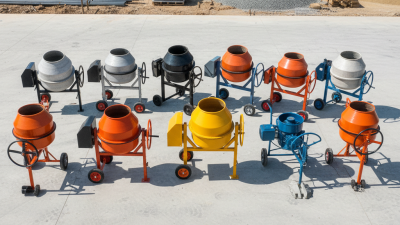
Choosing an industrial concrete mixer starts with the material, not the advertised motor power. Drum mixers suit steady batches and simple recipes. Pan mixers deliver faster, more uniform blending for stiff concrete, mortar, and fiber-reinforced mixes. Twin-shaft mixers handle demanding production lines with strong shear and short cycles. Planetary mixers offer excellent dispersion, especially when powders and additives must spread evenly.
Capacity must match your actual workflow. A 500-liter mixer may fit small construction sites, while a 3,000-liter unit supports continuous precast production. Do not select capacity from maximum volume alone. Effective output is usually lower after accounting for freeboard, moisture, and loading space. Leave room for movement.
Mixing performance depends on cycle time, blade design, rotation speed, and discharge efficiency. Watch the mix during testing. Dry pockets near the corners reveal poor circulation. Excessive splashing may indicate an unsuitable speed or overfilled drum.
I once focused too heavily on batch size and underestimated cleaning time. That mistake delayed production more than expected. Maintenance access matters.
Ask for test data using your own aggregate sizes and moisture levels. Check power demand, noise, wear protection, safety controls, and spare-part availability. A mixer that performs well in a showroom may struggle with cold, sticky material. Measure consistency from several batches, not one impressive trial. Small differences often become costly at industrial scale.
Choosing an industrial concrete mixer in 2026 starts with the power system, not the brochure. I inspect site voltage, available fuel, duty cycle, and expected batch size before comparing motors. Electric systems suit fixed plants with stable grid access and lower routine emissions. Diesel or hydraulic systems can handle remote sites, but fuel quality and cooling deserve close attention. Check starting torque. Watch cooling performance. Weak startup performance causes stalled batches and overheated components. I prefer accessible controls, overload protection, and documented test results.
Materials affect output long before visible damage appears. A thick, abrasion-resistant drum shell tolerates aggregate impact, while poorly selected steel can deform around loading points. Inspect the paddles, liners, discharge gate, and welds. These areas meet wet cement and sharp stone repeatedly. Stainless or coated parts may resist corrosion, but coating quality matters more than attractive claims. Ask for material grades, hardness data, and replacement dimensions. Missing documents are a warning. Material hardness alone can mislead; brittle parts may crack under shock loading.
Durability depends on the complete machine. Sealed bearings, protected wiring, strong frame joints, and effective drainage reduce unplanned stops. During a practical inspection, I look for grease points reachable without removing guards. I also check whether operators can clean buildup from the drum safely and quickly. Small design flaws become expensive after thousands of cycles. Paint proves little. Review maintenance intervals, spare-part lead times, fatigue testing, and service records from comparable applications. I once trusted a heavy frame too quickly; neglected seals later caused more trouble than the frame solved. That experience still makes me question impressive specifications.
Choosing an industrial concrete mixer in 2026 starts with hazards around the drum, not its advertised capacity. Specify fixed guards, a visible emergency stop, and interlocked access doors. These controls must remain usable with gloves and cement dust. OSHA’s Census of Fatal Occupational Injuries recorded 1,075 fatal construction work injuries in 2023. That number makes casual guarding decisions indefensible. Ask for documented lockout points under OSHA 29 CFR 1910.147. Then test them.
OSHA’s Census of Fatal Occupational Injuries recorded 1,075 fatal construction work injuries in 2023.
Maintenance access affects both safety and production.
Look for hinged panels, reachable grease points, inspection ports, and simple liner replacement. A technician should not climb over the frame to reach a bearing. The U.S. Department of Energy reports that motor-driven systems can consume about 70% of manufacturing electricity. Compare motor power, batch cycles, idle consumption, water demand, and wear-part life. Small differences become visible on monthly utility bills.
Request a five-year operating-cost model. Include labor, cleaning time, lubrication, replacement liners, downtime, and electricity. Supplier estimates help, but they should not be accepted blindly. Real sites are dusty, rushed, and imperfect. I would add a contingency for unexpected bearing failures and delayed parts.
One uncomfortable question remains: will operators actually use every safety feature?
If access is awkward, they may bypass it. Better training helps, but better design helps more.
How to Choose an Industrial Concrete Mixer in 2026?
Select a mixer around site conditions, not brochure capacity. A remote project may need a compact unit with wide tires, simple controls, and low transport demands. Urban work often requires quieter operation, smaller turning space, and controlled material handling. Check aggregate size, batch frequency, water access, and electrical stability before comparing output figures. A large drum can underperform when loading space is limited. It happens more often than expected.
Long-term value depends on usable production, not maximum rated volume. The U.S. Bureau of Labor Statistics reported that maintenance and repair occupations will grow through 2033, showing why service access matters. Choose replaceable wear parts, clear inspection points, and documented maintenance intervals. Sealed bearings may reduce contamination risks, while automatic lubrication can limit missed service tasks. Still, automation is not always better. It can add training needs and create expensive downtime when sensors fail.
Energy and emissions also deserve attention. The Global Cement and Concrete Association estimates that concrete contributes roughly 7% of global carbon dioxide emissions. A mixer cannot solve that challenge alone, but efficient motors, reduced idle time, and accurate batching can lower avoidable waste. Request measured power consumption under realistic loads, rather than relying on laboratory ratings. Compare five-year costs, including fuel, labor, cleaning water, spare parts, transport, and planned downtime. Ask operators to test the controls with gloves and dust present. Their feedback may reveal weaknesses that a specification sheet hides.
| Mixer Type | Typical Batch Capacity | Typical Output Range | Recommended Concrete Applications | Site Conditions | Typical Installed Power | Main Long-Term Value | Key Selection Consideration |
|---|---|---|---|---|---|---|---|
| Twin-Shaft Mixer | 1.0–6.0 m³ per batch | 40–180 m³/hour, depending on cycle time and loading system | Ready-mix concrete, precast products, roller-compacted concrete, and large infrastructure projects | Best for fixed or semi-fixed plants with stable material supply and high daily demand | 45–250 kW | High throughput, short mixing cycles, and consistent homogeneity | Check wear protection, shaft-seal design, discharge speed, and access for maintenance |
| Planetary Mixer | 0.25–4.5 m³ per batch | 10–100 m³/hour, depending on material and discharge frequency | Precast elements, dry-cast products, pavers, blocks, pipes, and fiber-reinforced concrete | Suitable for plants requiring intensive mixing and precise control of small or medium batches | 15–180 kW | Excellent mixing uniformity and good performance with stiff, low-slump mixtures | Evaluate mixing tools, liner life, cleaning access, and the cost of replacing wear parts |
| Pan Mixer | 0.1–2.0 m³ per batch | 5–50 m³/hour | Precast components, paving materials, repair concrete, mortar, and small-to-medium production lines | Works well where floor space, budget, or production volume is limited | 7.5–75 kW | Simple layout, moderate purchase cost, and convenient batch control | Confirm required slump range and inspect the pan, blades, and discharge gate for wear resistance |
| Reversible Drum Mixer | 0.25–3.0 m³ per batch | 10–60 m³/hour | General construction, small ready-mix operations, rural projects, and intermittent concrete production | Useful on smaller sites with variable demand and straightforward aggregate recipes | 7.5–90 kW | Lower mechanical complexity and relatively easy operation | Compare mixing time, drum lining, discharge orientation, and availability of replacement components |
| Tilting Drum Mixer | 0.25–4.0 m³ per batch | 10–70 m³/hour | Concrete production using conventional aggregates and medium-strength construction mixes | Appropriate for sites that need flexible discharge positioning and moderate output | 11–110 kW | Robust operation and practical discharge control | Allow sufficient clearance for drum tilting and verify foundation loads before installation |
| Continuous Mixer | Continuous feed rather than a fixed batch size | 20–200 m³/hour, depending on configuration and material flow | Roller-compacted concrete, soil-cement, road base, mine backfill, and large-volume earthworks | Best for long, uninterrupted pours with consistent aggregate moisture and metering | 30–250 kW | High productivity and reduced interruption between loads | Requires accurate feeders, stable material quality, and disciplined calibration procedures |
| Truck-Mounted Mixer | 6–12 m³ per delivery load | Dependent on dispatch cycle, travel distance, and site access | Distributed construction sites, urban projects, foundations, slabs, and conventional ready-mix delivery | Suitable where concrete must be transported from a central plant to multiple locations | Vehicle engine and hydraulic system dependent | Flexible delivery and reduced need for a mixer at every worksite | Assess road access, travel time, allowable vehicle weight, washout facilities, and delivery scheduling |
| Mobile Volumetric Mixer | Material compartments commonly sized for 5–12 m³ of ingredients | Approximately 10–50 m³/hour, depending on recipe and dispensing rate | Remote sites, repair work, utility construction, low-volume pours, and variable-strength concrete | Well suited to locations where batch plants are distant or concrete demand changes frequently | Vehicle engine, hydraulic, and auxiliary systems dependent | On-demand production can reduce rejected concrete and transport-related delays | Requires accurate calibration, protected aggregate storage, and trained operators |
Note: Capacity, output, and power figures are typical industry ranges for general comparison. Actual performance depends on aggregate size, moisture content, mix design, slump, loading method, cycle time, automation level, and local operating conditions. Confirm duty cycle, electrical standards, foundation requirements, and spare-parts support before purchase.