2026 Best Volumetric Mixer Types for Global Buyers?
Choosing the best volumetric mixer in 2026 requires more than comparing production rates. Global buyers must match equipment design with project conditions, local standards, transport limits, and operator skills. A machine that performs well in Texas may struggle on a remote African site or a humid Southeast Asian road project.
This guide examines mobile, truck-mounted, electric, diesel, and compact volumetric mixer types. It considers aggregate storage, cement delivery, water control, mixing accuracy, fuel use, and cleaning access. These details affect concrete consistency, daily output, and long-term operating costs. Small differences matter.
Real-world use often reveals hidden weaknesses. A narrow discharge chute may slow placement. Poor seals can collect cement dust. Complex controls may confuse new operators. Some suppliers also present laboratory output as normal field performance. Buyers should request test records, service references, spare-parts lists, and clear warranty terms. Ask difficult questions.
Regional conditions deserve careful attention. Voltage, fuel quality, road access, weather, import duties, and emissions rules can change the final choice. Buyers should verify technical claims with independent inspections and local professionals. No single mixer suits every market. That point is easy to overlook.
The sections ahead compare major volumetric mixer types for different applications and budgets. They also explain where each design performs best, where it may disappoint, and how to evaluate suppliers responsibly. The recommendations are practical, but not absolute. Site data should always lead the decision.
What Is a Volumetric Mixer and How Does It Work?
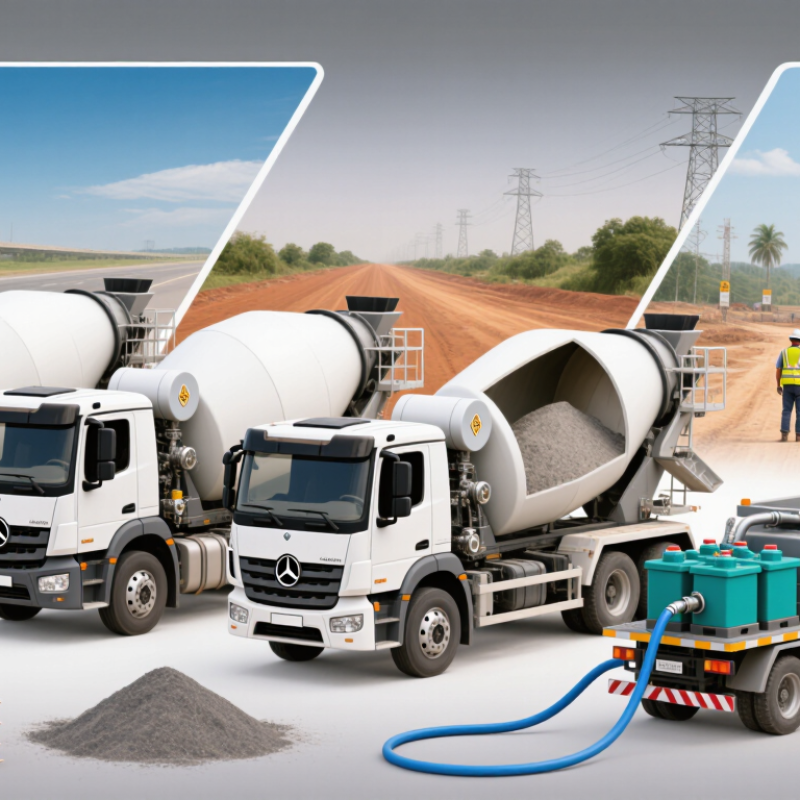
A volumetric mixer measures concrete ingredients separately and mixes them when needed.
It carries cement, sand, stone, water, and admixtures in individual compartments. Augers or conveyor systems meter these materials into a continuous mixing chamber. The operator can then produce concrete directly beside the pour.
The Global Cement and Concrete Association reports that the world uses roughly 14 billion cubic metres of concrete each year. That scale makes material control important. A volumetric mixer can reduce unused concrete because production starts only when placement is ready.
It also supports changing mix quantities during one project. This is useful for repairs, remote sites, and irregular pours.
There are three practical configurations.
Truck-mounted units suit mobile construction.
Trailer-mounted mixers support smaller contractors and restricted access.
Stationary systems fit repeat production near a fixed work area.
Load cells, moisture sensors, and calibrated metering gates control accuracy. Yet the process is not automatic perfection. Wet aggregate can change the water balance quickly. Poor calibration may weaken consistency without obvious warning.
The American Concrete Institute stresses regular testing, accurate batching, and quality control for reliable concrete performance.
Operators should check aggregate moisture, verify slump, and record batch results. Small mistakes matter. Local standards also differ, so global buyers should compare output capacity, measurement tolerance, cleaning access, and service support before choosing a mixer type.
Key Volumetric Mixer Types Available in 2026
2026 Best Volumetric Mixer Types for Global Buyers?
Key Volumetric Mixer Types Available in 2026
Truck-mounted volumetric mixers suit contractors moving between several small or medium projects. They carry cement, sand, stone, water, and additives in separate compartments. Operators adjust the mix beside the pour, which reduces waiting time and unused concrete. A typical unit may produce concrete for foundations, pavements, repairs, or rural infrastructure. However, road weight limits and chassis maintenance can affect operating costs.
Trailer-mounted mixers offer a practical option for buyers with tractors or existing transport fleets. They are easier to position on compact sites, although setup may require more time. Skid-mounted and stationary units fit precast yards, block production, and fixed construction zones. They usually need prepared foundations, reliable power, and material handling equipment. These details are easy to underestimate.
Mixing systems also differ. Single-shaft augers are simple and economical for common concrete work. Twin-shaft designs can improve blending when the mix contains fibers, dry materials, or demanding aggregates. Electric and hybrid configurations are becoming more attractive where noise, fuel use, or indoor emissions matter. Yet charging access may be weak in remote regions. Buyers should compare hopper capacity, discharge speed, water metering accuracy, control systems, spare-part access, and local technician support. A bigger machine is not automatically better. In field selection, the best result often comes from matching output to daily demand, not choosing the highest advertised capacity.
2026 Best Volumetric Mixer Types for Global Buyers
This chart compares representative nominal output ranges for major volumetric mixer formats available in 2026. Mobile truck-mounted mixers are suited to on-site production, while stationary units generally provide higher continuous output. Compact electric models are appropriate for smaller projects and locations with stricter emissions requirements. Actual performance depends on material mix, aggregate size, loading method, and operating conditions.
How to Compare Mixer Capacity, Materials, and Automation
For global buyers, volumetric mixer selection starts with output, not appearance. Trailer-mounted mixers suit mobile repair crews and small pours. Truck-mounted units support larger road, foundation, and infrastructure projects. Skid-mounted models fit fixed batching areas, but they need reliable loading equipment. Compare usable output, not only hopper volume. A machine advertised at 10 cubic meters per hour may produce less on steep sites, during frequent mix changes, or with poor aggregate grading.
Materials directly affect service life. Check whether the frame uses corrosion-resistant steel, whether augers resist abrasion, and whether water tanks tolerate freezing conditions. Concrete with recycled aggregate can increase wear and moisture variation. The 2024 Global Status Report for Buildings and Construction notes that buildings and construction consume about 32% of global energy. Accurate dosing can reduce wasted cement, water, and aggregate, although real savings depend on operator discipline. Small details matter.
Automation should match the workforce and maintenance network. Moisture sensors, programmable dosing, remote diagnostics, and digital batch records improve repeatability. The International Federation of Robotics reported 541,302 industrial robot installations worldwide in 2023, showing broader movement toward automated production. A volumetric mixer does not need maximum automation. It needs understandable controls, manual backup, and serviceable sensors. My checklist is not perfect. I still inspect calibration access by hand. Ask for verified output tests, energy use, spare-part lead times, and training records. A cheaper mixer can become expensive when one sensor stops production.
Which Volumetric Mixer Fits Different Global Applications?
2026 Best Volumetric Mixer Types for Global Buyers
Which Volumetric Mixer Fits Different Global Applications?
A mobile volumetric mixer suits projects with changing demand and difficult access. Road repairs, rural housing, and emergency infrastructure often need fresh concrete in small batches. Operators adjust cement, water, and aggregates on site. This can reduce leftover material, but only with accurate calibration and disciplined testing. The Global Cement and Concrete Association reports that approximately 14 billion cubic metres of concrete are produced globally each year. That scale makes material efficiency more than a purchasing detail.
A trailer-mounted unit fits contractors moving between several small sites. A stationary volumetric system works better near depots, precast yards, or continuous civil projects. Hot climates require reliable water control and shade for sensitive components. Cold regions may need heated water systems and stronger insulation. ASTM C94 and ACI guidance still matter, even when batching occurs on site. I would not choose a mixer from output figures alone. Real output falls when aggregate moisture changes or operators lack training. That is an uncomfortable, but common, gap.
Tips: Check aggregate bins, calibration records, spare-part access, and local service skills before ordering. Compare hourly output under your climate conditions, not laboratory conditions. The UNEP 2024 Global Status Report states that buildings and construction consume 32% of global energy and create 34% of global carbon dioxide emissions. Better batching cannot solve everything, but it can support tighter resource control.
What Global Buyers Should Check Before Purchasing
Choosing among volumetric mixer types requires more than comparing hourly output. Mobile mixers suit changing job locations, while stationary units may offer steadier production and easier material storage. Check the mixer’s aggregate bins, cement capacity, water system, and dosing accuracy. A high advertised output can fall sharply when materials are damp or poorly graded.
Global buyers should verify electrical requirements, control-system language, shipping dimensions, and local service support. Ask for calibration records and a live demonstration using materials similar to yours. Inspect the auger, mixing chamber, hydraulic lines, and discharge gate closely. These parts face constant abrasion. Also confirm whether replacement components can arrive quickly in your region. Delays can cost more than the machine.
Tips: Request a written performance test, not only a brochure. Compare output at realistic moisture levels. Check insulation and corrosion protection for cold, humid, or coastal sites. Review operator training, warranty limits, and maintenance intervals. Confirm that safety guards and emergency stops meet applicable local requirements. Keep photos of the inspection.
A practical lesson is easy to miss: automation does not remove the need for skilled operators. Small calibration errors can change mix consistency. I would also question unusually low prices. They may reflect thinner steel, weaker pumps, or limited support. Sometimes the simplest control system is more dependable, though it may feel less impressive during a sales demonstration. Test the machine under ordinary working conditions before approving the purchase.