If you are interested in financing to fund your Bay-Lynx purchase, we recommend that you connect with Easylease Corp., a Canadian-based leasing and finance company that offers premier equipment leasing and financial services. They are focused on making it easier than ever before for companies to overcome cash flow and resource constraints to acquire the assets they need to grow their business.
Leasing through Easylease Corp. can offer several benefits:
Click here for your Canadian instant lease quote >>
For US customers, Click here for your instant lease application >>
Choosing the best concrete mixer for global buyers in 2026 requires more than comparing drum capacity or engine power. It requires evidence, field experience, and honest attention to operating conditions. A mixer working beside a dusty highway in Kenya faces different demands from one serving a congested urban project in Germany. Temperature, aggregate size, water quality, road access, maintenance skills, and spare-parts availability all influence the final choice.
The U.S. Geological Survey reported global cement production at approximately 4.1 billion metric tons in 2023. The Global Cement and Concrete Association also identifies concrete as the world’s most widely used construction material. These figures indicate sustained equipment demand, but they do not guarantee equal value across every market. Market reports from Grand View Research and Fortune Business Insights show continued growth in concrete mixer sales, although their market boundaries and forecasts differ. That difference deserves attention.
Professor Karen Scrivener, a respected cement scientist, has stated, “Concrete is the most used material in the world.” Her observation explains why mixing consistency matters. Uneven moisture, delayed discharge, or weak batching control can create visible defects in a single slab. Small errors become expensive quickly.
For 2026, buyers should compare twin-shaft, planetary, and drum mixers against actual production needs. Check discharge speed, batch accuracy, fuel consumption, cleaning access, and local technical support. A 1-cubic-meter mixer may suit small sites, while continuous infrastructure work may require automated batching and higher output. The strongest specification is not always the best purchase. Sometimes, a simpler machine with nearby parts performs better. That is easy to overlook.
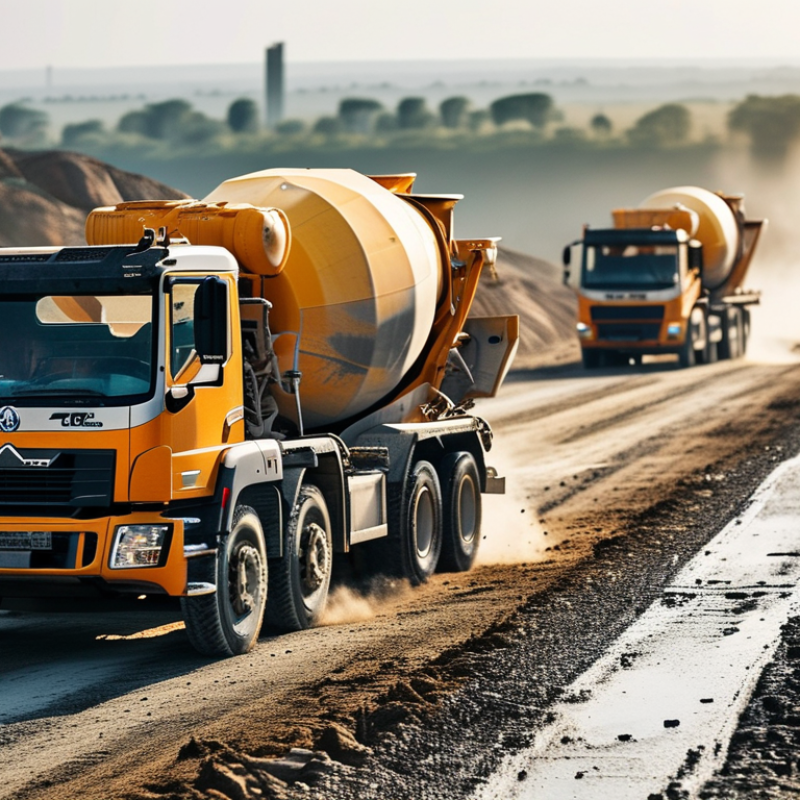
A concrete mixer combines cement, aggregates, water, and additives into a workable blend. Its drum or pan must distribute materials evenly. Poor mixing can create dry pockets, weak zones, and uneven curing. In modern construction, consistency matters as much as output.
A suitable mixer depends on project scale, material type, and local working conditions. Small sites may need compact equipment with simple controls and easy transport. Large projects often require higher capacity, strong torque, and accurate batch measurement. Drum speed also affects quality. Too fast can cause segregation, while too slow leaves unmixed material. Experienced operators check the slump and texture before placing concrete. That practical check often catches problems that specifications miss.
Maintenance supports reliable performance in every climate. Inspect blades, discharge gates, bearings, and electrical connections before use. Remove hardened concrete after each shift. It becomes difficult to remove later. Buyers should also confirm voltage, spare-part access, operator training, and safety documentation. These details are easy to overlook during price comparisons. I have seen efficient machines perform poorly because workers received limited instruction. The machine was not the only problem. Dust, heat, humidity, and uneven ground can also reduce service life. A careful selection process should include real site conditions, not only catalogue capacity. There is no perfect mixer for every project, and that limitation deserves honest attention.
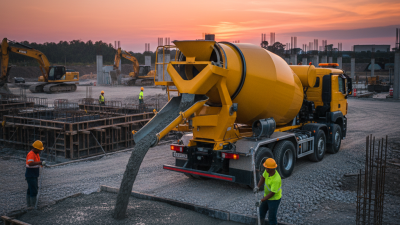
The 2026 best concrete mixer depends on the job, climate, and delivery distance. Global Cement and Concrete Association data indicates that the industry produces about 14 billion cubic metres of concrete each year. That scale demands different mixing systems, not one universal machine.
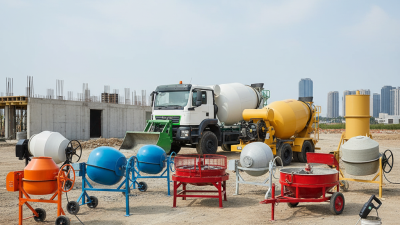
Drum mixers suit small sites, rural projects, and repair work. They are simple, portable, and easier to maintain. Twin-shaft mixers handle high-volume infrastructure projects with fast, consistent blending. Planetary mixers provide stronger shear action for precast elements, paving blocks, and dry mixes. Pan mixers remain practical for compact batches.
Volumetric mixers are useful when projects need fresh concrete on demand, especially where transport delays are common. Transit mixers work well for long-distance delivery, but drum capacity and road conditions must match the project. Field experience shows that oversized equipment often wastes fuel and reduces flexibility. That mistake is easy to make.
Tips: Check batch size, aggregate size, moisture variation, discharge speed, and local maintenance support. Compare real output, not advertised capacity. Ask for test batches. Measure slump consistency at the discharge point. Keep a spare wear-part plan.
The International Energy Agency reports that cement production creates roughly 7% of global energy-related carbon dioxide emissions. Mixer selection cannot solve this alone, but efficient loading, shorter idle periods, and accurate water control can reduce avoidable waste. A practical buyer should also review power availability, operator training, cleaning time, and spare-part access before choosing equipment. Price matters. It should not lead.
2026 Best Concrete Mixer for Global Buyers?
Rated capacity can mislead buyers. A mixer marked for 500 liters may produce less usable concrete after adding aggregate, cement, and water. Check the recommended batch size, not only the drum volume. Measure the actual output per cycle. A 400-liter batch may suit a small foundation crew better than an oversized machine that wastes fuel and labor.
Power should match the material and working conditions. Dry, dense mixes demand stronger torque during startup. Electric models need stable voltage and suitable protection against dust and moisture. Engine-driven units can support remote sites, but fuel quality, ventilation, and maintenance access require attention. More power is not always better. It can increase operating cost.
Mixing performance deserves a practical test. Watch whether the blades lift material evenly or leave dry pockets near the drum wall. Record the mixing time, discharge speed, and consistency between batches. A smooth discharge matters when workers are placing concrete continuously. Experienced operators should inspect noise, vibration, and residue after each cycle. Small irregularities become expensive delays.
I would not choose from specifications alone. Test the mixer with your local aggregate size and moisture level. Even a strong machine may struggle with poorly graded stone. That lesson is easy to overlook. A reliable evaluation combines measured output, power behavior, maintenance needs, and feedback from the people who will operate the mixer daily.
2026 Best Concrete Mixer for Global Buyers?
Safety, Maintenance, and Operating Requirements by Region
Global buyers should judge a concrete mixer by local working conditions, not capacity alone. The Global Cement and Concrete Association estimates annual concrete production at about 14 billion cubic meters. That scale makes guarding, dust control, and operator training essential.
In the United States, OSHA limits respirable crystalline silica exposure to 50 micrograms per cubic meter over eight hours. Buyers should request water-suppression options, enclosed transfer points, and documented exposure controls. European users should check applicable machinery safety, electrical, and noise requirements before installation. The EU Machinery Regulation will apply from January 2027, so equipment selected in 2026 needs transition planning.
Australia and other hot, remote markets require stronger attention to heat, dust, and service access. Daily inspections should cover emergency stops, guards, hydraulic leaks, drum wear, and cable damage. Keep records. Small faults become expensive failures.
Maintenance intervals must match the site. A dusty quarry may need filter cleaning every shift, not every week. Cold regions need suitable lubricants and protected water lines. No mixer is maintenance-free. A specification can look complete and still fail during winter startup or night repairs. The ILO’s 2023 global estimates report nearly three million work-related deaths annually, reminding buyers that productivity cannot replace safe operating procedures.
A serious purchase starts with the total landed cost, not the factory quotation. Include the mixer price, sea freight, insurance, import duties, installation, and spare parts. A low quote can become expensive after currency changes or port charges. Ask for a detailed pro forma invoice. Request motor power, drum capacity, production rate, and warranty terms in writing.
Supplier experience matters when projects operate far from service centers. Check factory records, export history, quality inspection reports, and customer references from similar climates. Ask for production photographs and a video of the mixer running under load. Remote checks are useful, but they are not perfect. A live inspection may reveal vibration, uneven welding, or weak protective guards.
Standards should match the destination market and jobsite requirements. Confirm electrical voltage, frequency, emergency stops, guarding, noise limits, and required conformity documents. Certification alone does not prove reliable workmanship. Verify serial numbers, test results, manuals, and spare-part availability. After-sales support should include response times, troubleshooting guides, technician training, and a realistic parts list. Clarify who pays for replacement components and shipping. Keep critical parts nearby, especially belts, bearings, switches, and hydraulic seals. Written promises help, but practical response speed matters more.