
Financing

If you are interested in financing to fund your Bay-Lynx purchase, we recommend that you connect with Easylease Corp., a Canadian-based leasing and finance company that offers premier equipment leasing and financial services. They are focused on making it easier than ever before for companies to overcome cash flow and resource constraints to acquire the assets they need to grow their business.

Leasing through Easylease Corp. can offer several benefits:

  • Conserve Cash Leasing
  • 100% Financing
  • No Pre-Payment of Taxes
  • Preserve Lines of Credit
  • Potential Income Tax Benefits
  • Pay as You Profit
  • Match Revenue with Expenditures
  • Simple, Convenient Process
  • Tailored Payments

Click here for your Canadian instant lease quote >>

For US customers, Click here for your instant lease application >>

What is a Wafer Roll Machine and How Does It Work?

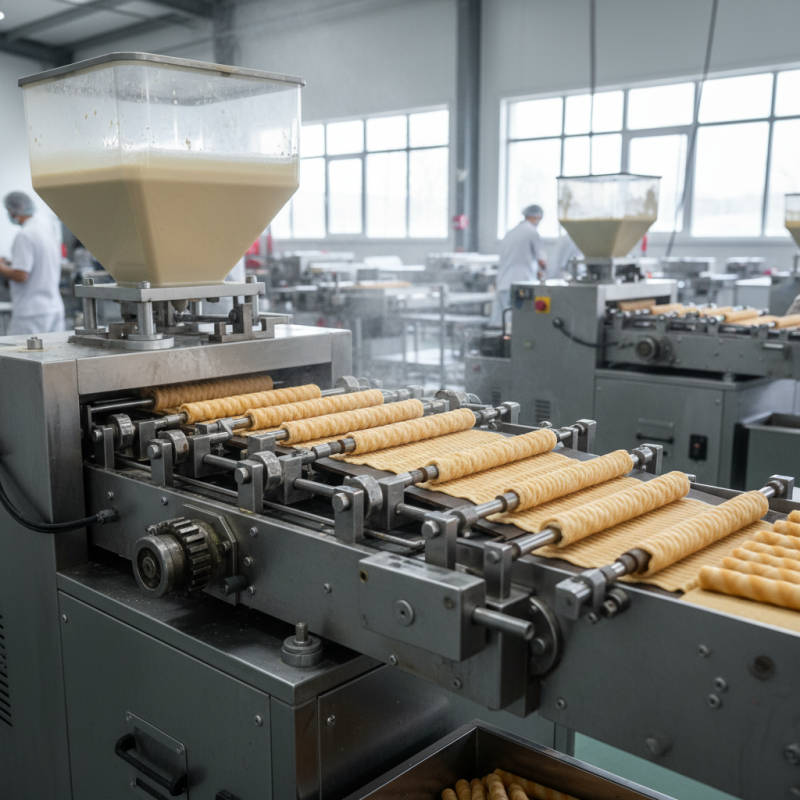
A Wafer Roll Machine is essential in the confectionery industry. It produces delightful wafer rolls that capture the taste and texture consumers love. This machine combines raw ingredients into a smooth batter, cooked to perfection.

As the process unfolds, it transforms the batter into thin, crispy sheets. These sheets are then rolled into perfect tubes. Each roll needs to be uniform, yet slight variations can occur. This aspect may affect quality control.

Understanding how a Wafer Roll Machine operates reveals its complexity. It requires precise temperature control and timing. Mistakes can lead to undercooked or overcooked wafers. It’s crucial to analyze these outcomes to enhance production efficiency. The machine’s mechanism offers insight into automated baking processes, but it's not always foolproof. Continuous learning is key to mastering this technology.
What is a Wafer Roll Machine and How Does It Work?

What is a Wafer Roll Machine?

A wafer roll machine is a specialized piece of equipment used in the food industry. It transforms a batter mixture into crispy, tube-shaped wafers. These are often enjoyed as snacks or desserts. The machine operates in several stages. First, the batter is prepared and poured onto a heated plate. Then, the plate cooks the batter until it's golden brown. Finally, a roller shapes the wafers into a cylindrical form.

Data from industry reports indicates that the global demand for wafer snacks is on the rise. The market is expected to grow at a rate of 4.5% annually. Many consumers prefer snacks with unique textures and flavors. Wafer rolls provide that experience. However, the production process can be complex. Precise temperature control is essential. Any deviation can lead to undesired outcomes. This aspect requires constant monitoring and adjustments, which can be challenging.

While wafer roll machines are efficient, there is room for improvement. Maintenance can be demanding, and breakage may occur if not properly handled. Additionally, achieving consistency in thickness can be difficult. Variations can impact texture and taste, ultimately affecting consumer satisfaction. Emphasizing quality control during the production process is crucial. The balance between efficiency and quality remains a significant consideration for manufacturers.

What is a Wafer Roll Machine and How Does It Work?

Feature Description Functionality Applications
Machine Type Wafer Roll Creates thin, rolled wafers from batter Desserts, Snacks
Production Capacity Up to 500 pcs/hour High-speed processing Commercial Baking
Heating Method Electric or Gas Even heat distribution for baking Wafer Production
Material Used Food-grade Stainless Steel Durable and easy to clean Food Manufacturing
Control System Digital PLC Precise temperature and timing control Optimized Production

Key Components of a Wafer Roll Machine

A wafer roll machine is a specialized device used in the production of thin, crispy wafers. The key components of this machine play a crucial role in its functionality. The first component is the dough mixer. It blends flour, water, and other ingredients. The mixer must achieve a consistent texture for optimal flavor. If not done correctly, the wafers may become too dense or dry. Precision is essential here.

Next in line is the forming unit. This part shapes the blended dough into thin layers. The forming unit consists of rollers and molds that create uniform sheets. It is vital for producing evenly-sized wafers. An irregularly shaped wafer can lead to inconsistent cooking and texture issues. Sometimes, operators may overlook the setup, leading to wasted batches.

Another important component is the baking system. This system uses heated plates to cook the wafer sheets. Proper temperature control ensures the wafers become crisp without burning. If the temperature is too high or low, the product quality will suffer. Adjustments should be made carefully, as small changes can affect the end result significantly. Overall, these components must work in harmony for the process to be successful.

The Wafer Production Process Explained

The wafer production process is a fascinating blend of precision and creativity. It starts with the right ingredients, primarily a mixture of flour and water, combined carefully. This mixture is then placed into a specialized machine. The machine heats the mixture to form a thin, delicate sheet. This initial step is crucial; any inconsistency can lead to poor quality wafers.

After the sheets are formed, they move to the next stage. They are cut into desired shapes. Sometimes, this cutting process is not perfect. Some edges may be uneven. It’s a reminder of the challenges faced during production. Quality control is essential here. Each piece must meet certain standards before moving on.

Finally, these wafers are rolled into their signature shape. A wafer roll machine takes care of this. It employs precise pressure to achieve the perfect curl. Slight flaws may occur, but they often add character. The entire process is a dance between technology and human oversight, with each step vital to the final product. Embracing these challenges helps refine the craft.

Working Principles of a Wafer Roll Machine

A wafer roll machine operates on simple yet effective principles. The main components include a heating element, rollers, and a cooling system. These parts work together to transform a batter into thin, crispy wafer rolls. The batter is spread on a heated surface, where it cooks quickly. The precise temperature is crucial; too high may burn the batter, while too low will leave it soggy.

Once cooked, the wafer is transferred to a set of rollers. These rollers shape the soft wafer into a roll. Timing is essential during this phase; if the wafer cools down too much, it becomes brittle and breaks. An effective machine maintains a steady flow of batter and an optimal rolling speed. Users often overlook the importance of calibration. Slight inaccuracies can lead to inconsistent product quality.

In the cooling phase, air circulates around the rolls, allowing them to crisp. This step can be delicate; excess moisture can ruin the texture. Operators should regularly check the cooling system's efficiency. Regular maintenance is tricky. Problems can arise unexpectedly, affecting production. Manufacturers must adapt quickly to these challenges to ensure quality and consistency in their products.

Applications and Benefits of Wafer Roll Machines

Wafer roll machines are essential in the food industry. They create thin, crispy wafer rolls that are popular snacks. These machines can produce various flavors and sizes, catering to different markets. Their efficiency can save time and money, making them vital for manufacturers.

The benefits of using wafer roll machines include high production rates. They can roll hundreds of wafers per hour. This leads to a consistent supply, which is crucial for meeting demand. Additionally, the automation reduces labor costs. Yet, operators must remain vigilant. Even the best machines can malfunction or produce defects. Regular maintenance is necessary to ensure quality output.

Applications extend beyond snacks. Wafer rolls can be used for desserts, ice cream cones, and even savory snacks. The versatility helps businesses innovate their product lines. However, the initial investment can be significant. Many companies weigh the costs against potential profits. Balancing efficiency and quality is key to success in this competitive market.

Wafer Roll Machine Production Capacity by Month

Article Source: