If you are interested in financing to fund your Bay-Lynx purchase, we recommend that you connect with Easylease Corp., a Canadian-based leasing and finance company that offers premier equipment leasing and financial services. They are focused on making it easier than ever before for companies to overcome cash flow and resource constraints to acquire the assets they need to grow their business.
Leasing through Easylease Corp. can offer several benefits:
Click here for your Canadian instant lease quote >>
For US customers, Click here for your instant lease application >>
In the fast-paced world of construction, the importance of a reliable mobile concrete mixer cannot be overstated. According to industry expert John Martinez, "A mobile concrete mixer can make or break your project timeline." Choosing the right equipment can directly impact the quality and efficiency of your work. With numerous options available, finding the best fit might seem daunting.
Mobile concrete mixers provide flexibility and convenience. They allow for on-site mixing, leading to fresher concrete. This can save time and reduce waste, which is crucial in construction. Yet, with so many choices, making a decision is sometimes overwhelming. Each model has its pros and cons, and not all mixers are created equal. Understanding what you need is essential.
Investing in the right mobile concrete mixer can lead to substantial savings. However, it’s vital to consider factors like capacity, mixing speed, and ease of use. Missteps can result in delays. Ultimately, reflecting on your specific requirements can guide you to the ideal mixer for your projects. The right choice can be transformative.
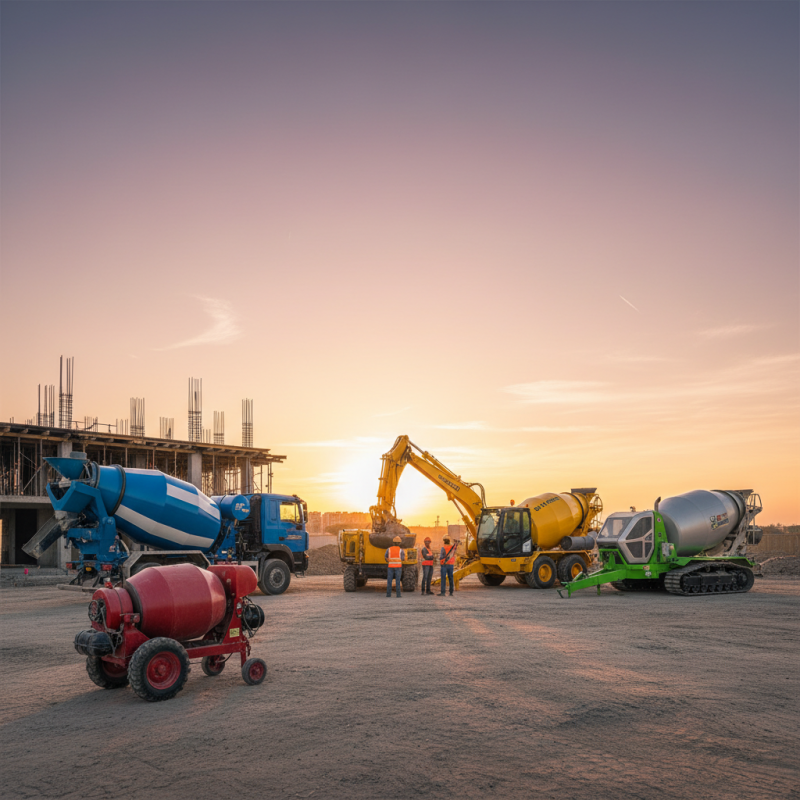
When selecting a mobile concrete mixer, several key features are essential. The capacity of the mixer plays a vital role. Models typically range from 1 to 10 cubic yards. Choosing the right size depends on project scale. The right capacity reduces waste and ensures efficiency.
Another crucial feature is the mixing technology. Look for advanced mixing mechanisms. These ensure even consistency and blend materials effectively. A well-mixed batch enhances strength and durability. Companies report a reduction in material costs by up to 30% with improved mixing technologies.
**Tip:** Evaluate the transportation options. Some mixers offer special attachments for easy mobility. This can save time onsite.
Don’t overlook the control mechanisms either. User-friendly interfaces can significantly impact operation speed. Complex controls may lead to mistakes. A good mixer should balance performance with usability.
**Tip:** Consider maintenance requirements. A mixer that’s easy to maintain can prolong service life significantly. Regular checks help avoid costly repairs later.
Investing time in these features will lead to better results. It’s not always about the brand. The right specifications make a true difference in project outcomes.
| Mixer Model | Mixing Capacity (cubic yards) | Weight (lbs) | Engine Power (HP) | Features |
|---|---|---|---|---|
| Model A | 3.5 | 4000 | 80 | Hydraulic Drive, Automatic Mixing |
| Model B | 4.0 | 4500 | 90 | Digital Control, Fast Mixing |
| Model C | 3.0 | 3700 | 70 | Compact Design, Easy Transport |
| Model D | 5.0 | 5000 | 100 | High Capacity, Long-lasting |
| Model E | 4.5 | 4700 | 85 | User-friendly Interface, Versatile |
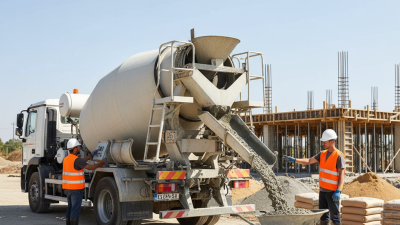
When considering mobile concrete mixers, it's crucial to look at the variety of brands available. Many mixers have specific features designed to meet different needs. Some are more compact, ideal for smaller jobs, while others offer larger capacities for bigger projects. Features can include varying drum sizes, mixing speeds, and ease of transport.
User reviews show mixed feedback. Some models are praised for reliability but can be challenging to maneuver on tight sites. Others might mix concrete effectively but have issues with maintenance. It's essential to weigh these factors based on the intended use. You might have to compromise between performance and portability.
Overall, the diversity in features and user experiences makes finding the right mobile concrete mixer quite challenging. Each brand has its strengths and weaknesses, calling for careful consideration. A hands-on demo might reveal important details that specs don't fully cover. Remember, understanding your specific needs is vital for making the best choice.
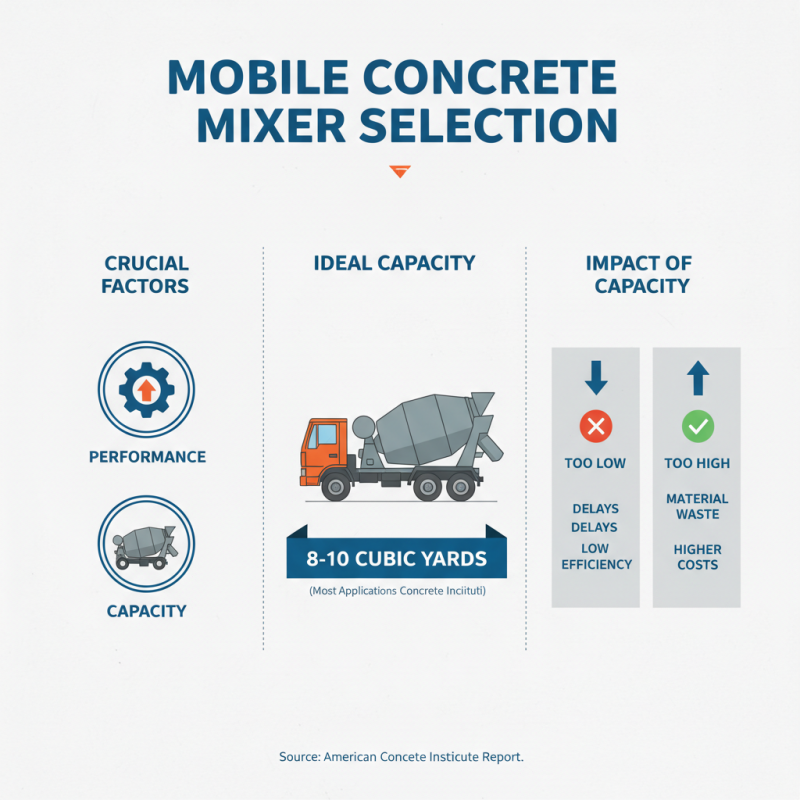
When choosing a mobile concrete mixer, performance and capacity are crucial factors. A report from the American Concrete Institute indicates that mixers with a drum capacity of 8 to 10 cubic yards are ideal for most applications. Mixing capacity directly affects production efficiency. If the capacity is too low, projects may face delays. Conversely, a mixer with excessive capacity can lead to unnecessary material waste.
Concrete mixers must also perform well under various conditions. Research shows that operational efficiency can drop by 30% in extreme weather. Therefore, selecting a mixer designed for versatile environments is essential. Some models promise consistent mixing quality only to fall short in adverse conditions. Performance metrics like mixing time and discharge rate vary significantly across different machines. Users need to scrutinize these aspects to avoid costly mistakes.
Additionally, mobility is often overlooked. A mixer must be easy to transport and set up. Yet, many options tend to be cumbersome. A machine that is easy to maneuver over rough terrain can save significant time. Evaluating the weight and size of a mobile mixer is vital. Misjudging these factors can lead to operational headaches on-site. Balancing capacity with mobility is key for successful outcomes in concrete mixing projects.
When considering mobile concrete mixers, cost is a crucial factor. The average price of these mixers can range between $15,000 to $100,000, depending on features and capacity. The purchase cost is just one aspect. Maintenance costs can add up over time. Regular servicing may require 5-10% of the purchase price annually.
Fuel efficiency also plays a role in total expenses. Many mixers operate on diesel. Fuel prices fluctuate widely, affecting operational budgets. According to a recent industry report, mobile mixers can consume 10-15 gallons of fuel per hour. This can significantly impact long-term cost considerations.
Investing in a mobile concrete mixer can yield substantial returns. Project efficiency improves, reducing labor costs and time on site. However, there are risks. Poor maintenance can lead to breakdowns, increasing downtime. This can negate the initial savings from efficiency gains. All these factors should be weighed carefully when selecting the best mobile concrete mixer option.
When choosing a mobile concrete mixer, user reviews can provide valuable insights. Many customers praise the flexibility these mixers offer. They appreciate being able to mix concrete on-site, which saves time and reduces waste. One reviewer noted that having a mobile mixer eliminated the need for multiple deliveries, enhancing project efficiency.
However, not every experience is flawless. Some users pointed out challenges with maintenance. A few mixers had issues with parts wearing out faster than expected. This highlights the importance of regular upkeep. Setting aside time for maintenance can prevent bigger problems later on.
Here are some tips to consider. Research user experiences thoroughly before making a purchase. Look for specifics about reliability and performance. Check for complaints that consistently arise across different reviews. Lastly, consider your own needs. A mixer that works well for one project may not be suitable for another. Each user’s story is unique, so take those differences into account.