Top 10 Granulation Machine Manufacturers for Global Buyers
Choosing a Granulation Machine is a process decision, not merely a purchasing decision. Each supplier must prove control over particle size, moisture, throughput, cleaning, and repeatability. These details become visible on the factory floor: consistent granules, stable feed rates, and fewer blocked screens.
Industry evidence supports careful comparison. Grand View Research’s 2024 pharmaceutical equipment market report links market growth with automation, process control, and stricter production requirements. MarketsandMarkets’ Pharmaceutical Manufacturing Equipment Market report also highlights demand for scalable, efficient, and compliant systems. These findings matter beyond pharmaceuticals. Food, fertilizer, chemicals, and advanced materials producers face similar concerns, although their operating conditions differ.
James D. Iveson and his co-authors described granulation as “a process in which primary powder particles are made to adhere to form larger, multiparticle entities called granules” in their widely cited 2001 study, “Nucleation, growth and breakage phenomena in agitated wet granulation processes.” That definition remains practical. A machine must create granules, but it must also protect their strength, shape, and downstream performance.
No ranking is perfect. That limitation matters. Manufacturer claims may emphasize capacity while understating maintenance time, energy use, or operator training. This guide compares ten leading Granulation Machine manufacturers through equipment design, application experience, customization, service coverage, and documented reliability. Buyers should still validate every shortlist with material trials, reference checks, and total-cost calculations. A polished brochure cannot replace powder testing.
What Granulation Machines Are and Why Manufacturers Matter
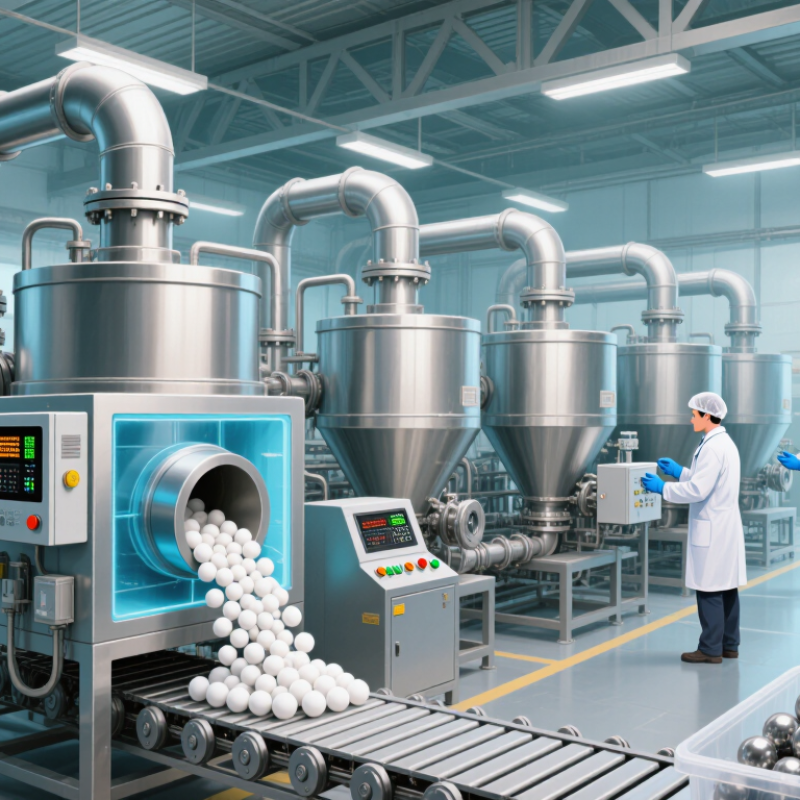
Granulation machines convert fine powders into uniform, free-flowing granules. They improve handling, reduce dust, and support more consistent filling or blending. Common systems include high-shear mixers, fluid-bed granulators, dry compactors, and oscillating granulators. Each design suits different materials, moisture levels, and production goals.
Machine selection requires more than checking capacity. A reliable manufacturer should understand powder behavior, heat sensitivity, cleaning demands, and particle-size targets. Technical teams may test a sample before recommending an impeller, screen, nozzle, or compaction force. That practical step matters. A machine that performs well with one powder may struggle with another.
Details reveal manufacturing quality. Watch the welds, seals, inspection access, control logic, and contact-surface finish. Operators need clear alarms and repeatable settings, not confusing menus. Manufacturers should provide process documentation, installation support, training, and accessible spare parts. They also need strong quality systems and traceable testing records.
Real production is rarely perfect. Powders can absorb moisture, stick to walls, or form uneven lumps. A capable manufacturer helps diagnose these problems instead of blaming the operator. However, buyers should question impressive claims and request test data, cleaning procedures, energy figures, and maintenance schedules. A lower purchase price can become expensive when downtime, rejected batches, or delayed service appear later.
Key Criteria for Evaluating Global Granulation Machine Manufacturers
When evaluating granulation machine manufacturers, global buyers should examine more than price and catalog capacity. The machine must match the actual material, batch size, moisture range, and target particle distribution. Ask for documented test results using a feedstock similar to yours. A polished video is not enough.
Technical expertise appears in practical details. Check rotor speed control, screen access, dust containment, temperature monitoring, and cleaning procedures. Request drawings, tolerance data, utility requirements, and maintenance intervals. Operators should understand the controls quickly. Complex screens can create expensive downtime. Factory acceptance testing can reveal unstable feeding, uneven granules, or difficult discharge before shipment.
Reliability depends on the manufacturer’s support system. Verify spare-part availability, response times, training, installation guidance, and remote troubleshooting. Review references from facilities with comparable production conditions. Confirm electrical standards, safety documentation, language options, and local service coverage. Independent inspections can strengthen confidence, especially for overseas purchases. No evaluation is flawless. Buyers may overlook noise, cleaning labor, or shipping damage until production starts. A careful comparison should include total ownership cost, not only the initial quotation. The strongest supplier communicates limitations clearly and provides evidence for every major claim.
Top 10 Granulation Machine Manufacturers by Technology and Market Reach
The top 10 granulation machine manufacturers are best compared by technology, validation support, and market reach. Global buyers should examine high-shear, fluid-bed, dry, and wet granulation platforms separately. Each process suits different powders, moisture limits, and production scales. MarketsandMarkets’ 2024 pharmaceutical manufacturing equipment analysis forecasts steady growth through 2029, with automation and process control driving investment. That trend matters. A polished machine can still fail without reliable sensors, recipe control, and cleaning access.
Technology leaders increasingly offer closed material transfer, inline moisture monitoring, and automated endpoint detection. Fluid-bed systems support drying and granulation in one vessel, reducing transfer losses. Dry granulators can help moisture-sensitive formulations, but they demand careful roll-pressure control. According to Grand View Research, pharmaceutical manufacturing automation is expanding at a strong mid-single-digit rate, reflecting demand for repeatable production and digital records. Market reach also matters. Manufacturers with regional service teams, spare-parts warehouses, and multilingual commissioning support usually reduce downtime for overseas buyers. Maybe not always.
A practical top-10 assessment should score technical depth, installed base, compliance documentation, and after-sales response time. Buyers should request factory acceptance testing, particle-size data, noise measurements, and energy figures. Reported capacity can be optimistic. Independent verification remains essential. Recent International Society for Pharmaceutical Engineering guidance also emphasizes risk-based equipment qualification and data integrity. The strongest suppliers combine proven equipment with adaptable engineering, rather than selling one standard configuration worldwide. Cost alone is a weak ranking tool. Total ownership cost often reveals the real difference.
Top 10 Granulation Machine Technologies by Capacity and Market Reach
This benchmark compares widely used granulation technologies through their representative industrial throughput and cross-sector applicability. The figures are indicative reference values based on commonly published equipment operating ranges, not individual company data or rankings.
Higher values indicate broader production scalability and application coverage across pharmaceutical, chemical, food, fertilizer, and specialty-material industries.
How to Compare Machine Types, Features, and Production Capacity
When comparing granulation machine manufacturers, global buyers should examine machine types before reading capacity claims. High-shear wet granulators suit powders needing liquid binding and strong agglomeration. Dry roller compactors avoid added moisture and support moisture-sensitive formulations. Fluid-bed granulators combine spraying, mixing, and drying in one controlled process. Each design creates different demands for space, utilities, operators, and cleaning.
Start with the material. Check bulk density, moisture sensitivity, flow behavior, and target granule size. A machine producing 500 kg per hour may perform poorly with a cohesive powder. Quoted capacity often assumes ideal feeding and stable materials. That detail matters. During technical evaluations, request test data using your actual formulation, not a standard sample. Measure yield, screen residue, energy use, and batch-to-batch variation. A reliable supplier should explain these results clearly.
Production capacity also depends on cycle time, loading volume, discharge speed, and cleaning intervals. Continuous systems may support steady output, while batch machines offer easier recipe changes and process control. Inspect contact-surface materials, seal design, dust control, automation, and maintenance access. Verify whether sensors record temperature, pressure, torque, and moisture consistently. Smaller access doors can slow cleaning more than expected. I would also question impressive automation claims when operators still adjust settings manually. Practical trials reveal these gaps. One overlooked issue is spare-part availability across borders, especially for seals, screens, and drive components.
Selecting the Right Granulation Machine Manufacturer for Your Business
Selecting the Right Granulation Machine Manufacturer for Your Business
Choosing a granulation machine manufacturer requires more than comparing prices. The correct partner should understand your material, production volume, moisture level, and final particle requirements. Ask whether the manufacturer has handled similar powders before. Practical experience often matters more than attractive specifications.
Request a material trial using your actual formulation. Observe particle uniformity, dust control, cleaning time, and discharge behavior. A machine that performs well in a demonstration may still struggle with your process. This is an uncomfortable but important possibility. Review construction materials, motor efficiency, control systems, and documentation carefully. Reliable manufacturers provide clear drawings, operating guidance, validation support, and responsive technical service. Spare parts availability also affects long-term production stability.
Tips: Visit the production facility when possible. Inspect weld quality, safety guards, testing procedures, and assembly discipline. Ask for customer references from comparable industries. Confirm delivery schedules, installation support, training, warranty terms, and maintenance response times. Calculate total ownership costs, not only the purchase price. A cheaper machine can become expensive through frequent downtime, difficult cleaning, or limited support. Be specific about future expansion, because an undersized system may restrict growth. Also question your own assumptions; familiar equipment is not always the most suitable choice.