
If you are interested in financing to fund your Bay-Lynx purchase, we recommend that you connect with Easylease Corp., a Canadian-based leasing and finance company that offers premier equipment leasing and financial services. They are focused on making it easier than ever before for companies to overcome cash flow and resource constraints to acquire the assets they need to grow their business.
Leasing through Easylease Corp. can offer several benefits:
Click here for your Canadian instant lease quote >>
For US customers, Click here for your instant lease application >>
Choosing a Rubber Deflashing Machine supplier in China takes more than comparing quoted prices. Rubber parts vary in size, hardness, shape, and flash thickness. A machine suited to small molded seals may not handle larger, irregular components efficiently. Details matter.
This guide introduces practical ways to assess Chinese suppliers and their equipment. It considers machine type, processing capacity, control options, and the support available after purchase. For cryogenic systems, ask about operating requirements, cooling procedures, and how sample parts perform after deflashing. For mechanical methods, examine the tooling, part-handling process, and possible effects on delicate edges. Request clear specifications, not just broad claims.
A factory visit can help. So can a live demonstration using your own parts. Ask how cycle time is measured, which consumables are needed, and whether replacement components are readily available. Check installation guidance, operator training, warranty terms, and response times for technical questions. These points may seem ordinary. They often shape the real cost of ownership.
No supplier is automatically the best fit for every application. Published capacity figures may not reflect your actual part mix, and a polished sample may not reveal routine production limits. That deserves a second look. Before shortlisting a supplier, compare test results, communication quality, and documented service commitments. This overview offers a grounded starting point, while final decisions should follow trials with representative parts and a careful review of your production needs.
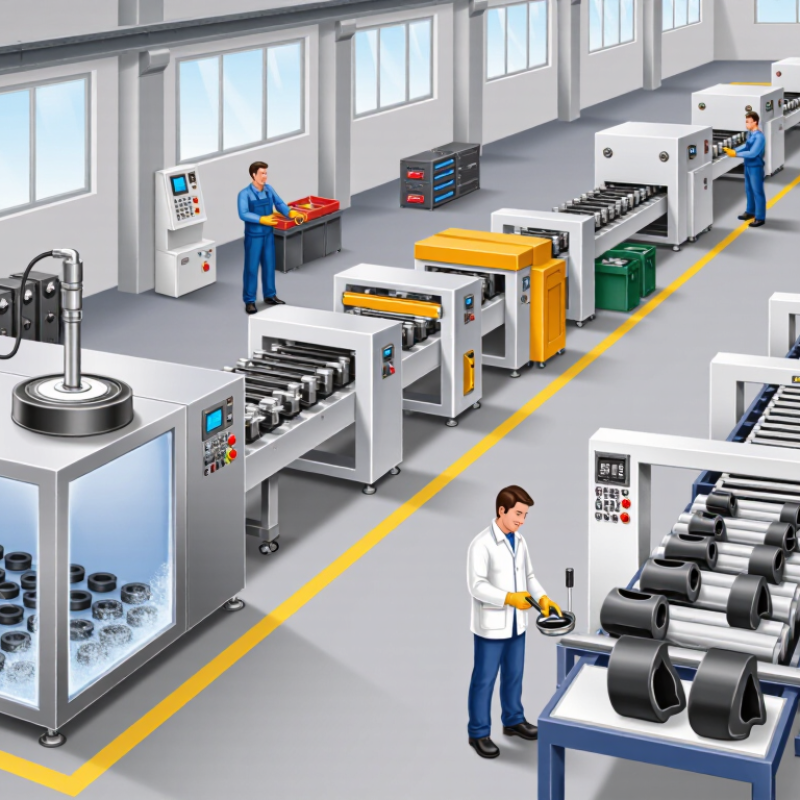
A rubber deflashing machine removes thin excess material, called flash, from molded rubber parts. Flash forms where mold sections meet or around vents. It can leave a rough edge on a seal, gasket, or small component. The machine cleans these edges more consistently than hand trimming, though results depend on the part and process.
One common method is cryogenic deflashing. The machine cools rubber parts, often with liquid nitrogen, until their thin flash becomes brittle. A controlled stream of media then knocks away the flash while the thicker parts remain intact. Other machines use mechanical cutting or tumbling. Each method suits different shapes, compounds, and production volumes. That distinction matters. A compound that performs well in one process may crack or retain flash in another. Operators should inspect sample parts and check for surface damage before setting production parameters.
Tips: Ask suppliers about process trials, cycle time, media recovery, and cleaning needs. Compare finished samples under consistent lighting. Small details count. A little flash left in a groove can still affect fit, so inspection criteria should be agreed upon before purchasing.
Rubber deflashing machines remove thin flash left around molded parts, but different compounds need different settings. Cryogenic systems cool components until the flash becomes brittle, then use tumbling or impact to separate it. Temperature control matters: too little cooling leaves ragged edges, while excessive cooling can stress delicate parts. Short trials with actual production samples are more useful than relying on a catalog description.
Compare chamber capacity, batch size, cycle time, and nitrogen consumption under similar operating conditions. Ask how temperature is measured and whether recipes can be saved for different rubber formulations. Screen openings and part geometry also affect separation; tiny seals may pass through an unsuitable screen. Test parts carefully. A specification sheet can omit details that become obvious only during unloading.
For supplier evaluation, request sample results, maintenance guidance, and clear explanations of safety interlocks and ventilation needs. Check access to the chamber, filters, and worn components; these details shape daily downtime. Noise and energy use deserve attention too. There is no universal machine setting, and a promising trial may not match every mold or shift. That uncertainty should be discussed openly.
China’s rubber deflashing machine supplier market is layered, not dominated by one supplier type. Large equipment makers often serve tire and automotive component plants, while smaller specialist workshops build compact machines for molded seals, gaskets, and precision parts. Some suppliers integrate automation; others focus on the machine, leaving loading and inspection to the buyer. The distinction matters. A polished catalog does not prove stable results across different rubber compounds.
Demand provides context, but not a direct measure of deflashing-machine sales. The International Rubber Study Group’s 2024 outlook projected global rubber demand growth of about 1.8% that year, supporting continued production activity across rubber goods. Buyers should compare suppliers by process capability: batch size, part geometry, trimming method, cycle time, and scrap rate. Ask for trials using the actual compound and representative parts. Watch the edge closely. A small burr can become a costly defect downstream.
China-based suppliers also differ in service depth. Some provide tooling, installation, and operator training; others rely on local partners or remote support. Check spare-part lead times, safety documentation, and whether quoted output includes manual handling. One point is easy to miss: published capacity may assume ideal parts and experienced operators. Request test records, then confirm the result on your own line.
Typical supplier archetypes and their relative breadth of deflashing-related offerings
Specialist machine builders focus on deflashing equipment, while integrated equipment makers may offer a broader range of machinery and services. Rubber molding equipment suppliers and trading or export sourcing firms can also serve buyers. The 1–5 scores are a qualitative comparison of typical offering breadth—not supplier counts, market shares, or audited market data.
When evaluating Chinese rubber deflashing machine suppliers, look beyond catalog photos and headline capacity. Ask for a test using parts close to your own rubber compound, shape, and flash thickness. Ask for evidence. Request cycle-time data, finished-part samples, and a clear description of the deflashing method. A polished sample is useful, but it does not show how consistently a machine performs across a full production shift.
Inspect the machine’s working details. Check guarding, access for cleaning, control-panel language, and how operators adjust temperature or processing time. Ask what routine maintenance involves and which wear parts may need replacement. If possible, observe a live test or request an unedited video showing loading, processing, and unloading. Small details matter. A supplier that explains limitations plainly may be more dependable than one promising a perfect result for every part.
Service quality needs specific answers. Who handles installation guidance, troubleshooting, and operator training? What response time can the supplier commit to, and what support is available after delivery? Ask for a written spare-parts list and clear warranty terms. Compare replies to the same technical questions, not just quoted prices. I would still verify every claim with a trial; remote demonstrations can miss problems that appear during longer runs. Keep records of agreed specifications, sample results, and service commitments before placing an order.
A rubber deflashing machine quote is useful only when its scope is clear. Compare the same part, material, flash thickness, and target output with every supplier. Ask whether the price includes tooling, installation, operator training, and initial spare parts. Small omissions add up.
Request a sample test using your actual molded components. Check edges under consistent lighting, then record cycle time, reject rate, and surface damage. Ask for the recommended operating range and expected maintenance intervals. A polished video is not enough. The test should reflect your production conditions, not just a supplier’s best-case setup.
When comparing suppliers in China, review technical drawings, inspection records, and references for similar rubber parts. Confirm who handles commissioning and how quickly common wear parts can be shipped. Warranty terms matter, but so does practical support after delivery. One detail may remain uncertain: quoted capacity can change with part geometry and operator skill. Ask the supplier to state assumptions in writing, then compare the full operating cost rather than the headline price.