China Top LED Stop Turn Tail Light Suppliers?
China Top LED Stop Turn Tail Light Suppliers: A Practical Guide for Global Buyers
Choosing reliable Chinese suppliers requires more than comparing prices and product photos. A capable factory should understand signal visibility, thermal control, sealing, vibration resistance, and vehicle integration. These details matter when an LED stop turn tail light operates through rain, dust, road shocks, and repeated braking cycles.
Automotive lighting consultant Daniel Stern offers a useful principle: “A lamp must communicate, not merely illuminate.” This idea explains why a strong LED stop turn tail design needs clear optical separation between stop, turn, and tail functions. Brightness alone is not enough. Timing matters. Color consistency matters. Driver recognition matters even more.
This guide examines China’s leading suppliers through practical purchasing criteria. It considers manufacturing experience, LED quality, lens design, housing materials, wiring options, testing procedures, customization support, and export communication. Some suppliers specialize in trailer lamps. Others focus on trucks, buses, agricultural machinery, or heavy-duty vehicles. Their strengths are not identical.
A supplier may show impressive samples but provide limited test documentation. That should invite careful questions. Ask about waterproof ratings, working temperature, photometric testing, warranty terms, and production capacity. Request sample validation before placing a large order. Small details can reveal large risks.
No ranking remains perfect forever. Factories change equipment, staff, and quality systems. Buyers should verify current evidence rather than trust old reputations. The best supplier is not always the cheapest. It is the one that delivers stable performance, honest communication, and traceable quality over time.
What Are LED Stop Turn Tail Lights?
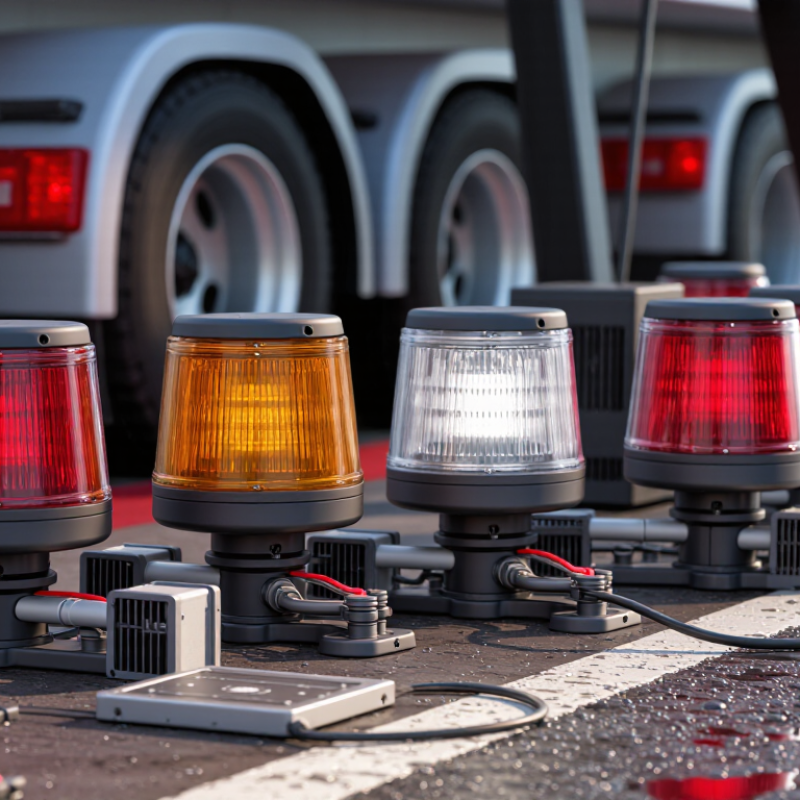
LED stop turn tail lights are rear vehicle lamps that combine three signaling functions in one compact unit. The stop light glows brightly during braking. The turn signal flashes to show a change of direction. The tail light remains dimmer for night visibility.
LEDs create light through semiconductor chips rather than heated filaments. They switch on quickly and usually consume less power. That response is important when a vehicle brakes suddenly. Every fraction matters.
A typical assembly includes red LEDs, a circuit board, a lens, wiring, and a sealed housing. Some lenses are clear, while the LED output remains red.
In practical inspections, I check brightness, flash timing, connector fit, and water resistance. A capable supplier should also test vibration, heat cycles, and lens clarity. A lamp may look excellent on a workbench but fail after moisture enters the housing. That is easy to overlook. Vehicle wiring also needs attention. Incorrect polarity, poor grounding, or incompatible control modules can cause flickering or warning signals. I have found that installation instructions are sometimes too general, so measurements should not be skipped. Good LED stop turn tail lights should remain visible in rain, resist road vibration, and separate braking brightness from tail-light brightness clearly. Small details decide reliability.
How LED Stop Turn Tail Lights Work
An LED stop turn tail light combines three signals in one compact housing. The tail function stays dim during normal night driving. Pressing the brake pedal raises the light output sharply. Activating the indicator makes selected LEDs flash on one side.
A control circuit manages current, timing, and brightness. It prevents uneven output when voltage changes. The circuit also separates braking from turning signals. This matters when both functions operate together. Poor control can create confusing light patterns.
Inside the housing, LED chips sit behind a red lens and reflector. The lens spreads light across a wide viewing angle. Good thermal paths move heat away from the chips. Heat matters more than many buyers expect. Moisture sealing is equally important. A small leak can corrode contacts and dim the lamp.
During supplier inspections, I check brightness, flash timing, connector fit, and water resistance. I also test the lamp at low and high vehicle voltages. A product may look excellent on a workbench. Road vibration can reveal loose terminals or poor sealing. That is the uncomfortable part.
Brighter is not always safer. Excessive intensity may reduce contrast between tail and brake modes. Some test results also change after repeated heating cycles. For reliable sourcing, request measured data, sample testing, and clear production records from each supplier.
How LED Stop, Turn and Tail Lights Work
LED lighting modules use semiconductor diodes that emit light when forward current flows through them. Automotive systems commonly operate from a nominal 12-volt electrical supply, while driver circuits regulate current and control brightness for tail, stop and turn functions.
Reading the chart: Red and amber LEDs typically require about 2 volts across each diode, while white and blue LEDs commonly require about 3 volts. An automotive LED module therefore uses multiple LEDs in series or parallel together with a regulated driver. Tail-light operation normally uses reduced current for lower brightness, while braking applies higher current for a brighter signal. The turn function rapidly switches the LED circuit on and off to create the flashing signal.
Key Features of Reliable Chinese Suppliers
China Top LED Stop Turn Tail Light Suppliers: Key Features of Reliable Chinese Suppliers
Reliable Chinese suppliers begin with disciplined engineering, not attractive catalogs. OICA recorded 93.5 million vehicles produced worldwide in 2023, raising demand for consistent replacement and original-equipment lighting. A capable factory should provide IATF 16949 or ISO 9001 records, production traceability, and controlled LED binning. Ask for test data, not promises.
Thermal design matters. The U.S. Department of Energy’s 2023 Solid-State Lighting R&D Opportunities report identifies thermal management, efficiency, and long-term reliability as continuing industry priorities. For stop, turn, and tail lamps, inspect aluminum heat paths, sealed connectors, lens uniformity, and current protection. Request photometric results, waterproof testing, thermal cycling, vibration testing, and salt-spray records. Small details count.
Check the factory floor.
In practical sourcing, a polished sample can still mislead. Visit the assembly line, compare incoming-material records, and inspect whether each batch carries a readable code. Reliable suppliers explain tolerances when drawings change. They also submit samples from normal production, not only from a special pilot run. That distinction is easy to miss. Confirm compliance with applicable vehicle-lighting requirements in the target market, including beam visibility, color, and electromagnetic compatibility. One weakness remains common: suppliers may share excellent test reports but weak corrective-action evidence. Ask for failure histories and verified improvements. Reliability is proven after repetition, not presentation.
How to Evaluate and Select a Supplier
China Top LED Stop Turn Tail Light Suppliers: How to Evaluate and Select a Supplier
China’s automotive lighting supply base is broad, but supplier selection needs evidence. OICA recorded 93.55 million motor vehicles produced globally in 2023. That scale increases demand for stable LED stop, turn, and tail light components. It also increases quality risks. I have seen attractive samples fail after vibration, moisture, or repeated thermal cycling. A bright sample is not enough. Ask for IATF 16949 or ISO 9001 certification, process flow charts, incoming inspection records, and traceable LED batch data. Check whether the factory performs photometric, waterproof, vibration, and thermal tests in-house.
Review the actual engineering details. SAE J575 testing can reveal weak housings, loose terminals, and early LED failure. For road-use products, request photometric reports matched to the target market’s requirements. The U.S. Department of Energy’s Solid-State Lighting research reports repeatedly highlight thermal management as a key factor in LED lifetime. Ask for heat-sink material, junction-temperature data, and test duration. Do not accept “long life” without conditions. Request PPAP documents, controlled drawings, change-notification procedures, and a small pilot order. Check ten random units, not one perfect sample. Factory visits help, but they can mislead. Production discipline matters more than polished reception rooms. That judgment is imperfect, so independent inspection remains worthwhile.