What Are the Top Bed Fans for Better Sleep?
A Bed Fan can make a warm, restless night feel more manageable by directing air beneath the sheets rather than cooling an entire room. That focused airflow may suit people who feel hot under bedding but prefer a cooler breeze near their face. Still, comfort is personal. A fan that feels gentle to one sleeper may seem distracting to another.
The top bed fans are not simply the ones with the strongest airflow. Noise, adjustable settings, hose or outlet placement, cleaning, and ease of use all matter. A quiet motor can still produce an irritating rustle if sheets brush against the air outlet. Small details matter. Bed size and bedding style can also change how well a model works, so product descriptions alone may not predict your experience.
This guide compares bed fans by practical features, including airflow control, sound, setup, and value. It also considers who may benefit most and what trade-offs to expect. For example, a compact design may be easier to position but offer fewer adjustments. Some setups can feel fiddly at first; that deserves honest attention. No fan replaces medical advice for persistent night sweats or ongoing sleep problems. Check the manufacturer’s instructions, keep air pathways clear, and choose a model that fits your bed and routine. The best option is the one that helps you sleep comfortably without adding noise, clutter, or extra hassle.
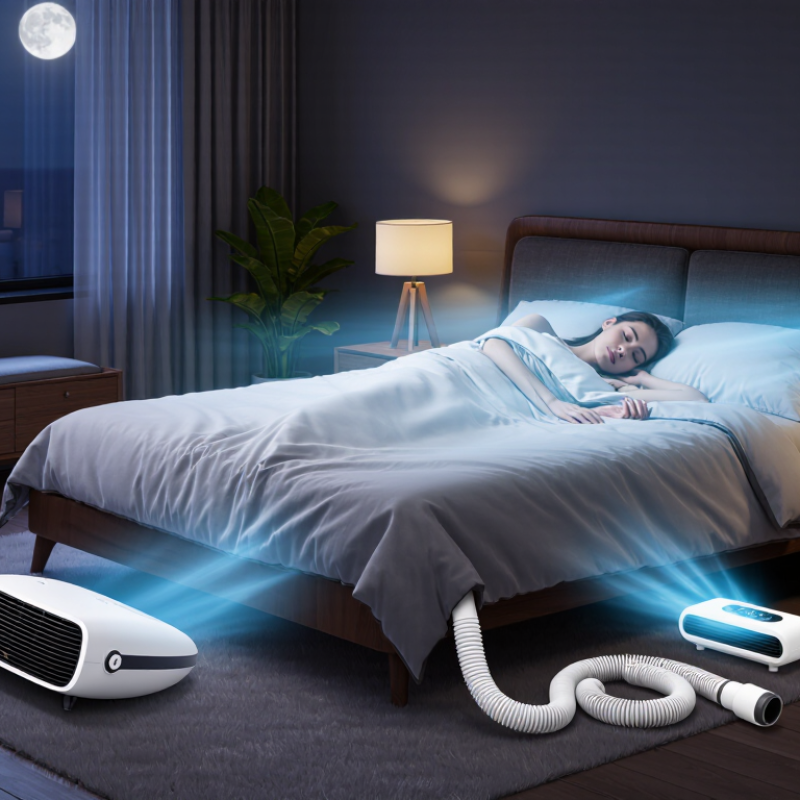
What a Bed Fan Is and How It Supports Sleep
A bed fan is a device that directs air beneath the covers, rather than simply cooling the whole room. Many designs sit near the foot of the bed and guide air through a channel or under-sheet space. The airflow can help reduce the warm, damp feeling that builds around the legs and torso during the night. That distinction matters.
By moving air close to the body, a bed fan may make it easier for some people to feel comfortable without lowering the room temperature as much. Comfort varies, though. A light stream may feel soothing, while stronger airflow can dry the skin or disturb a sensitive sleeper. Bedding, mattress thickness, room humidity, and personal preference all affect the result. Small details count.
A useful setup should feel quiet, stable, and easy to adjust from bed. Check that the air path is not blocked by tightly tucked sheets, and keep the device’s cords clear of walking areas. It is not a treatment for persistent night sweats or other health concerns. The concept is simple, but airflow can feel uneven at first; a low setting and a few nights of adjustment may help reveal whether it suits your sleep.
How Bed Fans Differ From Room Fans and Cooling Systems
Bed fans and room fans move air, but they serve different zones. A bed fan directs a narrow stream beneath or across the bedding, where warmth can collect around the body. Many models sit near the foot of the bed, with an outlet aimed between the sheets. The effect is personal, not room-wide. Your partner may feel little change. Small detail matters.
A room fan mixes air across a larger area. Moving air can help sweat evaporate and make skin feel cooler, but it usually does not lower the room’s actual temperature. A bed fan mainly changes comfort at the mattress, so it may suit someone who feels hot under covers but prefers a warmer room. Air-conditioning works differently: it removes heat from indoor air and can change conditions throughout the room. That broader effect may matter on humid nights, though energy use and installation needs vary. A bed fan is not a substitute for room cooling. It may not be enough. Check that the airflow feels comfortable, the unit stays stable, and cords do not cross a walking path. Bedding, humidity, and personal preference still shape the result.
How to read this chart: “Yes” indicates a typical function, not a measure of cooling power. Bed fans direct airflow beneath bedding for personal comfort; room fans circulate air but do not lower room temperature; air conditioners can lower room temperature.
Key Features to Compare in Bed Fans
A bed fan should fit your sleeping position and bed frame, not just promise strong airflow. Compare adjustable speed and direction: gentle air across the legs may feel better than a steady stream toward the face. Check how the unit attaches, whether its outlet can be repositioned, and whether controls are reachable from bed. A timer can prevent unnecessary overnight operation. Look for stable construction, clear electrical safety information, and removable parts that are easy to clean. Small details matter.
Noise claims need context. A fan’s decibel rating may be measured at a different distance or setting than you use at home. The World Health Organization’s 2018 Environmental Noise Guidelines recommend keeping nighttime outdoor noise below 40 dB Lnight; that is a long-term outdoor measure, not a direct bedside-fan limit. Compare models under similar conditions, and listen for motor hum or rattling. Quiet on paper can still be distracting.
Comfort is personal, and airflow is not a cure for poor sleep. The CDC’s analysis of 2014 U.S. survey data found that 35.2% of adults reported sleeping fewer than seven hours per night. A bed fan may help with temperature comfort, but that statistic does not show that fans improve sleep. There is no perfect setting. Small adjustments—and a little patience—are often needed.
Types of Bed Fans for Different Sleep Needs
Under-sheet bed fans move air beneath the bedding, making them useful for sleepers who feel hot under a duvet. Some attach near the bed’s foot and direct air between the mattress and sheet. The cooling can feel gentle, though airflow may be uneven if bedding blocks the outlet. Small bedside fans suit people who prefer a breeze across their face or shoulders. They are easy to reposition, but direct airflow may bother sensitive eyes or skin.
Shared beds can benefit from dual-zone systems, which let each sleeper choose a different airflow level. A mattress-integrated cooling system is another option for people who want air distributed across a wider surface. These designs vary in setup, noise, and cleaning needs. Check how controls work from bed, and listen for the fan at night if you are a light sleeper. I would not assume the strongest setting is the most comfortable; preferences can change with the season.
Tips: Measure your bed and check where air enters before buying. Keep fabric clear of vents, and clean filters or openings as directed. Start on a low setting. A little trial and error is normal.
How to Choose and Use a Bed Fan Safely
What Are the Top Bed Fans for Better Sleep?
How to Choose and Use a Bed Fan Safely
A good bed fan should move air gently without creating a noisy draft or cluttering your sleep space. Compare adjustable airflow, sound levels, timer settings, and how the unit sits beside or beneath your bed. Check that its air intake stays clear and that the controls are easy to reach at night. A 2015 American Academy of Sleep Medicine consensus statement recommends that adults regularly sleep at least seven hours. A fan cannot guarantee better sleep, but comfortable airflow may help some people settle in.
Safety depends on placement. Follow the device’s instructions, set it on a stable surface, and keep its cord away from walkways and moving bed parts. Do not cover the motor or air vents with sheets, clothing, or dust. Unplug the unit before cleaning, and stop using it if the cord is damaged or the housing becomes unusually hot. Small details matter.
Tips: Test the lowest setting before bedtime. Keep airflow off your face if it dries your eyes or nose. Clean filters or vents as directed, since dust can restrict airflow. If the fan shifts, rattles, or makes you wake up, change its position—or reconsider using it. Comfort is personal, and a setup that looks neat may still feel wrong at 3 a.m.
What Are the Top Bed Fans for Better Sleep? - How to Choose and Use a Bed Fan Safely
“Best” depends on your bed setup, room temperature, and preference for direct or room-wide airflow. Compare fan types by how they deliver air, then follow the safety guidance below.
| Fan Type | How It Delivers Air | Often Suits | Potential Advantages | Things to Consider |
| Under-sheet bed fan | Moves air through a hose or outlet positioned beneath the top sheet. | People who want airflow beneath the covers without a fan blowing directly at their face. | Can direct air to the bed and may let the rest of the room stay relatively undisturbed. | Requires suitable space beside or beneath the bed. Check that the outlet and hose are not blocked by bedding. |
| Bedside or clip-on fan | Blows air across the sleeper from a nearby stand, desk, or secure bedside attachment. | People who prefer adjustable, direct airflow and have a stable place to position a fan. | Usually easy to aim and reposition; can be useful without changing the bed setup. | Direct airflow may feel uncomfortable or dry the eyes or skin for some people. Keep the fan stable and out of the path of bedding. |
| Tower or pedestal fan | Circulates air through a larger area of the room, often with an oscillating function. | People who want airflow beyond the bed or need a fan that can serve a shared room. | Can distribute air around the room and may be positioned farther from the bed. | Requires floor space and a stable, unobstructed location. Keep cords clear of walkways and bedding. |
| Ceiling fan | Moves air downward or upward through the room, depending on its direction setting. | People seeking broad room circulation without placing a fan on the floor or bedside table. | Does not occupy floor or bedside space and can circulate air across much of the room. | Installation and controls vary. Use the direction recommended for the season and follow the manufacturer’s instructions. |
How to Choose and Use a Bed Fan Safely
| Check | Practical Guidance |
| Airflow and comfort | Choose adjustable airflow where possible. Start at a low setting and redirect the air if it feels too strong or causes discomfort. |
| Noise | If sound affects your sleep, check the fan’s stated noise information and, when possible, listen to it at the setting you expect to use. |
| Placement and stability | Place the fan on a stable surface, follow its clearance instructions, and keep air inlets and outlets unobstructed. |
| Electrical safety | Use a fan with an intact cord and plug. Keep electrical parts away from water, and do not run cords under rugs or where they can be pinched by furniture. |
| Bedding and moving parts | Keep sheets, blankets, clothing, and loose items away from the fan’s intake, outlet, and moving parts. Do not cover the fan. |
| Cleaning and maintenance | Turn the fan off and unplug it before cleaning. Follow the manufacturer’s instructions and stop using it if the cord, plug, or housing is damaged. |
| Children and pets | Position the fan so children and pets cannot reach its blades, controls, or cord; use required guards and safety features. |
| Room temperature | A fan moves air but does not lower the room’s temperature. For excessive heat, use appropriate cooling and follow local heat-safety advice. |