
Financing

If you are interested in financing to fund your Bay-Lynx purchase, we recommend that you connect with Easylease Corp., a Canadian-based leasing and finance company that offers premier equipment leasing and financial services. They are focused on making it easier than ever before for companies to overcome cash flow and resource constraints to acquire the assets they need to grow their business.

Leasing through Easylease Corp. can offer several benefits:

  • Conserve Cash Leasing
  • 100% Financing
  • No Pre-Payment of Taxes
  • Preserve Lines of Credit
  • Potential Income Tax Benefits
  • Pay as You Profit
  • Match Revenue with Expenditures
  • Simple, Convenient Process
  • Tailored Payments

Click here for your Canadian instant lease quote >>

For US customers, Click here for your instant lease application >>

Top Types of Ammonium Chloride Powder for Global Buyers

Global buyers need more than a low quoted price when selecting ammonium chloride powder. Product grade, purity, particle size, moisture, and packaging can directly affect performance. A fertilizer manufacturer may require consistent nitrogen content and easy dissolution. A metalworking facility may prioritize controlled particle size and stable reaction behavior. Food or feed applications demand stricter documentation and approved specifications.

This guide examines the top types of Ammonium Chloride Powder used across international supply chains. It compares industrial, agricultural, technical, food-grade, and feed-grade options where regulations permit their use. Each category has a different purchasing logic. A suitable product should match the intended application, not simply the supplier’s general description. Small details matter. A 25-kilogram moisture-resistant bag may protect quality during humid transport. A clear certificate of analysis can help buyers verify assay, chloride content, moisture, and heavy metals.

Experienced buyers also review the supplier’s manufacturing controls, batch consistency, safety data sheet, and export documentation. Local regulations must be checked before ordering, especially for food, feed, fertilizer, or chemical processing applications. Certifications can support confidence, but they should not replace independent verification. That is an important limitation.

In practice, product selection is rarely perfect on the first quotation. Samples, trial batches, and technical discussions often reveal hidden differences. Buyers should ask precise questions about origin, storage conditions, shelf life, and available packaging. Reliable sourcing depends on evidence, communication, and realistic expectations. Price matters, but consistency matters more.
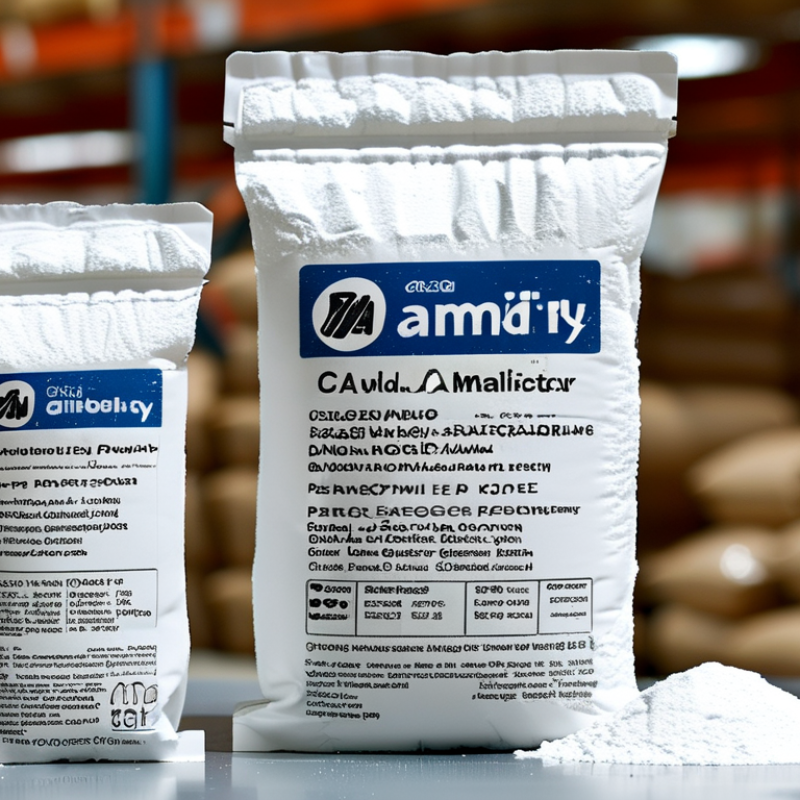
Top Types of Ammonium Chloride Powder for Global Buyers

What Ammonium Chloride Powder Is and Why Global Buyers Use It

Top Types of Ammonium Chloride Powder for Global Buyers

Ammonium chloride powder is NH₄Cl, a white crystalline salt that dissolves readily in water. It supplies both nitrogen and chloride, making it useful in selected fertilizers, metal treatment, dry-cell batteries, and permitted food applications. Its performance depends on grade. Agricultural material may prioritize nitrogen content and particle size, while technical buyers often require controlled purity, low moisture, and consistent flow. Small details matter.

The International Energy Agency’s Ammonia Technology Roadmap reports that ammonia production uses about 2% of global final energy and creates roughly 1.3% of energy-related carbon dioxide emissions. This context matters because ammonium chloride supply depends on nitrogen-based chemical chains. The U.S. Geological Survey reported global ammonia output near 190 million metric tons in 2023. That scale supports broad availability, but it does not guarantee identical powder quality across regions.

Global buyers usually compare agricultural, technical, and high-purity grades against the intended process. A fertilizer blender may check nitrogen percentage, caking behavior, and dissolution time. A battery or metal-treatment user may inspect assay, trace metals, particle distribution, and packaging stability. The European Chemicals Agency classifies ammonium chloride as an irritant under certain exposure conditions, so buyers should review the current safety data sheet and local requirements. I would not treat “high purity” as a complete specification. The certificate of analysis, sampling method, and transport history deserve equal attention.

Top Types of Ammonium Chloride Powder for Global Buyers

Ammonium chloride powder is a white, highly water-soluble inorganic salt used in fertilizers, metal treatment, dry-cell batteries, feed applications, and selected pharmaceutical formulations. Global buyers commonly evaluate industrial, fertilizer, feed, and pharmaceutical grades according to purity, impurities, particle size, and regulatory requirements.

Why this matters to buyers: Ammonium chloride becomes significantly more soluble as water temperature increases, which supports its use in fertilizer solutions, process chemicals, and other applications requiring rapid dissolution. The figures shown are approximate equilibrium solubility values in grams per 100 millilitres of water and can vary slightly with test conditions.

How Ammonium Chloride Powder Is Classified by Grade and Purity

Global buyers usually compare ammonium chloride powder by grade, assay, and contaminant limits. Industrial grade often targets about 98–99.5% NH4Cl, but suppliers define limits differently. Check moisture, iron, sulfate, insoluble matter, and particle-size data on every certificate of analysis. These details affect caking, dissolution, and process consistency. UN Comtrade’s 2023 HS 2827.10 records group shipments by chemistry, not purity. Trade volume cannot prove technical grade.

Food grade requires tighter contaminant controls and documented suitability for food use. The FAO/WHO JECFA specification lists ammonium chloride as food additive INS 510 and defines identity and purity requirements. Pharmaceutical grade follows a pharmacopoeial monograph, commonly requiring about 99.0–100.5% assay on a dried basis. Reagent grade may offer higher assay, often near 99.5%, with stricter trace-metal limits for laboratory work. Do not assume reagent grade is suitable for ingestion. In practice, I request the current specification, batch COA, SDS, origin, packaging date, and retain-sample policy. A bright white powder can still fail a critical limit. That remains an easy mistake.

Key Types of Ammonium Chloride Powder for Different Industries

Top Types of Ammonium Chloride Powder for Global Buyers

Ammonium chloride powder varies by industry, purity, and particle size. Agricultural grade is commonly used in nitrogen fertilizers and soil nutrition. It should match crop needs, soil conditions, and local application rules. Feed grade requires controlled purity and reliable testing for animal nutrition. Small differences in moisture can affect storage and flow.

Industrial grade supports metal treatment, soldering applications, textile processing, and dry-cell battery production. Buyers often check chloride content, insoluble matter, particle distribution, and packaging strength. Pharmaceutical-use material requires stricter specifications, traceability, and documented quality controls. A certificate of analysis is useful, but it should not replace independent verification. In practice, specifications can still be misunderstood between suppliers and end users.

Tips

Ask for the intended application before selecting a grade.

Confirm purity, moisture, particle size, and test methods in writing.

Request recent batch documents and safety data.

Check whether bags resist humidity during ocean transport.

A cheaper powder may create caking, dust, or production delays.

Trial quantities are sensible.

Even experienced buyers should review local import and industry requirements, because they may differ across markets.

How Production Methods Affect Powder Quality and Performance

Top Types of Ammonium Chloride Powder for Global Buyers

Production methods strongly influence ammonium chloride powder quality and field performance. Direct neutralization reacts ammonia with hydrochloric acid under controlled conditions. This route usually produces clean crystals, predictable purity, and tighter particle-size control. It suits technical applications requiring stable dissolution and low contamination. Recovered ammonium chloride from industrial streams can reduce waste and production costs. However, it may carry traces of sodium salts, metals, or process residues. Washing and recrystallization become essential.

The Solvay process creates ammonium chloride as a coproduct during soda ash production. Its quality can vary with feedstock, filtration, and drying conditions. Buyers should inspect chloride purity, moisture, bulk density, caking tendency, and particle distribution. Fine powder dissolves quickly but may bridge in storage. Coarser crystals flow better. That trade-off matters.

Data supports careful sourcing. The International Fertilizer Association’s 2024 Medium-Term Fertilizer Outlook places global nitrogen demand near 109 million tonnes in 2023. The U.S. Geological Survey reported global ammonia production near 150 million tonnes that year. These figures show the scale of nitrogen chemistry, but they do not guarantee uniform ammonium chloride quality. I would not judge a powder by purity alone. A low moisture number can mislead if particles absorb water during transport. Independent testing should confirm heavy-metal limits, sieve results, pH, and certificates from accredited laboratories. Production consistency is often more valuable than a single impressive specification.

What Global Buyers Should Check Before Choosing a Supplier

Top Types of Ammonium Chloride Powder for Global Buyers

What Global Buyers Should Check Before Choosing a Supplier

Ammonium chloride powder comes in crystal, fine, granular, technical, and fertilizer grades. Each type suits different production needs. Fine powder disperses quickly, while granular material offers better handling during storage. Buyers should match particle size, chloride content, moisture, and intended use before comparing prices. A low price can hide higher drying costs.

The International Fertilizer Association’s 2024 outlook expects global fertilizer demand to approach 205 million tonnes of nutrients by 2028. This growth may increase demand for consistent nitrogen materials. Still, volume alone proves little. Ask suppliers for recent certificates of analysis, batch numbers, sieve results, and moisture data. Testing should come from an ISO/IEC 17025-accredited laboratory whenever possible. Check the actual factory location, production capacity, packaging method, and loading photographs. Paperwork can look convincing.

Use HS code 2827.10 to review international shipment patterns through UN Comtrade data. Compare declared origins, quantities, and shipment frequency. Confirm whether the supplier handles industrial, fertilizer, or feed-grade material. Specifications differ significantly. For sensitive applications, request heavy-metal limits and contaminant testing. Also inspect inner liners, pallet strength, and container protection against humidity. Ammonium chloride absorbs moisture during poor storage. That detail is often underestimated. I have seen buyers focus on purity but overlook damaged bags and inconsistent particle size. Supplier audits remain imperfect, yet a video call alone is not enough. Ask difficult questions. Reliable vendors should answer with records, not promises.