Top 10 Concrete Equipment Manufacturers Worldwide
Concrete is the world’s most widely used building material after water, and its production depends on equipment that can handle demanding sites and tight schedules. The Global Cement and Concrete Association estimates that about 14 billion cubic metres of concrete are produced each year. That scale matters. Behind each pour are machines such as batching plants, transit mixers, concrete pumps, and placing booms, often working in dust, heat, and cramped urban spaces.
Demand is shaped by more than construction cycles. The United Nations’ 2018 World Urbanization Prospects projects that nearly 68% of the global population will live in urban areas by 2050. More urban growth means pressure to build housing, roads, and utilities efficiently, though forecasts do not guarantee uniform demand in every region. Buyers therefore assess more than output capacity. They consider uptime, parts availability, operator support, fuel use, automation, and performance across different mixes and climates. A high-capacity plant is less useful when service is far away.
This overview of the top 10 concrete equipment manufacturers worldwide introduces companies with significant influence across these equipment categories. It is not a universal ranking: company strengths vary by product, region, and customer needs. The comparison should be read as a practical starting point, not a final verdict. Some details change quickly. Product specifications and dealer coverage should be checked against manufacturers’ current documentation before procurement decisions.

Defining Concrete Equipment: Pumps, Mixers, Batching Plants, and Pavers
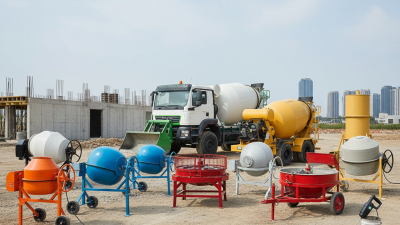
Concrete equipment covers the machines that move, combine, proportion, and place fresh concrete. A concrete pump sends the mix through a pipeline or boom to hard-to-reach areas. Its output depends on mix consistency, hose layout, and steady operation. A blocked line can halt placement, so crews watch pressure and flow closely. Small details matter.
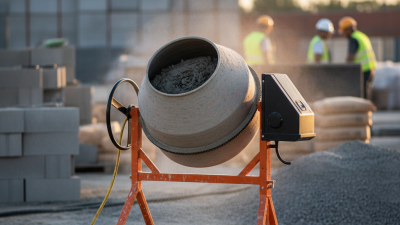
Mixers blend cement, water, and aggregates into a workable material. Some travel with the load; others mix at a fixed site. Batching plants measure ingredients and feed them in controlled quantities. Accurate weighing supports consistent batches, but calibration and moisture changes can affect results. The figures are not magic. Operators still need to check the material and the equipment.
Pavers spread and shape concrete across roads, floors, or other broad surfaces. They help control width, thickness, and finish, while crews monitor edges and the newly placed slab. These categories overlap in practice: a batching plant supplies the mix, a mixer keeps it moving, a pump delivers it, and a paver shapes it. The sequence sounds neat on paper. Real sites are less tidy, and access, weather, and delivery timing can change what equipment fits best.
Top 10 Concrete Equipment Manufacturers Worldwide
Concrete pumps, mixers, batching plants, and pavers support different stages of concrete production and placement. The chart shows common nominal output-capacity classes for batching plants, not a ranking of manufacturers.
Rated capacities are typical nominal classes in m³/h; actual production depends on plant configuration, materials, and operating conditions.
Ranking the Top 10: Product Range, Global Reach, and Production Capacity
A credible Top 10 ranking should weigh more than headline factory size. Product range matters: manufacturers serving ready-mix, precast, and on-site work can meet varied project needs. Look for batching plants, mixers, pumps, and recycling systems, then check whether replacement parts and technical support reach customers beyond domestic markets. Global reach is practical, not cosmetic. A mixer awaiting a specialist part can leave a crew idle.
The scale of demand gives this comparison context. The USGS Mineral Commodity Summaries 2024 estimates global cement production at about 4.1 billion metric tons in 2023. The International Energy Agency’s cement-sector analysis also highlights the sector’s significant share of global carbon dioxide emissions. These figures do not measure equipment sales, but they show why production capacity, energy use, and service coverage matter.
For each manufacturer, compare stated annual output with documented deliveries and plant locations. A large advertised capacity may not reflect actual production; public data can be uneven, so rankings should acknowledge that limitation. Product breadth also needs scrutiny. A catalogue may list many models, yet local availability can be limited. Consider whether equipment handles a specific job: tight urban access, abrasive aggregate, or high-volume pours.
The strongest contenders combine broad product coverage with dependable regional support and the ability to scale output. Companies rarely publish comparable factory-utilization figures, so this ranking treats capacity as an indicator, not a proven measure of performance.
Comparing Manufacturers: Pump Output, Mixer Capacity, and Plant Throughput
Concrete equipment manufacturers are best compared by the work their machines can sustain, not headline figures alone. A pump rated at 100 cubic meters per hour may deliver less through a long, narrow line, especially with stiff mixes, frequent bends, or stop-start placement. Ask whether published output is theoretical or measured under stated site conditions. Small detail, big difference.
Mixer capacity also needs context. A 3-cubic-meter drum does not always produce three cubic meters of usable concrete per batch; fill limits, aggregate grading, and mixing time matter. Compare batch size alongside cycles per hour, discharge consistency, and cleaning access. A mixer that turns quickly but leaves material around the blades can lose time each shift. It happens.
Plant throughput links these figures together. A batching plant may list 120 cubic meters per hour, yet actual production depends on aggregate bins, cement feed, water accuracy, truck availability, and operator rhythm. Compare rated and demonstrated output using the same mix, batch size, and operating window. Request service records and wear-part intervals, too. These are not glamorous numbers, but they shape downtime and cost. The comparison will never be perfectly clean, and that is worth admitting before choosing equipment.
Top 10 Concrete Equipment Manufacturers Worldwide – Comparing Manufacturers: Pump Output, Mixer Capacity, and Plant Throughput
Representative equipment ratings are shown for comparison. Manufacturer identities are anonymized; entries are ordered by nominal batching-plant throughput, not market share. Pump output is the rated maximum for a representative pump model, mixer capacity is per discharge batch, and plant throughput is nominal rated output. Actual output varies with configuration, materials, and operating conditions.
| Rank |
Manufacturer |
Representative Pump Output
(m³/h) |
Mixer Capacity per Batch
(m³) |
Nominal Plant Throughput
(m³/h) |
Typical Plant Class |
| 1 |
Manufacturer 01 (anonymized) |
180 |
4.0 |
240 |
Large, twin-line plant |
| 2 |
Manufacturer 02 (anonymized) |
160 |
3.0 |
240 |
Large, twin-line plant |
| 3 |
Manufacturer 03 (anonymized) |
120 |
3.0 |
180 |
High-capacity plant |
| 4 |
Manufacturer 04 (anonymized) |
100 |
2.0 |
120 |
Large commercial plant |
| 5 |
Manufacturer 05 (anonymized) |
90 |
2.0 |
120 |
Large commercial plant |
| 6 |
Manufacturer 06 (anonymized) |
80 |
1.5 |
90 |
Mid-to-large plant |
| 7 |
Manufacturer 07 (anonymized) |
60 |
1.5 |
75 |
Medium plant |
| 8 |
Manufacturer 08 (anonymized) |
50 |
1.0 |
60 |
Medium plant |
| 9 |
Manufacturer 09 (anonymized) |
40 |
0.75 |
45 |
Compact commercial plant |
| 10 |
Manufacturer 10 (anonymized) |
30 |
0.5 |
30 |
Small or mobile plant |
Technical Benchmarks: ISO 21573-1:2014 Methods for Testing Concrete Pumps
ISO 21573-1:2014 sets commercial specifications for concrete pumps; it is not, by itself, a complete pump-testing procedure. That distinction matters. The standard supports a shared basis for describing equipment, while meaningful performance comparisons also require clearly documented test conditions. Rated output or delivery pressure can be misleading when pipeline length, pipe diameter, concrete mix, or operating speed differs. Record these details beside the measured figures.
A practical evaluation should state the test setup, measurement units, and instrument calibration status. Note the concrete’s slump, aggregate size, and temperature, since each can affect pumping behavior. Measure output over a defined period, and record pressure readings at specified points. Keep the boom position and delivery line consistent when comparing machines. Small differences count. A partly blocked line or uneven feed can distort results, even during a carefully planned test. Real sites are rarely perfect. Reports should disclose interruptions and repeatability limits rather than present one clean number as universal proof. That extra detail takes time, but makes benchmark data more useful to buyers and operators.