
If you are interested in financing to fund your Bay-Lynx purchase, we recommend that you connect with Easylease Corp., a Canadian-based leasing and finance company that offers premier equipment leasing and financial services. They are focused on making it easier than ever before for companies to overcome cash flow and resource constraints to acquire the assets they need to grow their business.
Leasing through Easylease Corp. can offer several benefits:
Click here for your Canadian instant lease quote >>
For US customers, Click here for your instant lease application >>
Choosing the right Data Centre Pdu is crucial for optimal performance and reliability. A PDU, or Power Distribution Unit, is essential in managing power supply in data centres. With the increasing complexity of IT infrastructures, understanding your options is more important than ever.
When selecting a Data Centre PDU, consider your power requirements. What works for one facility may not suit another. Evaluate features such as monitoring capabilities and redundancy options. A well-chosen PDU helps avoid downtime and costly disruptions. However, making the wrong choice can lead to inefficiencies and increased operational costs.
Additionally, be aware of the latest technologies in PDUs. Innovations can significantly impact your power management strategy. Conduct thorough research, and consult with experts if needed. Data Centre PDUs are more than just a purchase; they are an investment in your facility’s future.
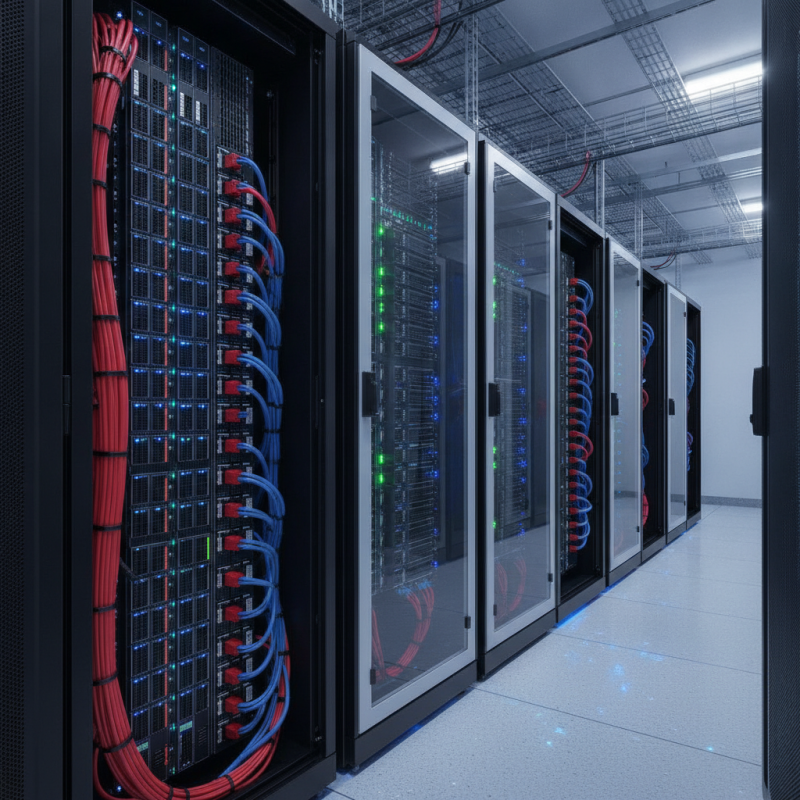
Power Distribution Units (PDUs) are critical components in data centre infrastructure. They manage the distribution of electrical power to servers and networking equipment. PDUs ensure that these devices receive adequate power for optimal performance and reliability. According to a report by the Uptime Institute, 30% of downtime incidents in data centres stem from power-related issues, emphasizing the importance of choosing the right PDUs.
Selecting the appropriate PDU requires understanding different configurations. Basic models offer simple power distribution, while advanced units provide monitoring capabilities. These advanced PDUs track energy usage and alert users to potential problems. Statistics indicate that data centres utilizing smart PDUs can reduce energy costs by 20% or more. However, not every facility requires such elaborate features. Over-specifying can lead to unnecessary expenses and complexity. Understanding your infrastructure needs is key.
Moreover, environmental considerations are shaping PDU design today. With sustainability becoming a priority, many facilities seek energy-efficient PDUs. Research shows that energy-efficient techniques can lower operational costs significantly. Yet, adapting to these technologies often involves initial investment and adjustments. Data centre managers must reflect on their long-term goals versus immediate needs. Balancing efficiency and cost is a complex challenge that many face.
When selecting the right PDU for your data centre, key specifications can greatly affect performance. Understand the power requirements of your equipment. Look for a unit that supports your maximum load capacity. Pay attention to the input voltage, as it should match your existing infrastructure. Compatibility is crucial.
Consider the number and type of outlets. You may need C13, C19, or others, depending on your devices. Ensure the layout allows for ease of cable management. Effective organization can prevent overheating and facilitate maintenance. Remember that space is often limited in data centres.
Monitoring capabilities are vital. Some PDUs offer real-time data on power usage. This feature helps in managing resources effectively. A well-monitored system can alert you to potential issues before they escalate. It's essential to rethink if your current PDU meets these criteria. Are you prepared for future growth? Assessing your needs will guide you to the best choice.
When selecting a Power Distribution Unit (PDU) for your data center, understanding the differences between basic and smart PDUs is crucial. Basic PDUs offer straightforward power distribution. They simply take power from a source and distribute it to multiple devices. While they are cost-effective, they lack advanced features. This simplicity might seem rational, but it can lead to challenges in monitoring energy usage.
Smart PDUs, on the other hand, come with additional functionalities. They often include remote management capabilities, allowing real-time monitoring. This can be essential for optimizing energy efficiency and uptime. Users can observe loads and receive alerts, which helps in preventing outages. However, the complexity of smart PDUs can be daunting for some. They require technical knowledge to configure correctly, and misconfigurations can lead to inefficiencies.
Understanding your data center’s needs is vital. If you manage a small facility, a basic PDU might suffice. But for larger operations, smart PDUs provide necessary insights. However, investing in smart PDUs without proper training can be a misstep. Balancing budget constraints with functionality is often a reflective process. Every decision should weigh the potential for growth and future technology needs. Proper planning is critical, as the right choice can enhance overall performance.
When evaluating power capacity and load requirements for Power Distribution Units (PDUs), understanding your specific needs is crucial. Start by assessing the total wattage needed for your equipment. Each server or device has a distinct power consumption. By adding these figures, you can determine the minimum capacity your PDU must support.
Consider the peak load as well. It’s not uncommon for devices to draw more power during startup or peak operational moments. Keep in mind that PDUs have a maximum load capacity. Choosing a unit that exceeds your peak requirements by 15-20% is a sound approach. This buffer accounts for future expansions too.
You must also think about the type of PDU that fits best. They can vary significantly in functionality and design. Some units offer advanced monitoring features, while others focus on simplicity. Reflecting on the specific environment is important. If your data center requires frequent adjustments, a managed PDU might be the right choice. Balancing these factors can be challenging, but it's vital for ensuring reliable power distribution in your setup.
When selecting a power distribution unit (PDU) for a data centre, monitoring and management capabilities are crucial. These features enhance operational efficiency and minimize downtime. A study by the Uptime Institute indicates that improper power management can lead to a 30% increase in unplanned outages.
Effective PDUs provide real-time monitoring of power usage. This feature allows data centre operators to identify potential overloads before they happen. According to IEEE, 70% of data centre professionals see value in detailed power analytics. They depend on insights gathered from their PDUs to optimize energy consumption and improve reliability.
Remote management capabilities are another key aspect. These features facilitate troubleshooting and adjustments from anywhere. A report by Gartner revealed that 60% of issues could be resolved faster with remote access to PDU controls. However, reliance on these tools also presents a challenge. Data security protocols must be stringent to prevent unauthorized access. Choosing the right PDU is about balancing capabilities with robust security measures.
| PDU Type | Monitoring Features | Management Features | Capacity (kVA) | Form Factor |
|---|---|---|---|---|
| Basic Power Distribution Unit | None | Manual Reset | 10 | Rack-mounted |
| Monitored PDU | Outlet-level monitoring | No Remote Management | 15 | Rack-mounted |
| Smart PDU | Power usage tracking | Remote management via network | 20 | Rack-mounted |
| Digital PDU | Real-time monitoring | Programmable Outlet Control | 25 | Blade-style |
| Environmental PDU | Temperature and Humidity monitoring | Alerts and Notifications via email | 30 | Rack-mounted |