
Financing

If you are interested in financing to fund your Bay-Lynx purchase, we recommend that you connect with Easylease Corp., a Canadian-based leasing and finance company that offers premier equipment leasing and financial services. They are focused on making it easier than ever before for companies to overcome cash flow and resource constraints to acquire the assets they need to grow their business.

Leasing through Easylease Corp. can offer several benefits:

  • Conserve Cash Leasing
  • 100% Financing
  • No Pre-Payment of Taxes
  • Preserve Lines of Credit
  • Potential Income Tax Benefits
  • Pay as You Profit
  • Match Revenue with Expenditures
  • Simple, Convenient Process
  • Tailored Payments

Click here for your Canadian instant lease quote >>

For US customers, Click here for your instant lease application >>

Top 10 Tips for Choosing Large Format UV Roll to Roll Printers?

In the world of printing, choosing the right equipment can be daunting. "Large Format UV Roll to Roll Printers" are crucial for businesses that demand high-quality prints. According to industry expert John Smith, "The right printer can elevate your work and enhance your brand." This highlights the importance of making an informed choice.

When selecting a large format printer, several factors come into play. Your needs, budget, and the types of materials you plan to work with will guide your decision. Exploring options allows you to find a model that perfectly suits your requirements. Quality and reliability must also be considered. Many printers may appear similar at a glance, yet their performance varies significantly.

Investing in a printer without thorough research can lead to regret. It's essential to consult with manufacturers and users. They can provide insights into durability and performance over time. Remember, a printer is not just an expense; it’s an investment in your business's future. Make sure to choose wisely.
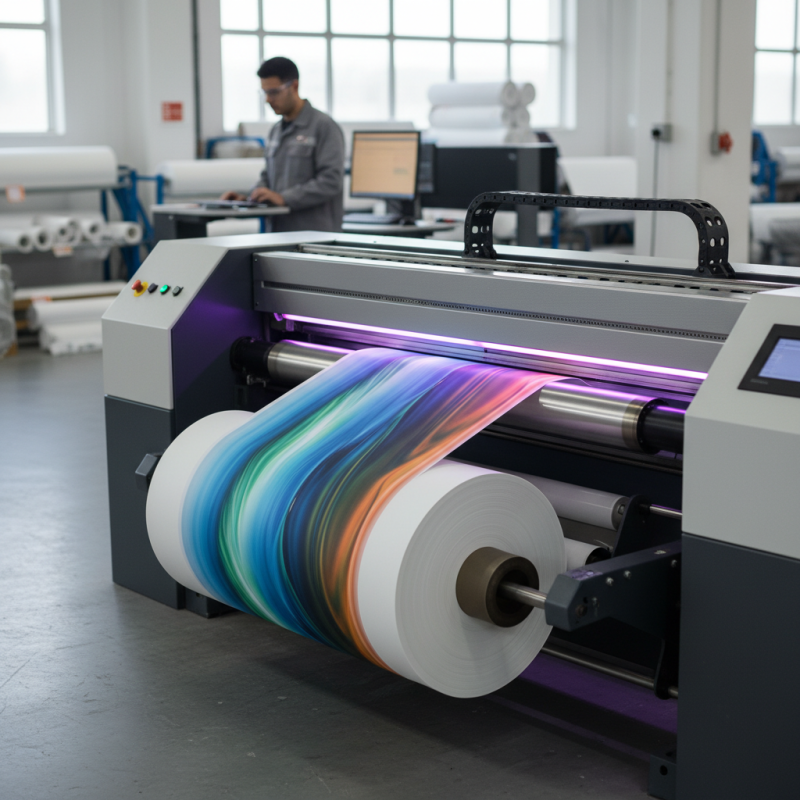
Top 10 Tips for Choosing Large Format UV Roll to Roll Printers?

Key Considerations for Print Quality in UV Roll to Roll Printers

When selecting a UV roll to roll printer, print quality should top your list of priorities. High-quality prints are essential for vibrant colors and sharp details. Consider the printer’s resolution, measured in DPI (dots per inch). A higher DPI typically results in finer images. However, high DPI settings can slow production speeds. Balancing speed and quality is crucial.

Another key aspect is the ink type used in these printers. UV inks cure quickly and provide excellent adhesion to various substrates. They also produce vivid colors and ensure durability. However, some inks can appear glossy, which may not suit all projects. Test samples on different materials to see how the finished prints feel and look.

Monitor color reproduction by evaluating the printer’s color gamut. A wide color gamut can capture a broader spectrum of colors, leading to more accurate and vibrant images. Look for printers that offer color management tools. These tools help ensure consistency across different prints. Finding the right printer involves weighing many factors, including how you assess these details. Don’t rush this process; print quality impacts your final product significantly.

Evaluating Speed and Productivity Metrics in Large Format Printing

When evaluating speed in large format UV roll to roll printers, start by analyzing the machine's output rate. This metric usually measures square feet per hour. A printer that can output a high volume quickly is crucial for maintaining productivity. However, speed should not compromise print quality. It's essential to strike a balance between these two factors. If a printer is too fast, it may lead to defects and lower resolution.

Consider the ink curing process as well. UV printers often use a curing mechanism that directly impacts production efficiency. A printer that cures ink instantly enables faster operation. However, this rapid process may sometimes create issues like ink adhesion. Investigating these effects can guide you in making informed choices.

User experiences are invaluable in this context. Reviews and case studies can illustrate the real-world implications of different speeds and productivity metrics. Always look for feedback on machine performance over time. A reliable printer may have an initial high output but later struggle with maintenance issues. This firsthand knowledge can help navigate the complexities of selecting the right equipment for your specific needs.

Understanding Ink Types and Their Impact on Large Format Output

Choosing the right ink type for large format UV roll to roll printers is crucial. The ink not only affects the printing quality but also the durability and vibrancy of the output. According to a report by Smithers Pira, UV inks can provide 50% more color vibrancy compared to traditional inks. This attribute is essential for businesses focusing on high-quality visual impact.

When selecting inks, consider the composition. UV inks typically contain photoinitiators that cure quickly under UV light. This results in faster turnaround times. However, not all UV inks are created equal. Some may lack flexibility, leading to cracking on stretchable materials. An expert from the Printed Electronics Association noted that 30% of users reported issues with ink adhesion on challenging substrates. A mix of experience and technical knowledge is vital in understanding these complex interactions.

Additionally, environmental factors play a role in ink performance. High humidity can impact drying times. Ideally, UV inks should perform consistently in various conditions. Many printers overlook this, leading to inconsistent results. It’s essential to choose inks designed explicitly for shared environments. Balancing quality, durability, and environmental adaptability is key in achieving the best results in large format printing.

Comparison of Ink Types Impact on Large Format UV Printing Quality

Analyzing Cost Efficiency: Initial Investment vs. Long-Term Savings

When choosing large format UV roll to roll printers, cost efficiency is a crucial factor. The initial investment can seem daunting, with prices ranging from $30,000 to $200,000. However, understanding long-term savings can shift this perspective. According to a report by IBISWorld, companies that invest wisely save up to 25% on operational costs over five years.

Maintenance should also be considered. High-quality printers may have a higher upfront cost but lower long-term maintenance expenses. A study by Smithers Pira highlights that well-maintained equipment can last twice as long. This translates to fewer replacements and repairs, enhancing overall efficiency while reducing hidden costs.

Choosing a printer with the right ink technology is essential. Some options are cheaper upfront, but they may use more ink and have higher consumable costs. Businesses must analyze these factors carefully. There can be hidden costs if a cheaper model requires frequent repairs or underperforms. Therefore, assessing all financial aspects holistically is vital before purchasing.

Assessing Hardware Features: Essential Components for Optimal Performance

When choosing large format UV roll to roll printers, hardware features are crucial. You should assess print head technology first. Quality and precision heavily rely on this aspect. Different technologies have unique strengths. Some offer vibrant colors, while others excel in speed. The choice impacts your final product quality.

Next, consider the ink system. UV inks provide durability and quick drying times. However, they can also be more expensive. Evaluate your budget against your production needs. A printer with versatile ink options can optimize your workflows. Pay special attention to the color gamut as well. A broader spectrum enhances design capabilities.

You might also want to look at the media handling system. Efficient feeding mechanisms minimize jams and misprints. Explore the maximum media width as well. Larger rolls can save time, but they may require more space. Performance can vary based on the environment too. Ensure your workspace supports optimal heating and ventilation for the printer.