
If you are interested in financing to fund your Bay-Lynx purchase, we recommend that you connect with Easylease Corp., a Canadian-based leasing and finance company that offers premier equipment leasing and financial services. They are focused on making it easier than ever before for companies to overcome cash flow and resource constraints to acquire the assets they need to grow their business.
Leasing through Easylease Corp. can offer several benefits:
Click here for your Canadian instant lease quote >>
For US customers, Click here for your instant lease application >>
Global construction is becoming more industrialized, but purchasing decisions remain surprisingly uneven. The Global Precast Concrete Market Report by Grand View Research estimated the market at approximately USD 144 billion in 2023. It also expects continued growth through 2030. That expansion creates demand for reliable Shuttering Magnet systems. Yet market growth does not guarantee good buying decisions.
A magnet may look simple on a factory shelf. The real test begins beside a vibrating table, under oily formwork, or during repeated lifting. Concrete specialist Adam Neville offers a useful warning: “The strength of concrete is not a constant.” The same practical idea applies to magnets. Holding performance changes with plate thickness, surface cleanliness, temperature, vibration, and repeated use. Buyers should therefore examine holding force, magnet size, steel quality, release design, corrosion protection, and supplier testing records. Small details matter.
Industry guidance from the Precast/Prestressed Concrete Institute and quality principles in ISO 9001 also support traceable specifications and repeatable inspection. Request test data, not only catalog numbers. Confirm whether the stated force is measured on clean, flat steel. Ask for photographs of internal components. Check the warranty terms. A low price can become expensive when a form shifts and concrete leaks. No checklist is perfect. Suppliers may also present data differently, making comparisons difficult. That weakness deserves attention. This guide examines seven practical Shuttering Magnet buying tips for global buyers, helping teams compare technical performance, production consistency, packaging, communication, and after-sales support with greater confidence.
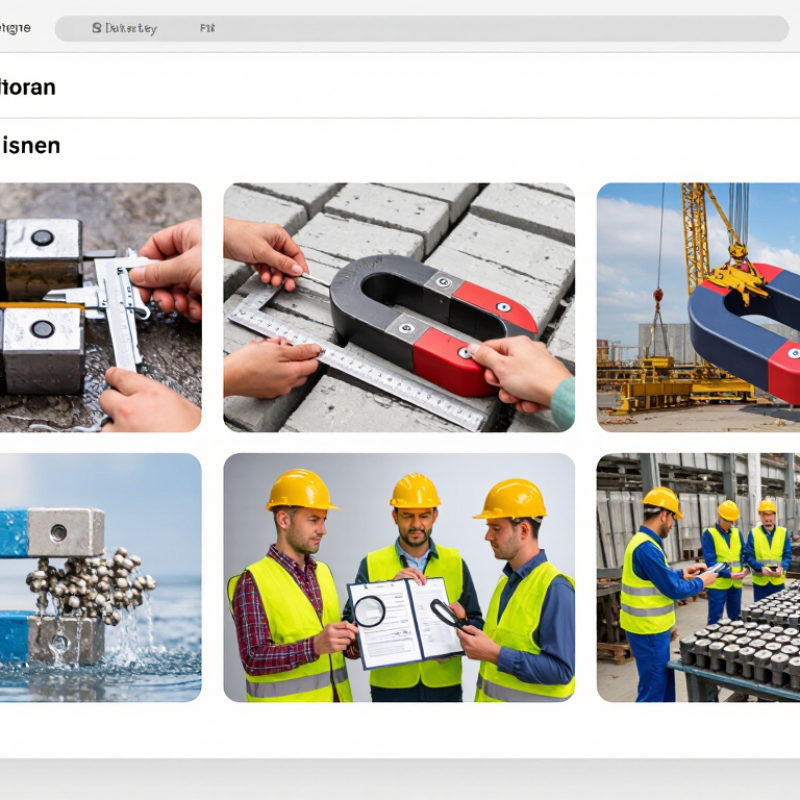
Shuttering magnets hold concrete formwork firmly against a steel casting bed. Their role is practical: they resist movement during concrete placement, vibration, and early curing. They do not replace correct formwork design. A magnet only secures the panel-to-bed connection.
Global buyers should define the required holding force before comparing prices. A small edge panel may need a compact unit, while a long precast wall form needs stronger, evenly distributed support. Check the magnet’s rated force, working temperature, dimensions, and release method. On site, workers often need a handle or lever to remove the unit safely after curing. Small details matter.
Surface condition also affects performance. Dust, rust, and dried concrete can create gaps under the magnet. Those gaps reduce contact and may cause panel movement. I have seen buyers choose the strongest model, yet ignore uneven steel beds. That decision was not entirely wrong, but it missed the real risk. Ask for test data, material specifications, corrosion protection details, and clear installation instructions. Packaging should protect the release mechanism during long-distance transport. Spare parts and replacement availability also deserve attention. A reliable supplier should explain limitations honestly, not promise universal performance.
Shortcuts can become expensive.
Match the magnet type and holding force to your construction needs before comparing prices. In precast production, I have seen strong magnets fail when their contact surface was too small or uneven. Box magnets suit repeated formwork setups, while compact magnets work better around narrow edges and tight corners. Check the steel form thickness, concrete pressure, vibration level, and release method. A magnet rated for light panels may shift during vibration. That mistake can damage alignment.
Tip 1: Measure the actual formwork surface, not only the drawing. Tip 2: Choose holding force with a safety margin. Tip 3: Confirm whether the magnet uses a protected switching mechanism. Tip 4: Check resistance to cement dust, moisture, and impact. Small details matter.
Tip 5: Test the magnet on your own steel before ordering in volume. Tip 6: Ask for force data measured on conditions similar to your site. Published figures can change with air gaps, paint, or rust. Tip 7: Consider removal speed, storage, and operator training. A powerful unit is not always the most practical choice. I once underestimated cleaning time, and the production schedule suffered. That was avoidable. Review the test results with your site team, and record the conditions clearly for future purchases.
Check the magnet’s length, width, height, and recess depth against your formwork drawings.
A few millimeters can affect alignment. Measure twice. Confirm the fixing method, thread size, and access space before ordering. Also compare the stated holding force with your panel weight, vibration level, and concrete pressure. Laboratory pull values may not match a dusty steel table.
Material choice affects service life.
Steel housings handle repeated impacts, while corrosion-resistant alloys suit damp production areas. Ask about the magnet grade, not only the product name. A strong magnet can still fail when its contact face is uneven. Examine the working surface for burrs, dents, or concrete residue. Cleaning tools should not scratch it.
Coatings deserve practical attention.
Zinc, paint, or another protective layer may resist moisture, but each coating has limits. Check adhesion, thickness, and compatibility with release agents. Operating conditions matter just as much: record temperature, humidity, vibration, storage time, and cleaning chemicals. Some magnets lose performance when overheated. Others collect debris around the switch.
I once treated a “weatherproof” coating as permanent protection; it was not.
Request test data, inspection guidance, and a replacement plan. If the supplier cannot explain expected performance after repeated cycles, pause before buying.
7 Shuttering Magnet Buying Tips for Global Buyers
A reliable shuttering magnet starts with measurable quality, not a polished brochure. Ask for pull-force reports, coating thickness, corrosion testing, and batch traceability. Test samples on your own steel formwork, because laboratory strength can differ from site performance. The ISO Survey 2023 recorded over 1.26 million ISO 9001 certificates worldwide. Yet certification alone cannot prove magnet durability. Request the certificate number, issuing body, scope, and recent audit evidence.
Compare pricing through total landed cost. Include tooling, minimum order quantity, packaging, inspection, freight, duties, and replacement risk. The cheapest quotation may become expensive after weak magnets create panel movement or rework. Require a written specification for magnet size, holding force, operating temperature, and warranty terms. I would also compare at least three suppliers. But price comparisons remain imperfect when test methods differ.
Delivery needs equal attention. The World Bank’s Logistics Performance Index 2023 evaluates customs, infrastructure, shipment tracking, and timeliness. Ask suppliers to provide production lead time, dispatch time, port options, and contingency plans. Confirm Incoterms and document responsibilities before payment. Use protective packaging with clear carton labels and moisture control. Small details matter. A pilot order can reveal inconsistent batches, unclear documents, or unrealistic schedules before a large project is exposed.
This practical procurement framework ranks the key factors buyers should review before purchasing shuttering magnets. Product performance, supplier quality, certifications, total cost, and delivery reliability should be evaluated together rather than by unit price alone.
Global buyers should treat shuttering magnets as load-bearing production tools, not simple accessories. Grand View Research valued the global precast concrete market at about USD 144.6 billion in 2023, with continued growth forecast through 2030. Higher output makes verification more important. Request batch-specific test records, not only a catalogue force rating. Reports should identify pull-force testing, test equipment, air gaps, steel thickness, and temperature. A magnet that performs well on a clean plate may lose grip against concrete dust or uneven steel.
Warranty language needs equal attention. Check coverage periods, exclusions, corrosion conditions, repair procedures, and response times. ISO’s 2023 Survey recorded more than 1.26 million ISO 9001 certificates worldwide, but certification alone does not prove magnet quality. Ask whether the supplier controls complaints, corrective actions, and replacement parts through a documented system. Real support is measurable. Can they supply switches, housings, and technical advice after several years?
Maintenance instructions should specify cleaning frequency, storage humidity, inspection points, and safe release procedures. In busy yards, operators should examine locking mechanisms every shift and record damaged surfaces or reduced holding performance. Keep a simple log. It often reveals gradual failure before production stops. Still, a monthly inspection may be insufficient in abrasive environments; this is where many purchasing plans are too optimistic. Independent testing, clear warranty terms, and accessible long-term support reduce uncertainty more effectively than a low initial price.
| Buying Tip | What to Verify | Useful Technical Benchmark | Recommended Test or Document | Why It Matters for Global Buyers |
|---|---|---|---|---|
| 1. Confirm the required holding force | Check the rated pull force, contact area, magnet arrangement, and whether the rating applies to a clean, flat steel plate. | Common shuttering-magnet assemblies are often specified from approximately 900 kgf to 2,100 kgf, depending on size and configuration. Treat the published value as a laboratory reference, not an automatic site guarantee. | Request a signed force-test report showing test method, steel plate thickness, contact condition, measuring equipment, and actual results for the supplied batch. | Prevents under-specification, mold movement, concrete leakage, and costly rework when the magnet is used with different formwork systems. |
| 2. Verify testing and batch consistency | Confirm that testing covers magnetic force, dimensions, switch operation, weld quality, and coating condition. | A practical incoming-inspection plan can sample at least 1% of a large batch, with a minimum of 3 units, while critical projects may require 100% functional inspection. | Ask for a certificate of conformity, inspection checklist, serial or batch traceability, and calibration records for force-measuring instruments. | Reduces the risk of receiving mixed specifications or inconsistent performance across shipments and production lots. |
| 3. Examine corrosion protection | Review the steel housing, exposed fasteners, welds, switch components, and surface-treatment process. | For zinc coatings, thickness is commonly specified in micrometres and should be confirmed against the agreed coating class. Salt-spray results are comparative evidence only and do not exactly predict field life. | Request coating-thickness readings, visual inspection criteria, and a corrosion-test report using a recognized laboratory method such as ISO 9227 or ASTM B117 when applicable. | Important for humid, coastal, winter, or chemically exposed construction sites where corrosion can reduce service life and switch reliability. |
| 4. Read the warranty conditions carefully | Check warranty duration, covered defects, exclusions, claim deadlines, replacement terms, and responsibility for transport costs. | A written warranty of 12 months from shipment or 12 months from commissioning is commonly used in industrial supply contracts; the agreed starting point must be stated clearly. | Request the complete warranty document, not only a quotation statement. Confirm treatment of premature loss of force, housing cracks, switch failure, and manufacturing defects. | Avoids disputes caused by unclear warranty start dates, improper-use exclusions, or different interpretations between countries. |
| 5. Plan maintenance and cleaning | Confirm cleaning procedures, storage requirements, switch protection, and inspection frequency. | Inspect the contact face before each use; remove concrete residue, rust, oil, and steel particles. Keep magnets dry and store them away from impact and excessive heat. | Require a multilingual maintenance sheet covering daily cleaning, periodic force checks, damage reporting, and safe handling procedures. | Correct maintenance preserves contact quality, prevents placement errors, and limits downtime caused by avoidable switch or corrosion problems. |
| 6. Check temperature and working conditions | Verify the maximum operating temperature, exposure to vibration, moisture, chemicals, and repeated impact. | Permanent-magnet performance is temperature-dependent. Many standard assemblies are intended for ordinary construction temperatures, while elevated-temperature applications require specific confirmation from the technical supplier. | Request a rated operating-temperature range and written suitability confirmation for outdoor, hot-climate, cold-climate, or steam-curing applications. | Prevents unexpected force reduction, seal deterioration, or housing damage in demanding regional environments. |
| 7. Evaluate long-term technical support | Assess spare-part availability, response time, replacement policy, documentation, and support after the first shipment. | For international projects, define a written response target such as 1 business day for technical acknowledgement and a documented corrective-action plan for nonconforming products. | Include service-level requirements, spare switch or housing availability, installation drawings, troubleshooting guides, and remote or on-site training options in the purchase contract. | Reliable support reduces downtime, simplifies cross-border communication, and protects the total cost of ownership over repeated casting cycles. |
| Buyer checklist: Compare equivalent test conditions, confirm the intended formwork and steel interface, document acceptance criteria before shipment, and obtain operating and maintenance instructions in the project language. | ||||