
If you are interested in financing to fund your Bay-Lynx purchase, we recommend that you connect with Easylease Corp., a Canadian-based leasing and finance company that offers premier equipment leasing and financial services. They are focused on making it easier than ever before for companies to overcome cash flow and resource constraints to acquire the assets they need to grow their business.
Leasing through Easylease Corp. can offer several benefits:
Click here for your Canadian instant lease quote >>
For US customers, Click here for your instant lease application >>
For global buyers, RTO means more than a parcel returning to a warehouse. It can create two delivery charges, customs delays, handling fees, and damaged inventory.
The NRF and Appriss Retail 2024 Consumer Returns in the Retail Industry report estimated $890 billion in U.S. merchandise returns during 2024. It also placed the overall return rate at 16.9% of annual retail sales. These figures do not measure RTO alone. That distinction matters. RTO often begins with failed delivery, incomplete addresses, refused parcels, or unpaid duties.
The cost can become visible quickly. A package leaves Shenzhen, reaches Frankfurt, misses the customer, and travels back. Every scan adds time and handling.
Tobin Moore, CEO of Optoro, has said, “Returns are not a cost center; they are an opportunity.” That view is useful, but incomplete for cross-border shipments. An avoidable RTO is still a preventable expense.
This guide presents seven practical RTO tips for global buyers. They cover address validation, delivery preferences, localized checkout information, carrier selection, duty transparency, shipment tracking, and smarter return routing. Each action can reduce failed deliveries before they become expensive reverse shipments.
Small details matter.
A phone number formatted for Brazil may fail in another system. A vague apartment field can strand a parcel in London. A buyer may also misunderstand who pays import duties.
Data from the International Post Corporation and major carrier performance reports shows that delivery quality depends heavily on accurate address and recipient information. Still, no checklist works perfectly across every market. Buyers should test one region, review failed-delivery reasons, and adjust the process.
Lower RTO costs require disciplined operations, not optimistic assumptions.
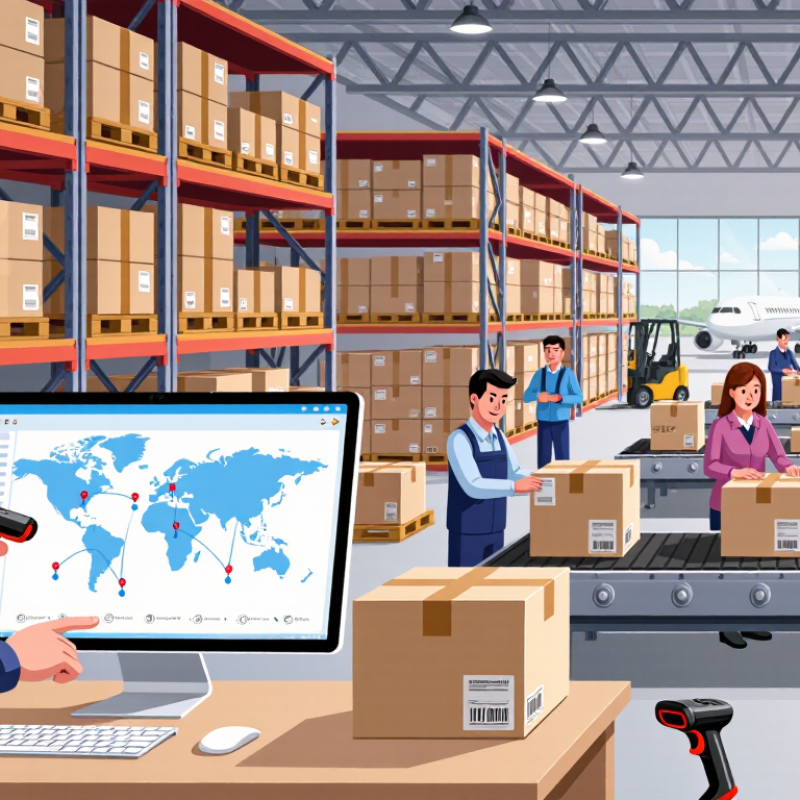
Return to Origin, or RTO, happens when a parcel cannot reach the buyer and travels back to the seller. Common causes include an incomplete address, missed delivery attempts, unpaid import charges, or unclear recipient information. That is RTO.
For global buyers, the expense is rarely limited to the original freight fee. A failed delivery may create outbound shipping, return transportation, warehouse handling, customs processing, and repacking costs. Storage charges can also increase when a parcel waits for instructions. Costs multiply quickly. In some markets, refunds and currency changes add further pressure.
From my experience reviewing international orders, address quality is often the first controllable factor. A missing apartment number can cause a delivery failure within hours. Delivery attempts also matter. Some regions need phone confirmation, local access details, or scheduled delivery windows. Customs data must match the commercial documents, including product descriptions and declared values.
Seasonal peaks make the problem less predictable. Parcels may remain in a depot longer, while support teams handle more complaints. Buyers should measure RTO by destination, product type, carrier handoff, and failure reason. A low average rate can hide serious issues in one country. I have also seen teams blame transportation too quickly. Sometimes the checkout form created the error. Small gaps matter, and the data deserves another review.
7 RTO Tips for Global Buyers to Cut Shipping Costs
Verify Buyer Details Before Dispatch to Prevent Failed Deliveries
Return-to-origin shipping often starts with one small mistake: an incomplete address. The 2023 NRF and Appriss Retail report estimated $743 billion in returned merchandise in the United States. RTO adds another charge before the parcel reaches the customer. Before dispatch, verify the recipient’s full name, country, city, postal code, street, unit number, and reachable phone number. Check whether the postal code matches the city. A simple mismatch can stop delivery.
Use a confirmation message before handing the parcel to the carrier. Ask buyers to review the address, delivery instructions, and preferred contact method. Keep the message short and request clear consent for future updates. Baymard Institute’s 2024 checkout research recorded a 70.19% average cart abandonment rate. Confusing address fields can increase hesitation, especially for cross-border shoppers. Local formatting matters too. Apartment numbers may appear before street names in one market and after them in another.
A practical warehouse check should compare the order record with the shipping label. Flag missing accents, unusual abbreviations, duplicate orders, and rural addresses for manual review. Do not rely only on automated validation. It misses some real-world details. A perfect form does not exist. Buyers may move after ordering, or forget a building code. Send a final confirmation shortly before dispatch, then pause high-risk orders until the buyer responds. This small delay is often cheaper than paying for delivery, return transport, inspection, and reshipment.
Verify buyer details before dispatch to prevent failed deliveries and reduce avoidable return-to-origin costs.
The chart shows typical percentage-point reductions in failed-delivery rates associated with common cross-border dispatch controls. Address validation, buyer confirmation, and complete customs information are especially effective because they prevent incorrect delivery attempts before shipment leaves the origin country.
Return-to-origin costs often begin with an unreliable carrier, not a high freight rate. Choose partners using route-level evidence: on-time delivery, scan completion, damage frequency, and response time after an exception. Ask for performance by destination country, not only global averages. A carrier may perform well on coastal routes but struggle with inland handoffs. The World Bank’s 2023 Logistics Performance Index highlights shipment reliability and tracking as critical logistics capabilities. Cheap transport becomes expensive when customers miss delivery windows.
Route design deserves equal attention. UNCTAD reports that maritime shipping carries over 80% of global merchandise trade by volume. However, the shortest ocean route is not always the cheapest operational route. Compare direct sailings with transshipment options, then check port congestion, seasonal weather, customs processing time, and final-mile capacity. Build a small buffer around holiday peaks. Two extra days may prevent a failed delivery and another outbound parcel. Use regional fulfillment points when order density supports them. Do not split inventory too early.
In practical shipping reviews, teams often overtrust quoted rates. I have seen a lower rate hide expensive residential surcharges, dimensional-weight rules, and return handling fees. Request a landed-cost model before selecting a carrier. Include line-haul charges, fuel adjustments, storage, redelivery, and RTO processing. Track delivery attempts by postcode each month. Then remove weak routes, even when their rate card looks attractive. The World Bank also notes that logistics performance varies widely across economies, so one global routing formula rarely works. Perfect optimization is unrealistic. Regular correction is more useful.
Global buyers can cut RTO costs by making delivery feel visible, flexible, and human. Baymard Institute research places average cart abandonment near 70%, with unexpected costs among major causes. Clear delivery communication matters.
1. Show the estimated arrival date before checkout.
2. Send tracking updates at payment, dispatch, customs, and local handoff.
3. Use plain language when a parcel pauses in transit.
4. Offer pickup points, safe-place delivery, or scheduled redelivery.
5. Confirm the address twice, especially apartment numbers and postal codes.
6. Let customers change delivery preferences before the final-mile attempt.
7. Review failed deliveries by country, carrier, and address type.
Keep messages short. A customer checking a phone at a train station should understand the next step immediately. The National Retail Federation reported that 17.6% of online sales were returned in 2023. Not every return is an RTO, but weak delivery communication can increase both problems.
Use local time zones and multilingual status pages where possible. A customs delay should not appear as “label created” for four days. That wording creates doubt. Operational teams should compare scan accuracy with customer contacts each week. A high scan rate can still hide confusing updates. This is where many programs need honest review.
Do not promise delivery windows that depend on uncertain border clearance. Flexible options usually cost less than repeated door attempts. Yet flexibility can become expensive if every choice is handled manually. Set clear rules, measure RTO by destination, and adjust them when real delivery data disagrees.
For global buyers, return to origin (RTO) is not just a failed delivery. It is a measurable cost signal. Track RTO rates by country, carrier lane, product type, payment method, and delivery attempt. Record outbound freight, return freight, duties, handling, and lost selling time. A parcel returned from Dubai may cost more than its original shipment. Small data gaps matter. Keep them visible.
Review these results every week, not only at month-end. Separate customer refusal from incorrect addresses, missed delivery calls, and unclear import instructions. Compare new customers with repeat buyers. Examine delivery attempts, tracking events, and support messages together. Do not trust one monthly average. A low overall rate can hide serious failures on a single route. We once blamed customers too quickly, and the data showed weak address validation instead.
Refine policies by cause, not guesswork. Add address checks, local-language delivery reminders, and clearer delivery windows where evidence supports them. For high-risk lanes, confirm key details before dispatch. Test one change at a time, then measure RTO, delivery time, customer complaints, and total cost. Avoid policies that punish reliable buyers. Review regional requirements regularly, because a process suitable for one market may create confusion elsewhere. Some experiments will fail. Document why, adjust carefully, and keep the original results for comparison.