If you are interested in financing to fund your Bay-Lynx purchase, we recommend that you connect with Easylease Corp., a Canadian-based leasing and finance company that offers premier equipment leasing and financial services. They are focused on making it easier than ever before for companies to overcome cash flow and resource constraints to acquire the assets they need to grow their business.
Leasing through Easylease Corp. can offer several benefits:
Click here for your Canadian instant lease quote >>
For US customers, Click here for your instant lease application >>
Choosing the right cement machine can shape your plant’s productivity, safety, and long-term costs. It is rarely a simple equipment purchase.
A reliable decision begins with your production target, material quality, site conditions, and available workforce. A small block-making plant needs different equipment from a large precast facility. Consider machine capacity, energy consumption, automation, maintenance access, spare parts, and operator training. A machine producing 40,000 blocks daily may appear attractive, but its output means little if your market cannot absorb it.
As Ian Riley, Chief Executive of the World Cement Association, has stated, “The cement industry has a key role to play in delivering net zero.” That responsibility also affects machine selection. Efficient motors, controlled material dosing, reduced waste, and durable components can lower environmental impact. They can also protect your operating budget.
Experience matters here. Inspect machines in real working conditions, not only in polished demonstrations. Ask to see finished products, maintenance records, and downtime figures. Speak with operators who clean the equipment every day. Their practical comments may reveal more than a sales brochure.
Do not ignore uncomfortable questions. Is local technical support genuinely available? Can your team repair basic faults? Will imported parts arrive quickly? A cheaper cement machine may become expensive after one failed controller or worn mould.
The best choice balances capacity, reliability, product quality, and future growth. It may not be the fastest machine. It should be the one your business can operate consistently, maintain responsibly, and improve over time.
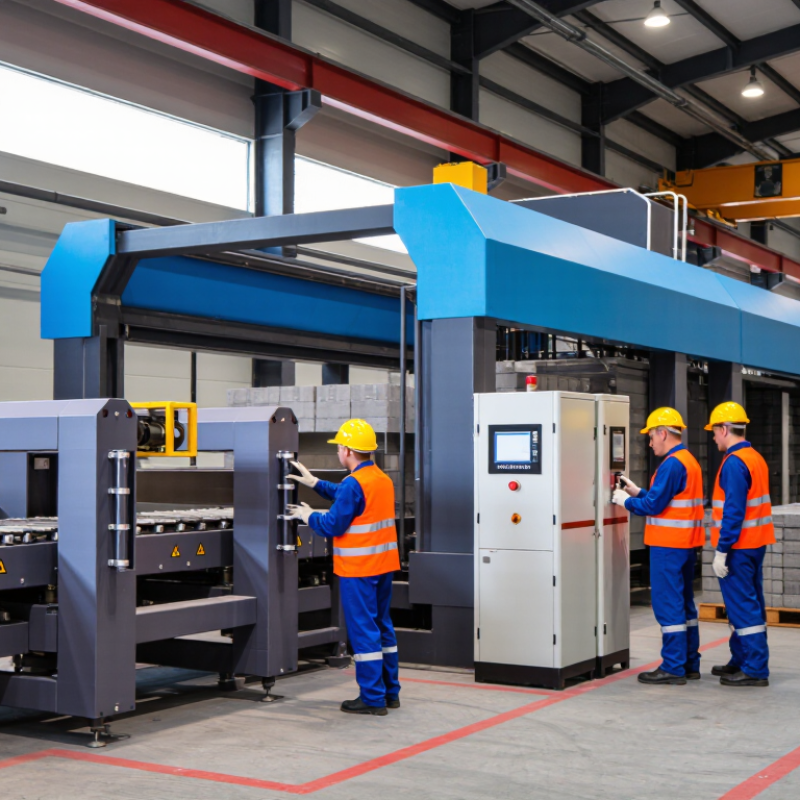
Understanding your cement production needs should come before comparing machine specifications. A small plant serving local construction projects needs different equipment from a facility producing export-grade cement. The U.S. Geological Survey reported global cement production at approximately 4.1 billion metric tons in 2023. That scale hides major differences in capacity, raw materials, and energy access.
Measure your target output by day, not only by annual ambition. Check limestone hardness, clay moisture, particle size, and seasonal supply changes. These details influence crusher capacity, grinding pressure, drying requirements, and storage volume. A plant handling wet raw material may need stronger drying capability. A dry site may prioritize lower power consumption. The International Energy Agency identifies cement as a major industrial carbon source, with process and energy emissions reaching roughly 2.3 gigatonnes of CO2 annually. Efficiency is not a decorative feature.
It affects operating survival.
Review fuel availability, maintenance skills, dust control, and replacement-part access before selecting a cement machine. The Global Cement and Concrete Association has emphasized efficiency, alternative fuels, and emissions reduction across the sector. However, projected savings can look better on paper than beside a dusty workshop. A machine with excellent efficiency may still fail your business if technicians cannot repair it quickly. I have seen planning assumptions become weak when moisture and downtime were ignored. That deserves honest reconsideration. Record real production conditions for several weeks, then match capacity with a practical safety margin. Bigger is not always better.
Compare typical cement production scales with the required machine throughput and specific electricity consumption. Use your target output, available power supply, and operating hours to select the most suitable equipment level.
Values are representative planning benchmarks for dry-process cement production. Actual performance varies with material hardness, moisture, product fineness, equipment configuration, and operating conditions.
How to Choose the Best Cement Machine for Your Business
Comparing Cement Machine Types and Core Functions
Choosing the best cement machine depends on your material, output, and working conditions. A mixer combines cement, water, sand, and aggregate, while a batching plant measures and feeds each ingredient. Drum mixers suit steady, moderate production and simple recipes. Twin-shaft mixers deliver fast, uniform blending for demanding concrete schedules. Planetary mixers offer strong mixing control when products need precise consistency. Control matters.
A batching plant can be stationary or mobile. Stationary systems support large, repeated pours near one site. Mobile units reduce relocation time for changing projects. Block machines shape measured concrete into masonry units, so vibration, mold accuracy, and cycle speed become core functions. Check whether the machine handles your aggregate size without frequent blockages. Small details affect output.
Compare rated capacity with realistic hourly production, not brochure figures alone. An experienced operator should test the discharge gate, emergency stop, and cleaning access. Inspect bearings, seals, and electrical protection before purchase. I have seen strong machines lose efficiency because operators ignored calibration. That mistake is common. No machine is perfect. A cheaper unit may demand more labor, water, and maintenance. Record noise, dust, and mixing time during a live trial. This evidence supports a safer, more reliable decision.
Choosing a cement machine starts with your actual production target, not the largest available model. Measure daily demand, working hours, and seasonal changes. A machine rated for 100 tons per day may produce less in real conditions.
My first capacity estimate was wrong because I ignored loading delays and cleaning time. Leave practical operating space between planned output and rated output. Track batch times for several weeks before making a purchase. Short cycles help, but uneven feeding can reduce consistency. Operators also need enough time to inspect mixers, conveyors, and control systems.
Material selection affects both machine life and product quality. Cement, sand, gravel, and additives vary in moisture, size, and density. Wet sand can distort weighing and increase mixing time. Check whether the machine supports your aggregate sizes and required cement grades. A strong frame is useful, but easy access to wear parts matters just as much. Production efficiency depends on the whole process. Review storage, feeding, mixing, discharge, and maintenance together. A fast mixer cannot fix a slow conveyor. Automated controls may reduce errors, although poorly trained staff can still create waste. Request verified performance data and inspect service procedures before deciding. Measure energy use, rejected batches, downtime, and labor needs during trial production. Small records often reveal expensive weaknesses.
Choosing a cement machine requires more than comparing purchase prices. Energy, maintenance, and daily operating costs shape long-term profitability. Record your expected output, material moisture, and working hours. A machine using 15 kilowatts may cost less than a larger model, yet frequent stoppages can erase that advantage. Ask suppliers for measured energy data under similar loads. Sales estimates are useful, but your own production records are stronger evidence. Keep the test conditions in writing.
Maintenance costs often hide in small details. Inspect access panels, lubrication points, wear parts, and control systems before buying. Can one technician complete routine checks safely? How long does belt or liner replacement usually take? A machine needing specialist service for every adjustment may become expensive in remote facilities. Request a maintenance schedule and spare-parts lead times. Leave room for uncertainty. Dust, poor storage, and irregular cleaning can shorten service life faster than brochures suggest.
Calculate cost per ton, not only hourly electricity or fuel use. Include labor, water, consumables, downtime, repairs, and worn-part disposal. Run a short trial with your actual aggregate and target mix. Measure power draw during startup, steady production, and cleaning. One trial is not enough. Seasonal temperatures and changing feed quality can alter results. Field assessments also show that efficient equipment may perform poorly with limited operator training. Choose clear controls, accessible manuals, and documented safety procedures. Keep monthly records after installation. Your real data should challenge the original forecast.
Choosing a cement machine starts with the supplier, not the brochure. A dependable supplier explains capacity, material flow, energy use, and maintenance access clearly. Ask for drawings, test records, spare-parts lists, and written performance limits. Visit an operating installation if possible. Watch its feed consistency, dust control, noise, and operator access. Real performance matters more than polished claims. Request references from businesses with similar raw materials and production targets. Call them directly. Ask what failed, how quickly support arrived, and which costs were underestimated.
Installation planning should begin before the purchase order. Confirm foundation loads, floor height, drainage, power supply, compressed air, and truck access. The supplier should provide certified layout drawings and a clear installation schedule. Assign one responsible engineer on your side. This prevents decisions from disappearing between contractors. Plan space for inspection doors and safe maintenance routes, not only the machine footprint. Keep extra time for concrete curing and utility testing. Delays here are common. They are also expensive.
I once saw a project accept a low quote without checking commissioning requirements. The machine arrived, but the foundation openings were wrong. Production stopped while concrete was cut and rebuilt. That mistake changed my supplier checklist. Now I require factory acceptance tests, installation supervision, operator training, and documented handover procedures. I also ask about response times after warranty issues. A reliable partner will discuss limitations openly. If every answer sounds perfect, investigate further. Honest uncertainty is often more useful than confident promises.
| Machine Category | Typical Production Capacity | Best-Suited Business | Typical Power Requirement | Space and Foundation Needs | Key Installation Requirements | Supplier Evaluation Criteria | Recommended Selection Scenario |
|---|---|---|---|---|---|---|---|
| Mobile Concrete Batching Plant | Approximately 25–100 m³ of fresh concrete per hour, depending on configuration and material flow. | Road contractors, infrastructure projects, and businesses that move between construction sites. | Commonly about 30–120 kW for the plant and auxiliary systems; the actual requirement depends on conveyors, mixers, and aggregate systems. | Usually requires a compact, level, load-bearing area with prepared access for trucks. Permanent civil works are generally less extensive than for a stationary plant. | Confirm transport dimensions, electrical connection, aggregate loading access, water supply, drainage, and safe truck circulation. | Check relocation procedures, commissioning support, spare-parts availability, control-system documentation, and warranty response time. | Choose when the plant must be relocated or when project duration at one site is limited. |
| Stationary Concrete Batching Plant | Approximately 60–240 m³ of fresh concrete per hour for common commercial and infrastructure configurations. | Ready-mix suppliers, large construction companies, and businesses serving a stable local market. | Often about 75–250 kW, excluding some external equipment such as large loaders or independent dust-control systems. | Needs a permanent, level foundation designed for plant loads, aggregate bins, cement silos, conveyors, and vehicle traffic. | Plan foundations, silo positions, truck access, dust control, drainage, electrical distribution, compressed air, and maintenance clearances. | Request structural drawings, load data, installation scope, performance tests, automation specifications, and a documented maintenance schedule. | Choose when high output, consistent production, and long-term operation are the main priorities. |
| Dry Mortar Mixing Plant | Approximately 10–60 tonnes of dry mortar per hour, depending on mixer size, formula, and packaging system. | Manufacturers of masonry mortar, plaster, tile adhesive, repair mortar, and other dry construction materials. | Commonly about 40–180 kW for conveying, mixing, screening, packing, and dust collection equipment. | Requires a dry, enclosed or weather-protected production area with a stable floor, raw-material storage, and finished-product space. | Provide reliable weighing systems, dust extraction, moisture control, compressed air, packaging access, and cleaning areas. | Evaluate mixing uniformity, dosing accuracy, dust-control performance, recipe management, calibration procedures, and cleaning access. | Choose when the business sells bagged or bulk dry cement-based products rather than ready-mixed concrete. |
| Concrete Block and Paver Machine | Approximately 500–3,000 blocks per hour or about 20–100 m² of paving products per hour, depending on mold and product size. | Precast-product manufacturers, building-material yards, and local businesses producing blocks, pavers, or kerbstones. | Typically about 25–100 kW, excluding curing-room heating or separate material-handling equipment. | Needs a level production floor, mold-change area, curing space, pallet storage, and adequate movement paths for forklifts or carts. | Plan aggregate and cement feeding, vibration control, mold storage, curing conditions, pallet circulation, and finished-product handling. | Check mold durability, vibration consistency, hydraulic-system serviceability, product tolerances, operator training, and replacement-part lead times. | Choose when the revenue model is based on standardized precast products rather than liquid concrete delivery. |
| Cement Silo and Screw Conveyor System | Common silo storage sizes range from approximately 30–300 tonnes; screw conveyors are often selected for roughly 5–60 tonnes per hour. | Concrete batching plants, dry mortar facilities, precast plants, and bulk cement storage operations. | Usually about 5–30 kW for screw conveyors, filters, level indicators, and discharge equipment; the total depends on the number of silos. | Requires a reinforced foundation, safe vertical clearance, delivery-truck access, inspection space, and protection from water ingress. | Include pressure-relief protection, level sensors, dust filters, grounding, access ladders, inspection platforms, and controlled discharge. | Verify silo plate thickness, welding quality, corrosion protection, filter performance, safety devices, documentation, and local compliance requirements. | Choose when reliable bulk-cement storage and controlled feeding are essential to plant productivity. |
| Small Cement Mixer or Pan Mixer | Approximately 0.1–1.5 m³ per batch, with output determined by batch size, mixing cycle, loading method, and operator workflow. | Small contractors, repair teams, rural projects, and businesses with intermittent or low-volume production. | Often about 3–30 kW for electric models; diesel-powered versions may be used where grid power is unavailable. | Requires a firm, level working surface, material staging area, water access, and safe discharge clearance. | Provide suitable power or fuel storage, guarded moving parts, water measurement, washout control, and sheltered storage when necessary. | Check drum or pan wear resistance, gearbox protection, emergency stops, cleaning access, operator guidance, and local service support. | Choose when capital budget, mobility, and simple operation are more important than continuous high output. |