10 Helpful Tips for Choosing a Mobile Concrete Mixer Truck
In today's construction landscape, the demand for a mobile concrete mixer truck has surged. A report by Mordor Intelligence shows that the global concrete mixer market is projected to reach USD 12 billion by 2026, with a significant shift towards mobile solutions. This growth reflects the increasing need for flexibility and efficiency on construction sites.
Choosing the right mobile concrete mixer truck can be a daunting task. Factors such as capacity, durability, and ease of operation must be considered. According to a study by Research and Markets, 65% of construction companies report that investing in mobile mixers has improved their project timelines and overall productivity. The wrong choice can lead to operational delays and increased costs.
Investing time in careful selection is crucial. Many buyers overlook key features, such as maintenance requirements and technology integration. Reports indicate that 30% of operators encounter issues due to inadequate research before purchase. Understanding these aspects can greatly enhance operational reliability and project success.

Factors to Consider When Selecting a Mobile Concrete Mixer Truck
Choosing a mobile concrete mixer truck requires careful consideration of several important factors. First, assess the truck's capacity. The capacity determines how much concrete you can mix and transport at once. Trucks typically range from small units to larger, industrial models. Your project scale plays a significant role in this decision. If you choose a truck that's too small, you may face delays and inefficiencies.
Next, consider the mixing technology employed in the truck. Different mixers offer unique features. Some provide continuous mixing while others may mix batch by batch. A truck with advanced mixing technology can enhance consistency and quality in your concrete. However, this can also come with a higher price tag. Weigh the benefits against your budget.
Also, don't overlook the importance of maintenance and service support. Trucks require regular upkeep to ensure they operate efficiently. Check what kind of after-sales support is available before making a decision. A reliable maintenance plan is crucial for minimizing downtime. While it’s tempting to go for the cheapest option, investing in quality and support can save money in the long run.
Your choice impacts not just current projects but future ones too. Reflect on these factors carefully before making your selection.
Understanding Different Types of Mobile Concrete Mixer Trucks
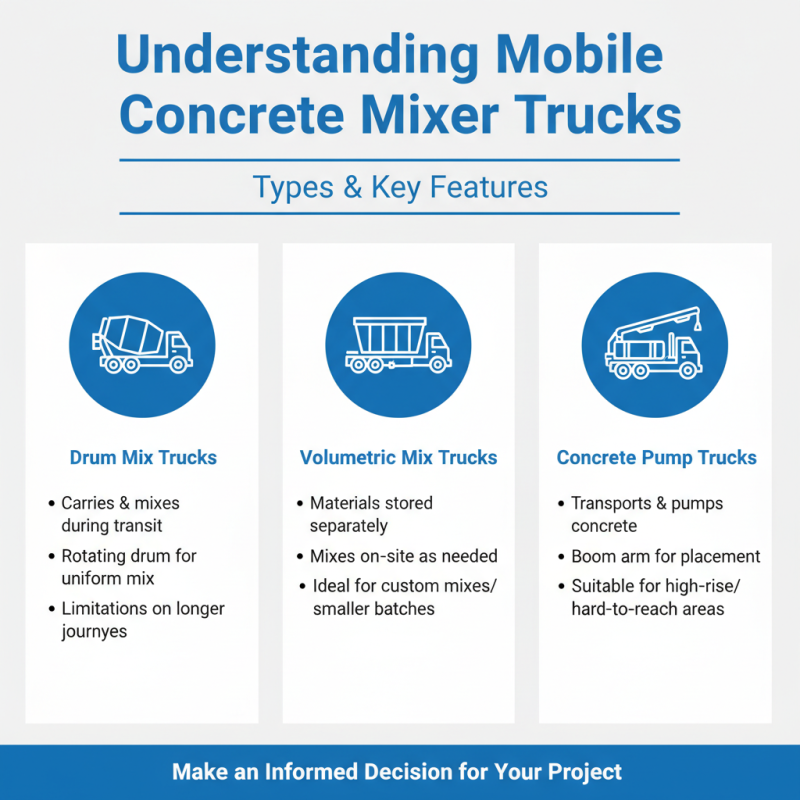
Mobile concrete mixer trucks come in various types, each designed for specific tasks. Understanding these different categories can help you make an informed decision. There are drum mix trucks, which carry and mix concrete during transit. Their rotating drum allows for uniform mixing but may have limitations on longer journeys.
Another type is the volumetric mixer truck. This mixer allows you to control the exact amount of concrete produced. You can switch between different concrete mixes quickly. This flexibility is particularly useful for personalized projects. It gives more control compared to traditional methods but requires skilled operators to ensure quality.
When evaluating options, consider your project needs. Think about site accessibility and truck size. The weight of the load also matters, as larger trucks can affect transportation logistics. Reflect on maintenance requirements as well. Some types may need more frequent servicing, impacting long-term costs. Choosing the right mixer isn't just about features; it's about aligning those features with your operational needs.
Evaluating Capacity and Performance Requirements for Your Projects
When evaluating capacity and performance requirements for mobile concrete mixer trucks, consider the scale of your project. It’s essential to match the truck’s capacity to the volume of concrete you will need. A small project may only require a mixer with a capacity of 3-4 cubic yards. However, larger construction sites could need mixers capable of handling 10 cubic yards or more. Assessing your project’s size and expected output is crucial for efficiency.
Tip: Always check the engine power. A robust engine ensures better performance, especially on uneven terrain. You might think you can compromise, but engine failure can delay your project significantly.
Evaluate performance metrics carefully. Look into the mixer’s rotation speed and mixing efficiency. These factors play a vital role in achieving a uniform blend. For example, a truck with a high mixing speed can save you both time and labor costs.
Tip: Review customer feedback regarding reliability. It’s insightful to know how a mixer performs in real-world conditions. Poor performance can lead to frustration and increased expenses, something all project managers want to avoid. Balancing these elements ensures the right choice for effective and efficient operations.
10 Helpful Tips for Choosing a Mobile Concrete Mixer Truck
| Tip |
Description |
Capacity (Cubic Yards) |
Performance Features |
| 1 |
Assess the volume of concrete needed for your project. |
3 - 12 |
High discharge rates. |
| 2 |
Consider the mix type and consistency needed. |
3 - 10 |
Adaptable mixing options. |
| 3 |
Evaluate the mobility and maneuverability of the mixer. |
5 - 10 |
Compact design. |
| 4 |
Inspect the ease of operation and controls. |
7 - 15 |
User-friendly interface. |
| 5 |
Check the quality and durability of materials used. |
4 - 8 |
Sturdy construction. |
| 6 |
Look for reliable delivery systems. |
5 - 15 |
Efficient loading and unloading. |
| 7 |
Assess maintenance needs and service availability. |
6 - 12 |
Ease of access for repairs. |
| 8 |
Evaluate pricing and warranty options. |
4 - 11 |
Competitive pricing. |
| 9 |
Check for additional features like automation. |
3 - 10 |
Modern automated systems. |
| 10 |
Seek expert advice or reviews from users. |
5 - 10 |
Quality feedback and ratings. |
Key Features to Look for in a Mobile Concrete Mixer Truck
When selecting a mobile concrete mixer truck, key features can significantly impact efficiency and performance. One critical aspect is the drum capacity. Choosing the right size ensures adequate mixing for your projects. Too small a drum may lead to multiple trips, affecting productivity.
Another important feature is the mixing technology. Look for trucks with advanced mixing systems. These can enhance the quality of concrete, leading to better project outcomes. A truck with a complete hydraulic system makes operations smoother, especially in tough terrains.
User-friendly controls are essential. Operators should easily access and use these controls during operation. Testing the controls before purchase helps identify any difficulties. Ultimately, having a reliable and efficient mobile concrete mixer truck can dramatically influence construction projects.
Key Features to Look for in a Mobile Concrete Mixer Truck
Understanding Budget and Financing Options for Your Mixer Truck
When considering a mobile concrete mixer truck, understanding your budget is crucial. Start by evaluating your financial situation. How much can you afford for an upfront payment? A clear budget will guide your decisions. Financing options can vary widely, so researching terms is essential. Interest rates and loan durations can affect your overall cost significantly. Make a plan and stick to it.
Evaluate the total cost of ownership, not just the purchase price. Maintenance, insurance, and fuel costs add up. A cheaper truck might seem appealing, but hidden costs can catch you off guard. Consider the long-term benefits of investing in a reliable model versus saving initially.
Explore various financing options available. Traditional loans might offer lower rates, but think about leasing, too. Leases can provide lower monthly payments and flexibility. However, they may also lead to higher costs over time. Keep your options open, and consult with financial experts if needed. Don’t hesitate to ask for guidance from those experienced in purchasing equipment. Their insights can help you reflect on your choices and avoid potential pitfalls.