
Financing

If you are interested in financing to fund your Bay-Lynx purchase, we recommend that you connect with Easylease Corp., a Canadian-based leasing and finance company that offers premier equipment leasing and financial services. They are focused on making it easier than ever before for companies to overcome cash flow and resource constraints to acquire the assets they need to grow their business.

Leasing through Easylease Corp. can offer several benefits:

  • Conserve Cash Leasing
  • 100% Financing
  • No Pre-Payment of Taxes
  • Preserve Lines of Credit
  • Potential Income Tax Benefits
  • Pay as You Profit
  • Match Revenue with Expenditures
  • Simple, Convenient Process
  • Tailored Payments

Click here for your Canadian instant lease quote >>

For US customers, Click here for your instant lease application >>

What is a CNC Turning Center and How Does it Work?

In the world of precision machining, understanding the CNC Turning Center is crucial. This advanced machine enhances production efficiency and accuracy. According to John Smith, a leading expert in the field, "The CNC Turning Center is revolutionizing how we approach manufacturing." His insight highlights the machine’s pivotal role in modern operations.

The CNC Turning Center combines high-speed capabilities with intricate control mechanisms. It transforms raw materials into precise components, ideal for various applications. Operators benefit from automated processes, but mastering this technology can be challenging. Mistakes can lead to wasted material and time.

Exploring the CNC Turning Center reveals its complexities. It's not just about programming and operation; it requires a deep understanding of the materials and tools involved. With advancements in technology, one must continuously adapt and learn. Each failure offers valuable lessons, reminding practitioners that perfection is challenging to achieve.
What is a CNC Turning Center and How Does it Work?

What is a CNC Turning Center?

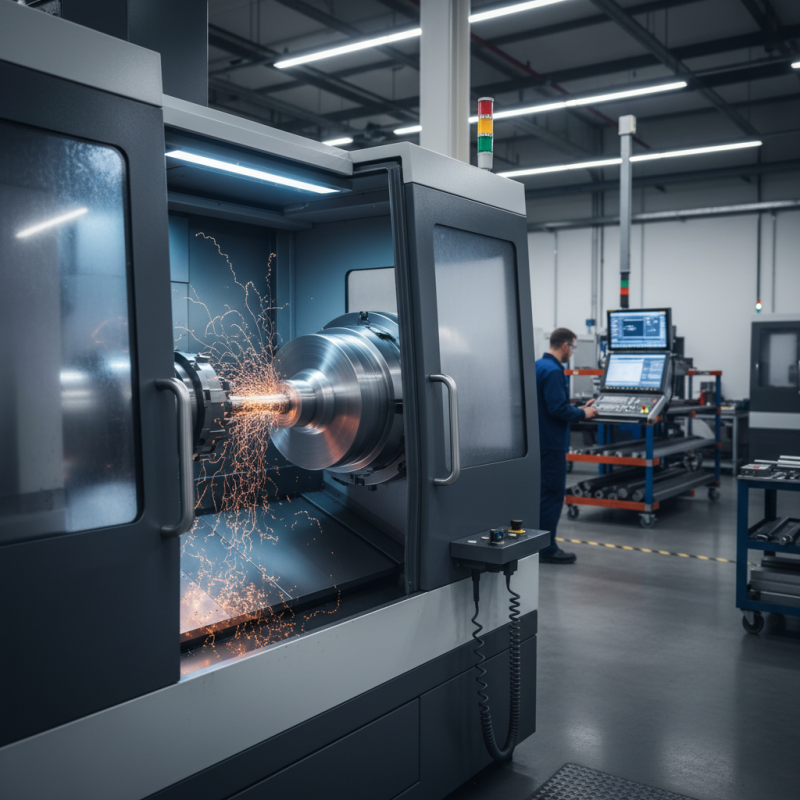
A CNC turning center is a versatile machine tool. It automates the turning process for various materials, mainly metals. These centers are integral in producing complex shapes with precision. According to industry reports, CNC turning centers can achieve tolerances as tight as ±0.001 inches. This capability significantly enhances product quality, reducing the need for manual adjustments.

CNC turning centers operate using Computer Numerical Control technology. This technology allows operators to program designs into the machine. A study by the Association for Manufacturing Technology indicates that CNC operations can increase productivity by up to 30%. Yet, the initial costs and setup time can be daunting for small manufacturers. While the benefits are apparent, transitioning to CNC involves a learning curve that can’t be overlooked.

In terms of applications, CNC turning centers are widely used in aerospace and automotive sectors. They create parts like shafts and fittings with high accuracy. However, some operators may struggle with the complexity of the software. If not programmed correctly, the results can be disappointing. Continuous training and adaptation are essential, making this a field where learning never truly ends.

Components of a CNC Turning Center

A CNC turning center is an essential machine in modern manufacturing. It combines the capabilities of a lathe and a milling machine. This allows for high precision machining of various materials. The main components of a CNC turning center include the spindle, tooling, and control system.

The spindle is the heart of the machine, rotating at high speeds. It holds the workpiece or tool in place. The tooling system can be quite complex. It allows for various tools to be switched efficiently to handle different tasks. The control system uses software to guide the machine’s operations. Operators input designs, and the machine carries them out with great accuracy.

Tips: Regular maintenance of the spindle is crucial. A worn-out spindle can lead to poor machining quality. Keep tools organized to ensure quick changes during operations. Efficiency can drop if everything is in disarray. It’s important to continuously refine techniques to improve productivity. Experiment with different settings to find the optimal performance for various materials.

CNC Turning Center - Component Usage Overview

The CNC Turning Process Explained

CNC turning is a fascinating process. It uses computer-controlled machines to shape materials. The process begins with a solid piece of material, often metal. The material is secured in a chuck and rotated quickly. A cutting tool then moves along the surface. It removes material to create the desired shape.

As the cutting tool works, it creates precise dimensions. This can be a cylinder, a cone, or other complex shapes. Accuracy is crucial. However, challenges exist. Sometimes, the material can vibrate during turning. This might affect the finish. Operators must adjust their techniques accordingly.

CNC turning centers often come with advanced features. Some even allow multiple operations to be done simultaneously. However, the learning curve can be steep. New operators may need time to master the controls. Watching the machine in action is thrilling yet daunting. Each cut requires focus and skill. The beauty of CNC turning lies in the blend of technology and craftsmanship.

Benefits of Using a CNC Turning Center

CNC turning centers offer significant benefits for various manufacturing processes. According to a study by MarketsandMarkets, the CNC machine market is expected to reach $100 billion by 2026, driven by the need for precision and efficiency. These machines enhance productivity through automation, which minimizes human error and increases output rates.

One of the primary advantages of using CNC turning centers is their ability to produce complex shapes with high accuracy. They can operate continuously, reducing downtime. However, the initial investment can be substantial. Small manufacturers may hesitate to adopt this technology. Still, the long-term savings in labor and material costs often justify the expense.

Moreover, CNC turning centers allow for customization. This flexibility meets diverse client demands, increasing customer satisfaction. Nonetheless, operators must be well-trained. A lack of proper understanding can lead to costly mistakes. Overall, the benefits are substantial, but the challenges remind us that proper implementation and training are crucial for success.

Applications of CNC Turning Centers in Various Industries

CNC turning centers are vital in various industries, showcasing their versatility and efficiency. In the automotive sector, these machines produce precision parts like shafts and housings. The global CNC turning center market is expected to reach $7 billion by 2025, indicating strong adoption rates. Aerospace also benefits greatly, where components must meet strict quality standards. CNC turning ensures high accuracy, crucial for safety.

Medical applications utilize CNC turning for producing intricate components, such as surgical instruments and implants. The industry demands precision and reliability, and these machines deliver. Unexpectedly, some manufacturers still struggle with programming complexities, which can lead to inefficiencies.

Tips: When implementing CNC turning centers, invest in employee training. This can boost productivity and reduce errors. Routine maintenance is vital; it can prevent machine breakdowns and prolong lifespan. Understand the specific needs of your industry, as it influences machine selection. Aligning technology with business goals is essential for success.