If you are interested in financing to fund your Bay-Lynx purchase, we recommend that you connect with Easylease Corp., a Canadian-based leasing and finance company that offers premier equipment leasing and financial services. They are focused on making it easier than ever before for companies to overcome cash flow and resource constraints to acquire the assets they need to grow their business.
Leasing through Easylease Corp. can offer several benefits:
Click here for your Canadian instant lease quote >>
For US customers, Click here for your instant lease application >>
Choosing the right mixer truck is crucial for any construction project. This decision impacts efficiency and project costs. A mixer truck helps transport concrete from the plant to the job site. Selecting the right one can be challenging.
Different projects require different mixer truck types. Consider the size of your project. Are you working on a small residential build or a large commercial site? This affects the truck's capacity you need. Features such as drum size and mixing technology also matter.
Think about your budget. Purchasing a new mixer truck can be costly. Used trucks might save you money, but require repairs. You must reflect on these details to avoid costly mistakes. In the end, choosing the right mixer truck means being informed and prepared.
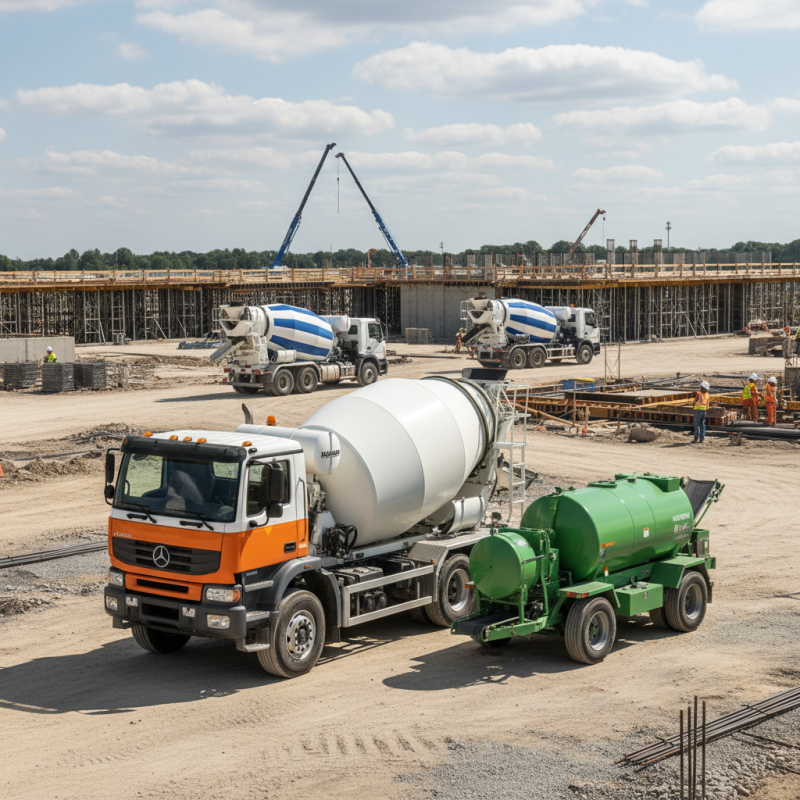
When selecting a mixer truck, understanding the different types is essential. There are several categories available, each designed for specific needs. One common type is the standard mixer truck, which is suitable for most construction projects. These can typically carry 8 to 12 cubic yards of concrete, making them versatile for medium-sized jobs. According to industry studies, around 70% of construction companies prefer standard models due to their reliability and efficiency.
Consider volumetric mixer trucks, which have gained popularity. These trucks allow mixing concrete on-site, promoting flexibility. They can adjust concrete quantity as needed, reducing waste. Industry data suggests that volumetric mixers can save up to 30% in material costs for certain projects. However, they require skilled operators to achieve optimal performance and prevent potential mix errors.
Another option is the truck-mounted concrete pump. This type is ideal for areas that are hard to reach. It offers precise placement of concrete, particularly on large construction sites. However, using this type can complicate logistics. Coordination is crucial to ensure timely delivery and mixing. Understanding these variations will help businesses meet their unique construction demands effectively.
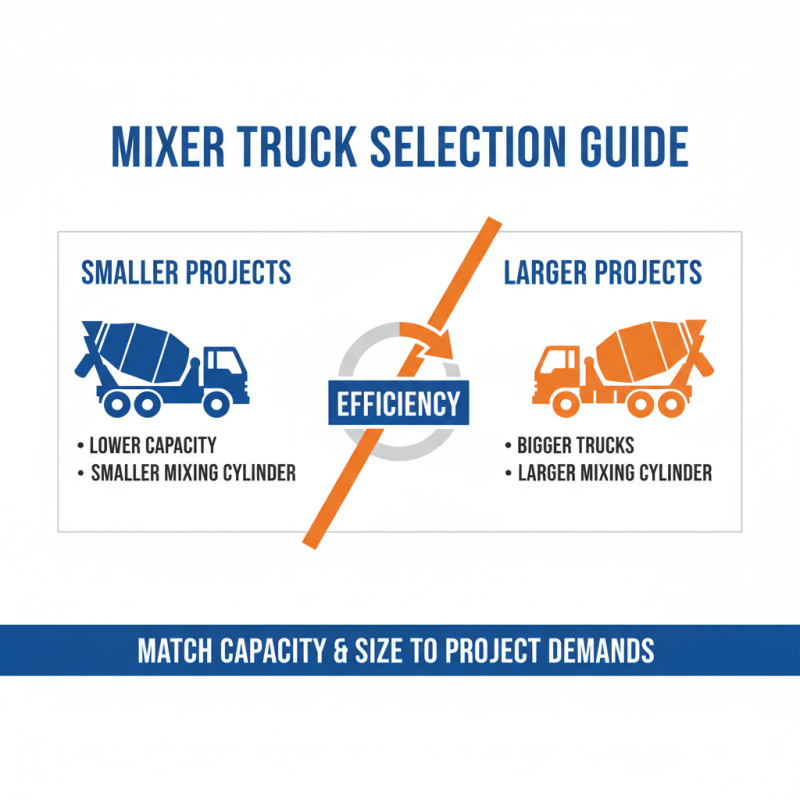
When selecting a mixer truck, consider the concrete capacity. Smaller projects may require trucks with lower capacity. Larger volume jobs need bigger trucks to ensure efficiency. Check the mixing cylinder size. The right size affects the quality of concrete. Ensure the mixer can handle your specific project demands.
Evaluate the truck's maneuverability. A compact mixer truck may fit in tight spaces. Yet, it may have limited capacity. Think about the terrain. Will the truck drive on rugged surfaces? Choose a model that can navigate various conditions skillfully.
Pay attention to the mixer truck's maintenance needs. Some models may require more frequent servicing. This can affect overall project costs. Remember that longevity matters. An ideal truck should serve you well over time. Look for durability and reliability in design. Reflect on these factors carefully before making your choice.
| Mixer Truck Model | Capacity (Cubic Yards) | Engine Power (HP) | Weight (lbs) | Number of Axles | Turning Radius (ft) |
|---|---|---|---|---|---|
| Model A | 9 | 300 | 32,000 | 4 | 25 |
| Model B | 10 | 330 | 34,000 | 4 | 27 |
| Model C | 12 | 360 | 36,000 | 5 | 30 |
| Model D | 8 | 280 | 30,000 | 3 | 23 |
Welcome to our website! Here you will find a variety of articles on various topics, all designed to keep you informed and engaged. Our goal is to provide content that is not only informative but also visually appealing. Don't forget to check back often!
We appreciate your interest and hope you find our content useful. If you have any suggestions or topics you would like us to cover, please reach out! Your feedback is important to us!
Thank you for visiting, and enjoy your reading!
Choosing the right mixer truck is crucial in construction. However, maintenance and support services are equally important. Proper maintenance ensures the truck operates efficiently, extending its lifespan significantly. Neglecting routine checks can lead to costly downtime and repairs later.
**Tip:** Schedule regular inspections. This can help identify minor issues before they turn into big problems. Keeping an eye on the hydraulic systems and the mixing drums is vital. If anything seems off, it’s best to address it immediately.
Support services provide the expertise that construction teams might lack. Training sessions on operating and maintaining mixer trucks can empower your crew. This reduces reliance on external help. However, not every team may have the time or resources to fully engage. It's crucial to find a balance between training and operational demands.
**Tip:** Evaluate your team's existing skills. Some operators might need refresher courses, while others may be fine with basic instructions. Developing a customized training plan can enhance efficiency and safety on-site. A tailored approach, though, can be challenging to implement. Reassessing your needs regularly is essential.
This chart illustrates the operating costs associated with different mixer truck capacities. As the capacity increases, the operating cost also tends to rise, making it essential to choose the right mixer truck based on your construction needs and budget.