
If you are interested in financing to fund your Bay-Lynx purchase, we recommend that you connect with Easylease Corp., a Canadian-based leasing and finance company that offers premier equipment leasing and financial services. They are focused on making it easier than ever before for companies to overcome cash flow and resource constraints to acquire the assets they need to grow their business.
Leasing through Easylease Corp. can offer several benefits:
Click here for your Canadian instant lease quote >>
For US customers, Click here for your instant lease application >>
The supplied material does not identify a verifiable Jacquard machinery expert or provide a quotation. To keep this introduction reliable, I will not invent an expert’s name or attribute words they may never have said. Choosing the right Jacquard Guide Board still begins with practical questions: Which loom will it serve? What yarns and pattern structures must it handle? How often will the board run, and under what production conditions?
A board that looks suitable on paper may behave differently on the loom. Check its dimensions, material, finish, hole or slot layout, and compatibility with the machine’s mounting system. Look closely at the working details: a clean edge, consistent openings, and a secure fit can matter during repeated operation. Ask the supplier for specifications, tolerances, and application guidance, then compare them with your loom’s requirements. Small mismatches can mean extra adjustment. That part is easy to overlook.
This guide explains how to assess those factors, compare options, and spot questions worth asking before purchase. It also considers durability, maintenance, and the support available after delivery. No single Jacquard Guide Board suits every setup. A careful choice starts with the actual loom and workload—not a product description alone.
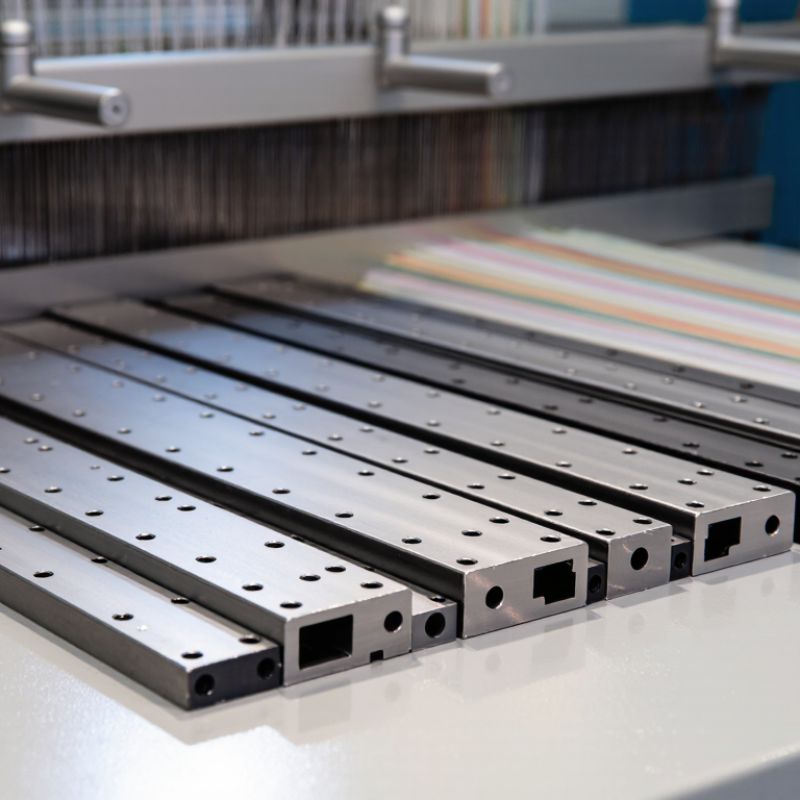
A Jacquard guide board helps control yarn paths as threads move through a textile machine. Its openings guide individual threads and keep them in position during operation. The board’s layout must match the machine setup and the required weave pattern. A mismatch can cause uneven tension, snagging, or unnecessary thread wear. Small details matter.
Construction affects how consistently the board performs. Check the material, thickness, hole spacing, and finish around each opening. Smooth, clean-edged holes help reduce friction; rough edges may catch delicate yarn. The board should also sit securely in its frame without bending under normal working conditions. A tidy appearance alone is not enough. I would compare the actual dimensions with the machine specifications, since small differences can be easy to overlook.
Tips: Measure the board and confirm the hole pattern before ordering. Inspect several openings under good light, especially near the edges. Ask how the material handles regular use and cleaning. Fit is critical, but the best choice still depends on your machine and yarn.
A guide board must match the machine’s mounting points, working width, and yarn path. Check the machine model and configuration against its technical drawing; “similar-looking” boards may have different hole spacing or thickness. Measure the board’s length, width, thickness, mounting-hole centers, and guide-slot pitch with calipers. Also confirm clearance around nearby parts. Small errors matter. A board that sits unevenly can rub yarn or complicate alignment.
ITMF’s 2022 International Textile Machinery Shipment Statistics reported about 82,000 new shuttleless looms shipped worldwide, down 18% from the previous year. This figure describes loom shipments, not guide-board dimensions. It does show why compatibility should be checked against the actual machine, rather than assumed from a broad machine category. For replacement work, compare the old board with the machine drawing, and verify whether modifications have changed the original setup.
Tips: Record every measurement in millimeters, photograph the mounting area, and note the machine’s model and configuration. Check slot count and spacing, not just the outside dimensions. If the old board is worn or bent, use the drawing as the reference; its shape may no longer reflect the required fit. I would recheck the measurements before ordering. One missed detail can mean a second fitting.
A jacquard guide board works under repeated contact, so material choice affects more than purchase cost. Aluminum offers a firm, dimensionally stable base, but exposed edges may wear or mark nearby yarns if finishing is rough. Engineering plastics can resist moisture and reduce weight. Their performance depends on the grade, operating temperature, and contact pressure. Composite boards may balance stiffness and weight, though repairs can be less straightforward. Check the actual machine environment, not just a material’s catalogue description.
Durability also depends on manufacturing precision. Slots, holes, and guide paths should match the machine drawing and maintain consistent spacing across the board. Even a small deviation can cause uneven yarn movement or repeated abrasion. Ask how dimensions are checked, and inspect a sample for burrs, flatness, and clean edges. Small details matter. A smooth surface is useful, but it cannot correct poor alignment. In practice, comparing boards side by side under the same lighting can reveal roughness that a specification sheet misses. That check is helpful, not definitive. Wear also depends on setup and maintenance, so a board that lasts well in one workshop may perform differently elsewhere.
Choosing a jacquard guide board starts with the yarn path, not the machine’s headline speed. Fine filament yarn needs smooth, accurately spaced openings to reduce snagging and uneven tension. Bulkier or textured yarn may need wider guides and more clearance, especially where several ends pass close together. Check the yarn’s thickness, surface, and tendency to fuzz before selecting the opening size.
Fit matters. Board thickness, hole layout, and mounting position must suit the machine and the pattern’s number of yarn ends. A dense design can improve control, but crowding may increase friction or make threading slow. Production volume matters too: longer runs put more importance on wear resistance and easy cleaning, while short runs may benefit from quicker setup.
At higher speeds, small alignment errors can show up as broken ends or inconsistent patterning. Run a sample with the actual yarn, then inspect for abrasion, tension changes, and fuzz around the openings. A specification sheet can miss these details. Sometimes the neatest-looking layout is awkward to thread; that is worth admitting before ordering.
Test it first.
Quality checks should match the board’s actual job on the loom, not just a general product description. Ask for the material grade, thickness tolerance, slot spacing, and flatness limits in writing. These details can affect yarn travel and shed consistency. Inspect a sample under bright side lighting. Look for burrs, rough slot edges, or a slight bow that could catch fine yarn. Small flaws matter. If inspection records are available, compare them with the drawing and your own incoming checks; a certificate alone cannot confirm a perfect fit. Requirements vary by machine and fabric, so one universal standard may not suit your setup.
Customization should start with measured loom dimensions, yarn type, and the pattern’s working width. Share a drawing with clear hole or slot positions, then confirm the measurements before production. It is tempting to request very tight tolerances everywhere, but that can add cost without improving performance. There is a trade-off here. Ask which dimensions affect alignment most. For maintenance, check the board regularly for wear, deformation, and yarn residue. Clean it with a method approved for its material, and avoid harsh solvents unless the supplier confirms they are safe. Store it flat and dry. Keep a simple inspection log; even a few dated notes can reveal wear patterns before they disrupt production.