If you are interested in financing to fund your Bay-Lynx purchase, we recommend that you connect with Easylease Corp., a Canadian-based leasing and finance company that offers premier equipment leasing and financial services. They are focused on making it easier than ever before for companies to overcome cash flow and resource constraints to acquire the assets they need to grow their business.
Leasing through Easylease Corp. can offer several benefits:
Click here for your Canadian instant lease quote >>
For US customers, Click here for your instant lease application >>
The choice of onsite concrete for a construction project is a critical decision that can significantly impact both the quality of the build and the overall project timeline. According to the National Ready Mixed Concrete Association, the U.S. concrete industry provides over 600 million cubic yards of concrete annually, emphasizing the importance of selecting the right type of onsite concrete tailored to specific project needs. With the diverse range of formulations, including standard, high-strength, and specialty concretes, contractors are faced with the challenge of understanding how various properties align with project requirements.
Moreover, a report by MarketsandMarkets estimates that the global concrete market will reach USD 689.9 billion by 2027, driven by the increasing demand for durable and sustainable construction materials. This growth underscores the necessity for construction professionals to be well-informed about the onsite concrete options available, including factors such as mix design, curing time, and environmental considerations. By making informed choices in onsite concrete selection, project managers can enhance structural integrity, optimize cost-efficiency, and contribute to sustainable construction practices.
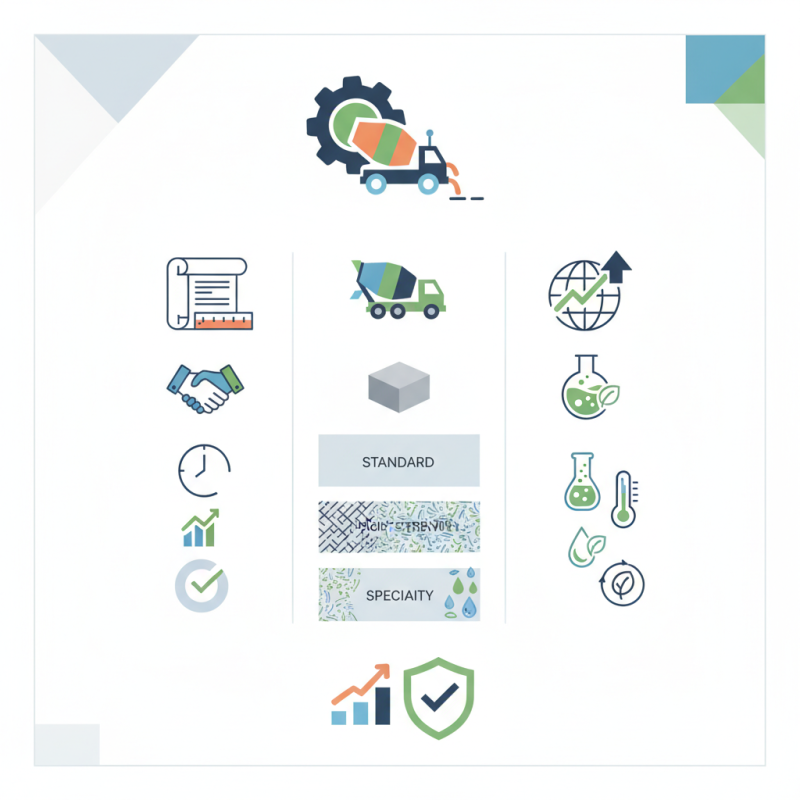
When selecting the best onsite concrete mix for your construction project, it's vital to understand the different types available, as each serves unique purposes and performance characteristics. The most common types include
standard concrete,
high-strength concrete, and
lightweight concrete.
Standard concrete, typically composed of cement, aggregates, and water, is as versatile as it gets, making it suitable for a variety of applications such as foundations and pavements. Its balance of workability and durability makes it a go-to choice for many construction professionals.
High-strength concrete, on the other hand, incorporates specialized materials to achieve enhanced load-bearing capabilities, ideal for structures requiring extra resilience, like skyscrapers and bridges. This type of mix is designed for situations where the compressive strength significantly exceeds that of standard concrete.
Lightweight concrete, which contains expanded aggregates, is another option designed to reduce the weight of a structure while maintaining acceptable strength. This variant is particularly useful in projects where minimizing load on foundations is crucial, such as in high-rise buildings or precast panels. By understanding these mixes and their specific applications, you can make a more informed decision that aligns with the requirements of your construction project.

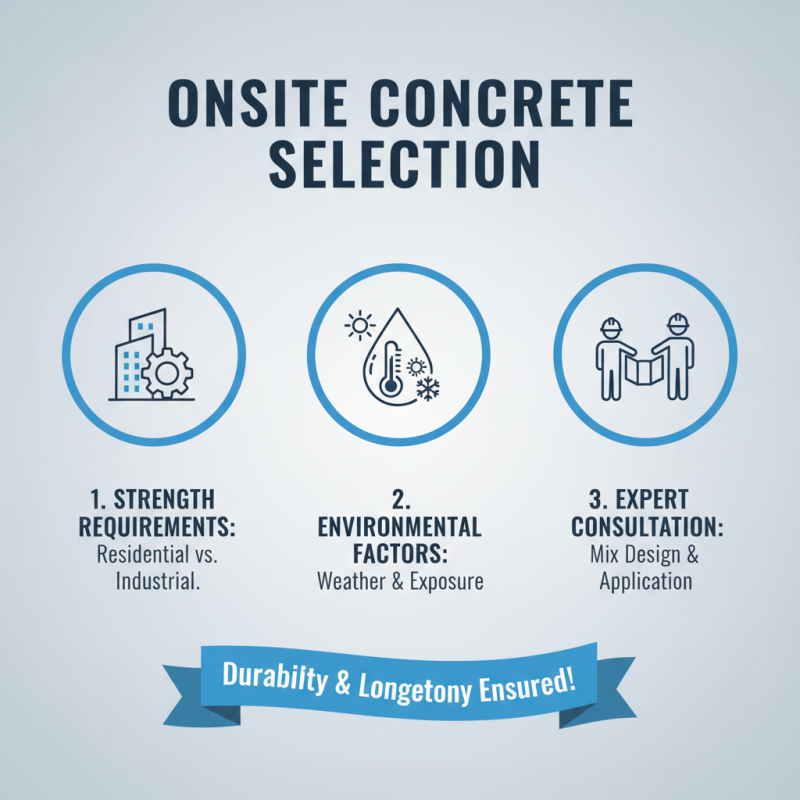
Choosing the right onsite concrete for your construction project is crucial to ensuring the longevity and durability of your structures. Several factors come into play when making this decision. First, consider the strength requirements of your project. Different applications, such as residential buildings or heavy-duty industrial facilities, require different compressive strengths. Assess your project’s needs and consult with a specialist if necessary to determine the appropriate mix.
Another important aspect is the environmental conditions at the construction site. Factors like temperature, humidity, and exposure to elements can affect the curing and performance of concrete. In colder climates, for instance, you may need a mix designed to set and cure faster to avoid complications.
Tips: When selecting onsite concrete, always request samples and conduct tests before committing to a large order. This approach will allow you to evaluate the concrete’s workability and performance under your specific conditions. Additionally, consider establishing a good relationship with your concrete supplier. Open communication can provide valuable insights and help you make informed decisions throughout the project.
When selecting the best onsite concrete for your construction project, it is essential to assess the specific requirements of the project thoroughly. The first step involves understanding the structural needs, which may include load-bearing capacities, environmental conditions, and finish requirements. For instance, heavy structures like bridges will demand high-strength concrete, while decorative applications may prioritize aesthetics and workability. Evaluating these parameters helps determine the ideal concrete mix that complies with the project's engineering specifications.
In addition to structural needs, another crucial factor to consider is the project's timeline and available resources. Onsite operations require a concrete solution that aligns with the construction schedule, so factors like curing times and the availability of materials can influence the choice. Also, it's important to account for the logistics of transporting and mixing concrete at the site, as transport distance and delivery methods can impact both quality and cost. By carefully analyzing these aspects, you can make an informed decision that optimizes efficiency and performance for your onsite concrete selection.
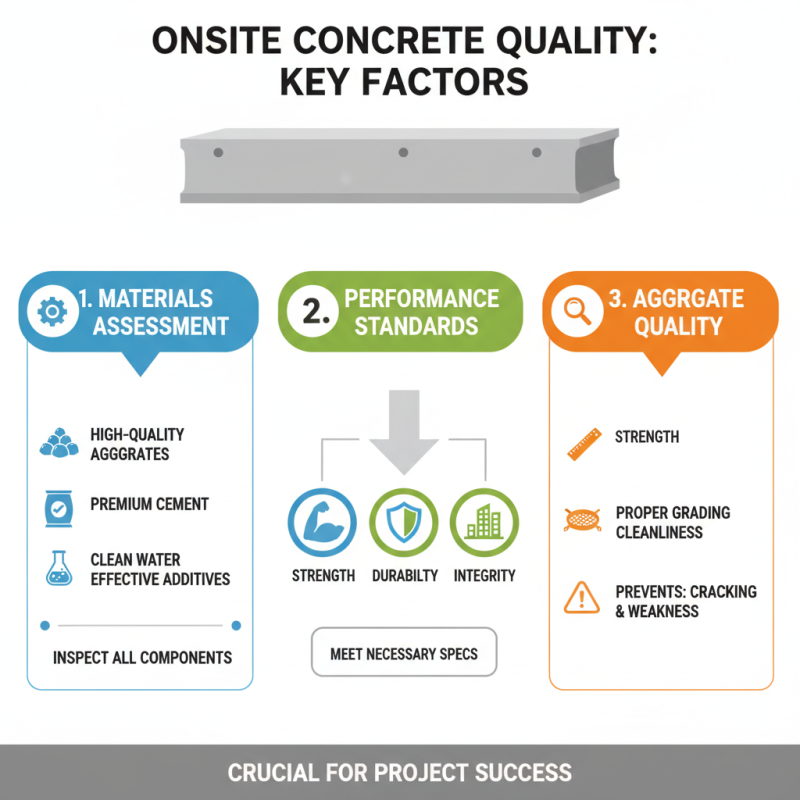
When choosing onsite concrete for construction projects, evaluating quality and performance is crucial. The first step is to assess the materials used in the mix. High-quality aggregates, cement, water, and additives can significantly influence the concrete's strength and durability. Thoroughly inspecting these components ensures that the resulting mix meets the necessary performance standards for structural integrity. Additionally, considering the grading and cleanliness of aggregates can prevent future issues like cracking or compromised strength.
Another essential aspect is the concrete’s workability and setting time. Workability affects how easily the concrete can be mixed, transported, and placed during construction, while the setting time is vital for ensuring that the concrete can be manipulated as needed without compromising its final strength. Employing a slump test can help determine the consistency of the mix, giving a clear indication of how it will perform in a real-world setting. Lastly, understanding the environmental conditions, such as temperature and humidity, during the curing process can help predict the performance and longevity of the onsite concrete, ensuring that it meets the overall objectives of the construction project.
When sourcing and managing onsite concrete for construction projects, understanding the nuances of material selection and supply chain logistics is essential. According to the American Concrete Institute, nearly 75% of all construction defects are related to concrete. This emphasizes the importance of selecting the right type of concrete mix that caters not just to the structural requirements but also environmental conditions and curing methods in place. Contractors should utilize concrete performance data, including compressive strength, setting time, and durability assessments, to determine the most suitable mix for their specific project needs.
Effective management of onsite concrete supply begins with establishing reliable partnerships with local suppliers. Studies indicate that sourcing concrete within a 30-mile radius of the construction site can significantly reduce transportation costs and logistical delays, which often lead to project overruns. Furthermore, effective inventory management through just-in-time delivery systems can help ensure that concrete arrives on schedule, minimizing the risk of waste and optimizing project timelines. Implementing technologies such as concrete tracking software also aids in monitoring the flow and quality of materials, ensuring that the concrete used meets project specifications and safety standards. By adhering to these best practices, construction teams can ensure high-quality outcomes while effectively managing resources.
| Criteria | Description | Importance Level | Best Practices |
|---|---|---|---|
| Mix Design | The specific proportions of materials used in concrete. | High | Consult with a concrete engineer to optimize mix design based on project needs. |
| Strength Requirements | The compressive strength needed for the project. | Critical | Specify required strength to the supplier and test at designated intervals. |
| Delivery Time | The schedule for concrete delivery to the site. | Medium | Coordinate logistics in advance to avoid delays. |
| Quality Control | Measures to ensure concrete quality during mixing and delivery. | High | Implement regular testing of concrete samples at various stages. |
| Local Regulations | Building codes and standards required for onsite concrete. | High | Familiarize with and adhere to local construction requirements. |