
Financing

If you are interested in financing to fund your Bay-Lynx purchase, we recommend that you connect with Easylease Corp., a Canadian-based leasing and finance company that offers premier equipment leasing and financial services. They are focused on making it easier than ever before for companies to overcome cash flow and resource constraints to acquire the assets they need to grow their business.

Leasing through Easylease Corp. can offer several benefits:

  • Conserve Cash Leasing
  • 100% Financing
  • No Pre-Payment of Taxes
  • Preserve Lines of Credit
  • Potential Income Tax Benefits
  • Pay as You Profit
  • Match Revenue with Expenditures
  • Simple, Convenient Process
  • Tailored Payments

Click here for your Canadian instant lease quote >>

For US customers, Click here for your instant lease application >>

How to Choose the Best MCB Insulation Tester?

Choosing the right Mcb Insulation Tester is not a matter of selecting the highest voltage or cheapest instrument. It is a safety decision involving circuit ratings, test conditions, measurement accuracy, and technician experience. A dependable tester should support suitable insulation test voltages, stable readings, automatic discharge, and clear warnings before testing. It should also help users avoid applying test voltage to connected electronics, which may cause costly damage.

Field experience makes the difference. In a distribution board, a tester may be used beside cramped terminals, dusty enclosures, and dim lighting. A bright display, well-insulated leads, a strong case, and a responsive hold function can prevent small mistakes. Check whether the instrument follows relevant safety requirements, such as CAT ratings and applicable IEC test guidance. Calibration records and manufacturer support matter too. Specifications alone are not enough.

Not every feature improves the result. Some testers offer advanced functions that rarely match a technician’s daily work. A better choice begins with the MCB type, expected test range, installation environment, and required documentation. Think carefully. Before comparing models, confirm the circuit is isolated, locked out, and verified dead according to your workplace procedure. Even experienced professionals can overlook a connected control device or misread a fluctuating value. This guide explains how to compare testers realistically, balance accuracy with usability, and choose equipment that supports repeatable, defensible maintenance decisions.
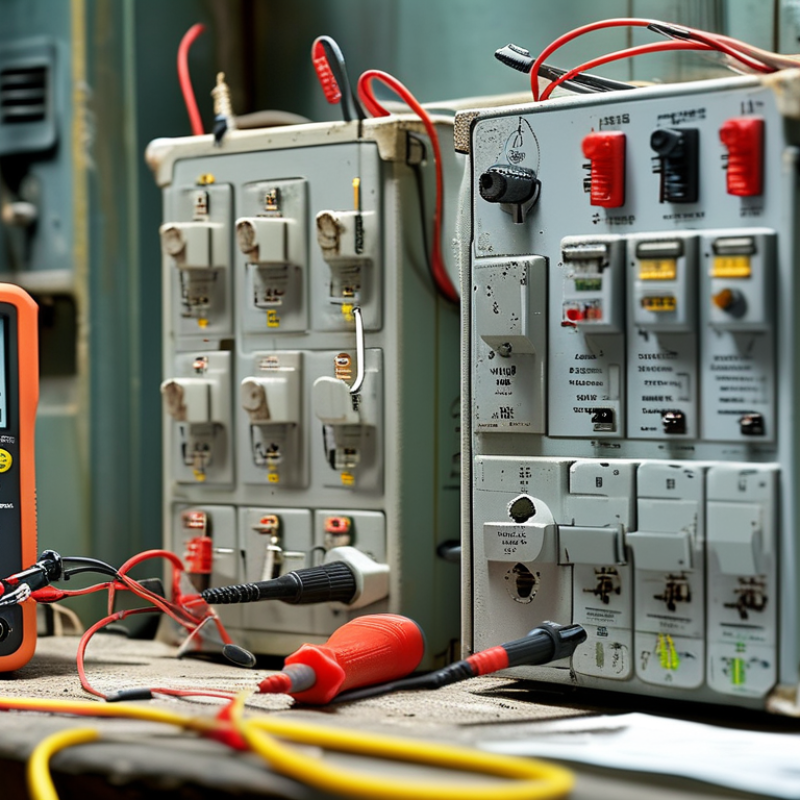
How to Choose the Best MCB Insulation Tester?

Understanding MCB Insulation Testers and Their Core Functions

An MCB insulation tester is designed to reveal leakage paths that normal continuity checks cannot show. It applies a controlled DC test voltage between live conductors and earth, then measures insulation resistance, usually in megohms. A high reading generally indicates better insulation, but the number needs context.

Core functions matter more than appearance. A dependable tester should offer selectable test voltages, automatic discharge, stable measurement, and clear pass-or-fail readings. Some models also store results, which helps technicians compare circuits over time. Before testing, isolate the circuit, verify the absence of voltage, and disconnect sensitive electronic equipment. Even a short test can damage connected devices.

Small details affect accuracy. Moisture inside a distribution board may reduce readings, while a loose probe can create unstable values. Clean contact points and hold the probes firmly. In practical work, repeating a doubtful test is wise. I once trusted a single low reading and later found a damp terminal, not damaged cable insulation. That mistake was avoidable.

A tester should also match the MCB installation and the applicable electrical standard. Read the manual carefully, especially its limits and discharge time. Do not test blindly. Temperature, cable length, and connected loads can influence results, so record these conditions with each measurement. A skilled operator combines the instrument’s data with inspection, circuit history, and sound judgment.

How to Choose the Best MCB Insulation Tester?

Insulation testers should provide the correct DC test voltage and clearly measure insulation resistance. The reference values below are based on commonly used IEC 60364-6 verification levels; always confirm the requirements of the applicable installation standard and equipment manufacturer.

For SELV and PELV circuits, a 250 V DC test with a minimum insulation resistance of 0.5 MΩ is commonly specified. Circuits rated up to 500 V typically use 500 V DC and require at least 1 MΩ, while circuits above 500 V commonly use 1,000 V DC with a minimum of 1 MΩ. A suitable MCB insulation tester should support the required test voltage, provide stable readings, and include safe discharge after testing.

Identifying the Required Testing Standards and Measurement Range

Choosing an MCB insulation tester starts with the required standard, not the product label. IEC 60898-1 covers miniature circuit-breaker performance, while IEC 60364-6 defines verification practices for low-voltage installations. For the measuring instrument itself, look for IEC 61557-2 compliance. This standard addresses insulation resistance testing accuracy, output voltage, and operational safety.

For most circuits rated up to 500 V, IEC 60364-6 commonly requires a 500 V DC test and at least 1 MΩ insulation resistance. SELV and PELV circuits generally require a lower 250 V DC test. Sensitive electronic equipment may also need 250 V, even when the installation voltage is higher. Select a tester with 250 V, 500 V, and preferably 1,000 V ranges. More range is not automatically better. Excessive test voltage can damage connected electronics.

The International Energy Agency’s Electricity 2024 report forecasts average global electricity-demand growth of about 4% annually from 2024 to 2026. That expansion increases the need for repeatable verification during installation, maintenance, and fault investigation. Choose a tester with stable readings, automatic discharge, lead compensation, and clear pass-fail limits. A useful display matters in a crowded distribution board.

Field experience exposes one frequent mistake: testing through connected surge protectors or control devices. The reading may be misleading. I still isolate every circuit and check the wiring diagram first. It takes longer. It prevents expensive errors. Also verify the instrument’s calibration certificate and measurement uncertainty, because a displayed value without traceability is only partly reliable.

How to Choose the Best MCB Insulation Tester? - Identifying the Required Testing Standards and Measurement Range

Selection Dimension Recommended Requirement Typical Application Why It Matters
Primary equipment standard IEC 61557-2, Electrical safety in low-voltage distribution systems: insulation resistance Verification of insulation resistance test instruments used on low-voltage installations Confirms that the tester’s output voltage, measurement accuracy, and safety functions are suitable for insulation testing.
Installation verification standard IEC 60364-6, Low-voltage electrical installations: verification Initial and periodic verification of circuits protected by MCBs Provides guidance on test voltages, test procedures, and minimum insulation-resistance values for electrical installations.
Electrical safety standard IEC 61010-1, Safety requirements for electrical measurement and laboratory equipment Handheld testers used in distribution boards and electrical panels Helps ensure protection against electric shock, hazardous energy, and abnormal operating conditions.
Test voltage: 50 V or 100 V DC Optional low-voltage range, when specified by the equipment or installation procedure Extra-low-voltage control circuits, electronic assemblies, and sensitive devices Reduces the risk of stressing components that may be damaged by standard 250 V, 500 V, or 1,000 V insulation tests.
Test voltage: 250 V DC Include as a minimum practical range for circuits containing sensitive equipment, where permitted by the applicable procedure Control circuits, electronic loads, and installations where connected equipment cannot be disconnected Provides a lower-stress alternative to higher test voltages; the selected voltage must follow the applicable installation standard or manufacturer instructions.
Test voltage: 500 V DC Essential range for most fixed circuits rated up to 500 V Common single-phase and three-phase final circuits protected by MCBs It is the commonly specified insulation-test voltage for low-voltage circuits up to 500 V, subject to local requirements.
Test voltage: 1,000 V DC Useful range for circuits or equipment with higher rated insulation, when specifically required Selected power equipment, feeders, and installations with insulation ratings above standard 500 V circuits Extends testing capability, but applying 1,000 V to ordinary low-voltage electronic equipment may cause damage.
Measurement range At least 0.1 MΩ to 1,000 MΩ; a wider range is beneficial for diagnostic work Routine MCB circuit verification and fault investigation The tester should identify low-resistance leakage as well as high-resistance insulation conditions without displaying only an over-range result.
Minimum acceptance reference Common IEC 60364-6 reference: at least 1 MΩ for circuits up to and including 500 V; 0.5 MΩ may apply to SELV and PELV circuits Interpreting pass/fail results after isolating loads and electronic equipment as required A measured value must be compared with the applicable local code, circuit type, and test procedure rather than a generic tester alarm alone.
Accuracy and resolution Clear specification of measurement accuracy, resolution, and output-voltage tolerance Comparing borderline readings and documenting commissioning results Reliable resolution around the applicable pass/fail threshold improves consistency and reduces interpretation errors.
Auto-discharge function Required safety feature that automatically discharges the circuit after testing Capacitive cables, motor circuits, long cable runs, and distribution boards Helps remove stored electrical energy before the test leads are handled.
Live-circuit detection Visual and audible warning before or during an attempted insulation test MCB panels where circuits may not be fully isolated Reduces the risk of connecting an insulation tester to an energized circuit and protects the instrument.
Overvoltage category CAT III for distribution boards; CAT IV where measurements are made at the origin of the installation, as applicable Commercial, industrial, and residential electrical distribution systems The category rating should match the location and transient-energy exposure of the measurement point.
Test lead and probe design Finger guards, shrouded connectors, durable insulation, and leads rated for the tester’s CAT and voltage level Crowded consumer units, panelboards, and industrial control cabinets Appropriate accessories reduce accidental contact and improve connection reliability during testing.
Data recording Memory, timestamping, USB or wireless export, and report-compatible records where documentation is required Professional commissioning, maintenance, and periodic inspection Stored readings make it easier to trace circuits, compare results, and demonstrate compliance.

Note: Always isolate the circuit, disconnect equipment that may be damaged by DC test voltage, and follow the applicable national regulations, installation standard, and equipment instructions before testing.

Comparing Accuracy, Safety Features, and Test Performance

Accuracy, safety, and test performance should guide the choice of an MCB insulation tester. A reliable instrument must hold its selected test voltage steadily, even when cable capacitance changes. Look for clear resistance resolution, stable readings, and documented calibration. A traceable calibration certificate adds confidence during maintenance records and compliance checks. Small errors matter when insulation resistance is close to the minimum acceptable value.

Safety features deserve equal attention. Select a tester with an appropriate CAT rating for the installation environment. Live-circuit detection can prevent a dangerous test connection, while automatic discharge reduces residual voltage after testing. Guard terminals may also limit surface leakage, especially on dusty panels. Read the manual carefully. A safety symbol alone does not prove practical protection.

Test performance affects daily efficiency. The tester should reach a stable reading quickly without making the operator hold awkward leads for too long. Useful features include timed tests, automatic range selection, backlit displays, and memory for circuit results. In the field, long leads can create unstable readings. Clean the probe tips and repeat the test before blaming the instrument. I have found that a second measurement often reveals poor contact rather than damaged insulation. Battery condition can also distort workflow, although it may not change the displayed resistance immediately. A tester that feels fast is not always more accurate.

Evaluating Portability, Controls, and Data Management Options

How to Choose the Best MCB Insulation Tester?

Portability matters when testing MCBs across crowded distribution boards. Choose a compact tester with a strong grip, clear terminals, and leads that remain flexible. A lightweight housing reduces fatigue during repeated checks. It should also withstand dust, drops, and unstable site conditions. However, smaller instruments often sacrifice display size. That trade-off deserves honest consideration.

Controls should make correct testing almost automatic. Selectable test voltages, a stable hold function, and automatic discharge improve field safety. A backlit display helps inside dim cabinets. IEC 61557-2:2019 specifies requirements for insulation resistance measurement equipment. Therefore, verify the tester’s declared compliance and measurement range. Simple controls win.

Data management is increasingly important. U.S. Bureau of Labor Statistics data recorded 126 fatal occupational injuries involving electricity in 2023. Reliable records can support investigation, maintenance, and training decisions. Look for memory storage, timestamps, circuit identification, operator fields, and clear CSV or PDF exports. ISO 9001:2015, clause 7.5, stresses controlled documented information. Wireless transfer can save time, but weak pairing controls may create confusion. A cable connection is slower. Sometimes, it is safer. Testers should also preserve failed readings, not only successful results. That detail is easy to overlook.

Selecting the Best MCB Insulation Tester for Specific Applications

How to Choose the Best MCB Insulation Tester?

Selecting an MCB insulation tester starts with the application, not the feature list. A residential distribution board may need a compact tester with 250 V and 500 V settings. Industrial control panels often require higher test voltage, stronger leads, and clearer data recording. Not every tester fits.

Before testing, isolate the circuit, verify the absence of voltage, and follow the site procedure. Choose a tester with automatic discharge after measurement. This feature reduces the risk of stored energy remaining in cables or connected equipment. Check the measurement range and accuracy against the expected insulation values. A narrow range can hide useful details.

In dusty workshops, a protected case and firm rotary controls matter more than a bright screen. For maintenance teams, backlit displays, timed tests, and saved readings can improve consistency. Select leads with suitable insulation and clear probe guards. The tester should also carry the correct measurement category for the installation environment. Calibration records support reliable decisions.

I have found that rushed testing creates misleading confidence. A clean reading does not prove every connection is sound. Moisture, temperature, connected electronics, and poor probe contact can change results. Disconnect sensitive devices when the procedure requires it. Repeat doubtful measurements after cleaning and stabilizing the circuit. Keep it practical. A tester is valuable only when its settings, accessories, and operating limits match the actual MCB application.