Financing

If you are interested in financing to fund your Bay-Lynx purchase, we recommend that you connect with Easylease Corp., a Canadian-based leasing and finance company that offers premier equipment leasing and financial services. They are focused on making it easier than ever before for companies to overcome cash flow and resource constraints to acquire the assets they need to grow their business.

Leasing through Easylease Corp. can offer several benefits:

  • Conserve Cash Leasing
  • 100% Financing
  • No Pre-Payment of Taxes
  • Preserve Lines of Credit
  • Potential Income Tax Benefits
  • Pay as You Profit
  • Match Revenue with Expenditures
  • Simple, Convenient Process
  • Tailored Payments

Click here for your Canadian instant lease quote >>

For US customers, Click here for your instant lease application >>

How to Choose the Right Cement Mixer Machine for Your Needs?

Choosing the right cement mixer machine can be daunting. Industry expert John Smith emphasizes, “Investing in the right equipment is crucial for success.” A cement mixer machine plays a vital role in any construction project. It ensures efficiency and consistency in mixing materials.

When selecting a cement mixer machine, consider your project's scale. You might need a small portable mixer for minor tasks. For larger jobs, a heavy-duty model is essential. Each option has unique features, so understanding these is key.

It's important to reflect on your needs. Don't rush into a decision. Evaluate your budget, frequency of use, and specific requirements. A high-quality mixer offers reliability. However, cheaper models can lead to more issues. Make sure to research and ask for advice. This will help you find a machine that truly fits your project's demands.
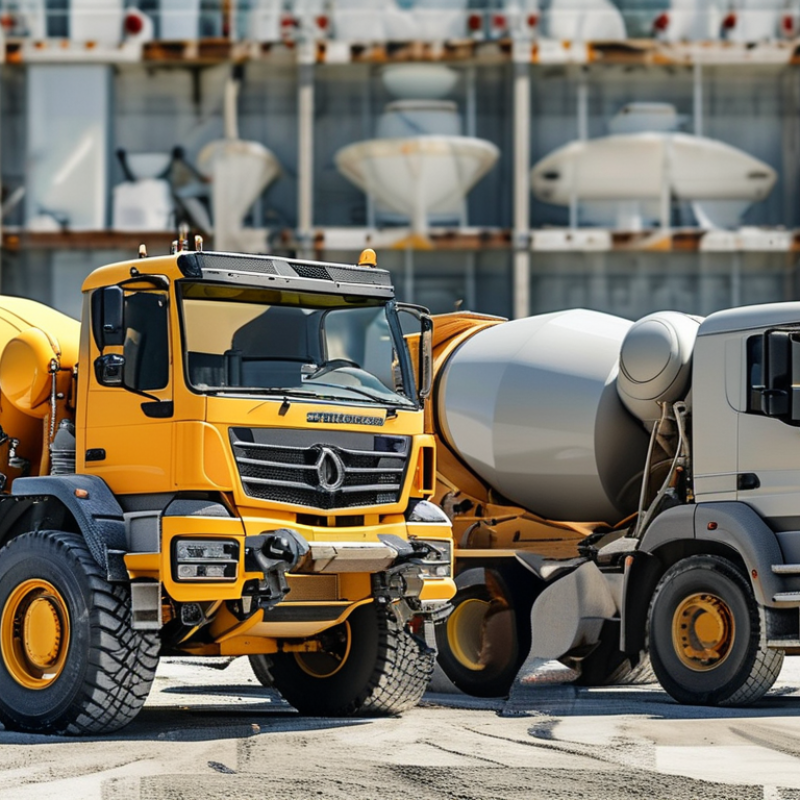
How to Choose the Right Cement Mixer Machine for Your Needs?

Understanding Different Types of Cement Mixers Available in the Market

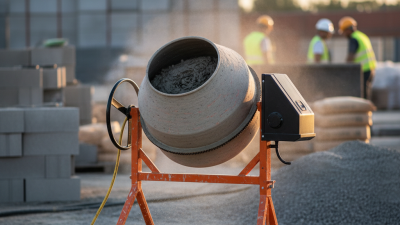
When looking for the right cement mixer, understanding the various types available is crucial. There are two main categories: drum mixers and pan mixers. Drum mixers are typically favored for their simplicity. They rotate to combine the ingredients, making them ideal for small to medium projects. Their design allows for easy mixing and pouring. However, they may not achieve uniformity for larger batches.

Pan mixers, on the other hand, are known for producing consistent mixtures. Their flat mixing surface allows for thorough blending of materials. This makes them suitable for larger construction projects needing high-quality concrete. While they are generally costlier and bulkier than drum mixers, the investment can pay off with improved efficiency and results.

Each option has its pros and cons. Drum mixers are portable but may sacrifice mix quality. Pan mixers offer superior blending but require more space and maintenance. Evaluating your specific needs is essential. Consider the scale of your project and the level of consistency required in your mix. Making an informed choice will save time and effort in the long run.
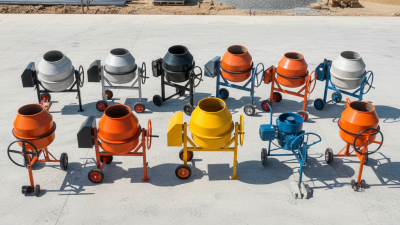
Key Factors to Consider When Choosing a Cement Mixer for Your Project

When choosing a cement mixer, various factors come into play. One critical consideration is the size and capacity of the machine. For small DIY projects, a 3 to 5 cubic feet mixer suffices. Larger projects demand machines that hold 6 cubic feet or more. According to a report by the American Concrete Institute, mixers with a 7-cubic-foot capacity are ideal for medium to large construction work.

Next, portability matters. If mobility is a priority, consider a lightweight model or one with wheels. Transporting a heavy mixer can be challenging, particularly in tight spaces. Additionally, think about the power source. Electric mixers are quieter but limited by location, while gas models provide flexibility but can be noisier.

Remember maintenance needs for long-term use. Some machines require more effort to clean and maintain. According to industry insights, neglecting proper upkeep can reduce a machine’s lifespan by up to 30%. It's essential to weigh your options based on project demands and expected usage. Careful consideration of these factors will enhance efficiency and productivity.

Assessing Capacity Requirements: Sizing Your Cement Mixer Appropriately

When choosing a cement mixer, assessing capacity is critical. The right size ensures efficient mixing while preventing material waste. A standard 8-cubic-foot mixer is suitable for small to medium projects, handling batches up to 0.5 cubic yards. For larger requirements, consider models that accommodate up to 12 cubic feet. This sizing can significantly impact project timelines.

Calculating your needs begins with the project's scale. Data shows that construction waste can be reduced by 20% with the correct mixer size. For example, a large mixing task typically requires 2-3 batches per hour. Misjudging your capacity may lead to either delays or excess spending. Many users have found themselves limiting productivity due to poorly sized equipment.

Additionally, consider the type of projects you undertake. Residential jobs may require flexibility, while commercial work demands larger capacities. Research suggests that 60% of contractors prefer versatile mixers for varying tasks. Reflection on past projects can guide you. Review where time was lost or materials wasted. This introspection helps in selecting a mixer that aligns perfectly with your concrete needs.

Evaluating Power Sources: Electric vs. Gas-Powered Cement Mixers

When choosing a cement mixer, the power source is critical. Electric and gas-powered mixers each have unique benefits and drawbacks. Electric mixers are generally quieter, lighter, and easier to use for smaller jobs. They require a nearby electrical outlet, which can limit your work location. For home projects, electric mixers can be a great fit, especially if you have access to power.

On the other hand, gas-powered mixers offer greater mobility and often have more torque. They don't rely on electricity and can operate in remote areas. This makes them ideal for large construction sites or outdoor projects. However, gas models can be heavier and more complicated to start. They require maintenance and can produce fumes, which may not be suitable for enclosed spaces.

Consider your project needs carefully. Think about where you’ll work. Will you have access to power? Do you need portability? Each option comes with its quirks. Balancing convenience with your specific project demands can lead to a more satisfying result.

Analyzing Budget Constraints and Long-Term Investment in Cement Mixers

Choosing the right cement mixer hinges significantly on your budget and long-term investment goals. According to industry reports, a quality cement mixer typically ranges from $300 to $3,000. Factors like size, power, and features contribute to this price variation. It’s essential to assess your project scale and frequency of use before committing to a purchase.

When evaluating budget constraints, consider the total cost of ownership. A cheaper mixer may save you money upfront but often requires more repairs and maintenance. For instance, data suggests that investing in a high-quality mixer can reduce operational costs by approximately 20% over five years. This perspective encourages a long-term view in your decision-making process.

Tips: Invest in a mixer that fits your typical project size. Consider electric models for smaller jobs. A gas mixer may be better for larger, ongoing projects. Also, utilize rental options if you’re unsure of your needs. This approach allows flexibility while assessing usage patterns without a significant upfront commitment. Keep in mind that experience and trusted feedback are invaluable in selecting the right equipment for your specific applications.