
If you are interested in financing to fund your Bay-Lynx purchase, we recommend that you connect with Easylease Corp., a Canadian-based leasing and finance company that offers premier equipment leasing and financial services. They are focused on making it easier than ever before for companies to overcome cash flow and resource constraints to acquire the assets they need to grow their business.
Leasing through Easylease Corp. can offer several benefits:
Click here for your Canadian instant lease quote >>
For US customers, Click here for your instant lease application >>
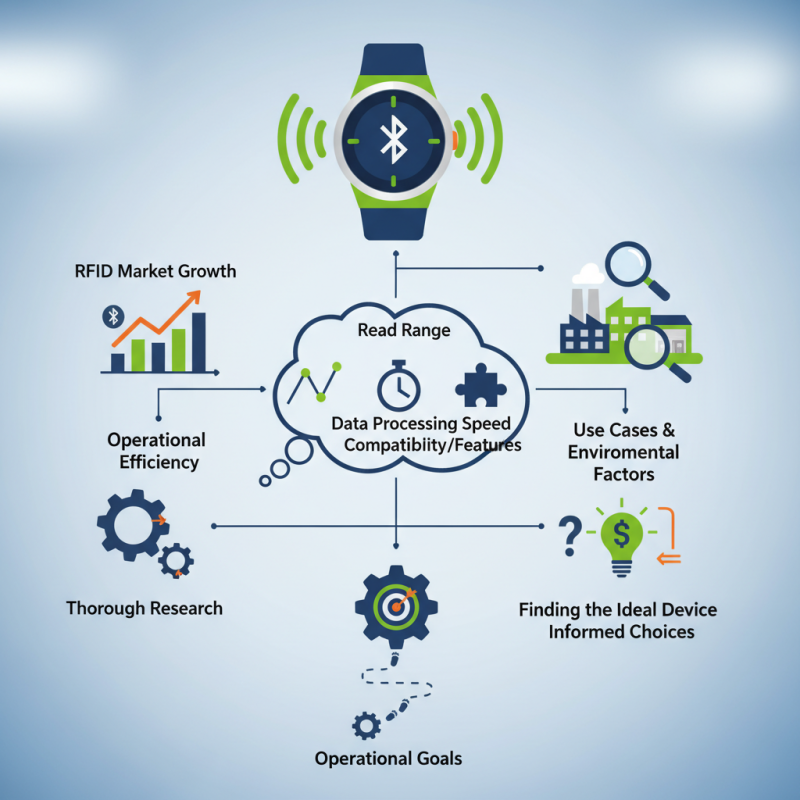
The rapid evolution of technology has transformed the way we interact with RFID systems. Today, Bluetooth RFID Watch Readers stand at the forefront of this change. According to a recent market report by ResearchAndMarkets, the RFID market is expected to grow to $44.7 billion by 2024, with Bluetooth technology playing a significant role. This growth highlights the demand for efficient and effective RFID solutions in various sectors.
Choosing the right Bluetooth RFID watch reader is crucial for maximizing operational efficiency. Each device varies in features, compatibility, and performance. Some readers excel in read range and data processing speeds, while others may lack critical functionalities. Industry experts emphasize the importance of evaluating specific use cases and environmental factors before making a decision. As noted by IDTechEx, many businesses still struggle to find the ideal devices that meet their needs.
In a landscape filled with options, it is easy to feel overwhelmed. Reflecting on practical needs is essential. Often, businesses purchase high-end models, only to find they lack necessary features. Understanding your specific requirements can lead to more informed choices. Investing time in thorough research will ensure a Bluetooth RFID watch reader aligns with your operational goals.
Bluetooth RFID technology offers versatile applications across various sectors. Retailers leverage this technology for efficient inventory management. According to industry reports, 67% of businesses utilizing RFID experience improvements in inventory accuracy. This reliability is vital for reducing stock losses and enhancing customer satisfaction.
Healthcare organizations benefit significantly from Bluetooth RFID watches. By tracking equipment and medications, they improve operational efficiency. A study indicated that 30% of hospitals using RFID reduced equipment loss significantly. However, implementing such systems requires careful planning. Integrating Bluetooth RFID with legacy systems may present challenges, requiring additional training for staff.
Understanding Bluetooth RFID's potential extends beyond mere tracking. The technology can streamline transactions and enhance security protocols. Yet, organizations must consider privacy concerns. The balance between efficiency and data protection remains a complex issue. Some users express concerns about the visibility of their data, emphasizing the need for clear usage policies.
Choosing the right Bluetooth RFID watch reader involves understanding key features that suit your needs. Battery life plays a crucial role in the effectiveness of any RFID reader. A long-lasting battery ensures you can rely on the device throughout the day without constant recharging. Look for models that offer at least 12 hours of operational time.
Connectivity options are equally important. Ensure the reader supports various devices and pairing methods. A stable connection can enhance your workflow by streamlining data transfer. Poor connectivity may lead to frustration and delays.
Tips: When testing a reader, try pairing it with multiple devices. Compatibility will affect your overall experience. Additionally, consider the weight and comfort of the watch design. A bulky reader might be cumbersome for daily use.
Another feature to reflect on is the range of RFID detection. Some models can read tags from greater distances, which could be essential depending on your application. Understand your operational environment to make an informed decision. Not all features matter for every user; prioritize what enhances your use case effectively.
When choosing a Bluetooth RFID watch reader, battery life and range are crucial factors. A report from the International Journal of RFID Technology indicates that devices with a robust battery life can last anywhere from 10 to 50 hours depending on usage patterns. Low battery can disrupt readings, leading to missed opportunities in asset tracking. Optimal performance requires understanding your usage environment. In high-traffic scenarios, a longer battery life is essential.
Range is another critical aspect. Most Bluetooth RFID devices operate effectively within a 30-foot range. Yet, certain environments can interfere with signal strength. A study by the RFID Research Center suggests that obstacles like walls or electronic equipment can reduce operational range by 20-50%. Users should test devices in their intended environment to ensure reliability.
While considering these features, it's vital to reflect on your specific needs. Can the battery accommodate your work hours? Does the range suit your operational context? These questions often lead to reconsideration of initial choices. Balancing battery life with optimal range enhances performance, but it’s also necessary to weigh the cost versus the benefits.
| Model | Battery Life | Range | Weight | Price |
|---|---|---|---|---|
| Model A | 30 hours | 100 meters | 50g | $120 |
| Model B | 25 hours | 80 meters | 55g | $110 |
| Model C | 40 hours | 150 meters | 45g | $140 |
| Model D | 20 hours | 60 meters | 60g | $90 |
When selecting a Bluetooth RFID watch reader, compatibility stands out as a key consideration. Many users overlook the impact of their existing systems. According to a recent industry report, 72% of organizations reported compatibility issues with new RFID devices. Existing infrastructure includes software and hardware that must work together seamlessly. A mismatch can lead to inefficient workflows and frustration.
Before making a decision, assess the Bluetooth profiles of your current devices. Ensure the watch reader supports the same protocols. For example, many devices use Bluetooth Low Energy (BLE), which is energy efficient and ideal for RFID applications. In contrast, other devices may rely on Classic Bluetooth, leading to performance conflicts. Evaluate case studies showing these incompatibilities. One firm faced a 30% increase in errors due to a failure to check compatibility.
Testing the watch reader with your current devices in advance can provide invaluable insights. Conduct a small trial before full-scale implementation. Many users find the user interface challenging and require time to adjust. Feedback from initial trials can inform improvements and reduce future hassles. Recognizing the nuances of device compatibility can save considerable time and resources in the long run.
When selecting a Bluetooth RFID watch reader, budget considerations play a crucial role. It’s essential to find a product that meets your requirements without overspending. A well-structured budget can help you assess which features are truly vital. Consider how often you will use the device. If you plan to utilize it daily, investing more might be worthwhile. However, if usage is infrequent, a more economical choice could suffice.
Many options exist, each presenting diverse price points. Researching different models helps you understand their features and functionalities. Seek devices that offer durability and user-friendly interfaces. Customer reviews can provide insights into long-term reliability, guiding your decision-making. Sometimes, choosing a slightly more expensive model yields better value over time if it performs well.
Don’t forget to account for any additional costs such as subscriptions or maintenance. This will affect your overall budget. Also, consider potential upgrades in the future. It’s wise to reflect on how your needs may evolve. Being flexible with your budget can lead to smarter choices, ensuring that you invest in a reader that aligns with your current and future requirements.