
If you are interested in financing to fund your Bay-Lynx purchase, we recommend that you connect with Easylease Corp., a Canadian-based leasing and finance company that offers premier equipment leasing and financial services. They are focused on making it easier than ever before for companies to overcome cash flow and resource constraints to acquire the assets they need to grow their business.
Leasing through Easylease Corp. can offer several benefits:
Click here for your Canadian instant lease quote >>
For US customers, Click here for your instant lease application >>
Choosing the right Rail Transfer Cart can be a daunting task. With various options available, it’s essential to consider your specific needs. A well-chosen rail transfer cart can enhance efficiency in transporting materials. However, a poor choice can lead to operational delays and increased costs.
When evaluating rail transfer carts, think about their load capacity. Different models cater to various weight ranges. Also, assess the cart's dimensions to ensure it fits within your workspace. Safety features are crucial. Look for carts with robust brakes and reliable wheel systems. The material of the cart is another important factor. Durable materials can withstand harsh environments and prolonged use.
It’s also vital to reflect on your long-term needs. Will your operations expand in the future? This consideration can influence your purchase decision. Investing in a rail transfer cart that meets current and future needs can save time and money. Overall, researching and understanding these factors will help you choose the best rail transfer cart for your requirements.
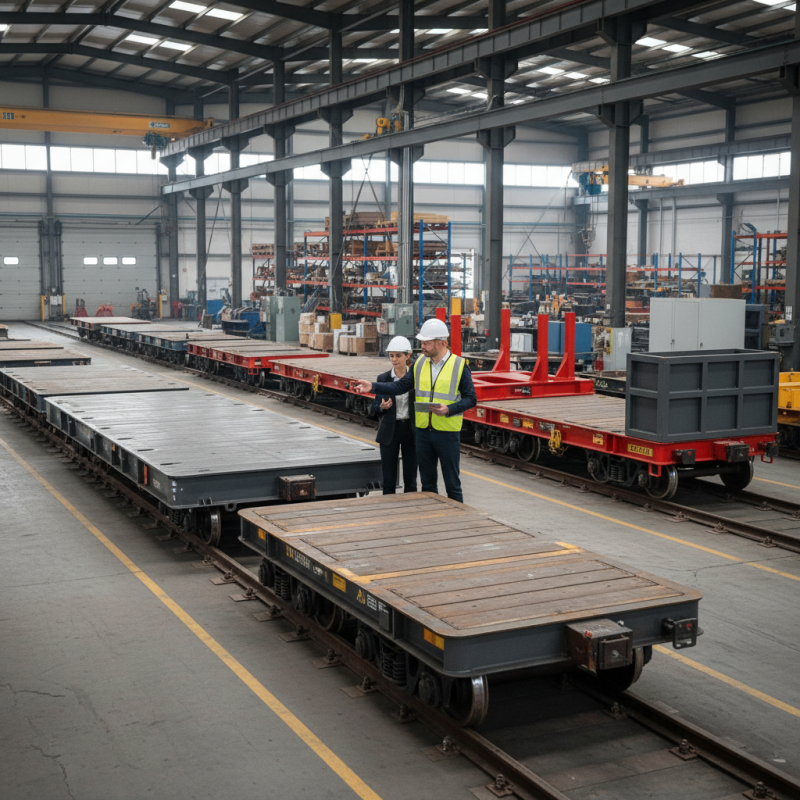
Rail transfer carts play a crucial role in many industrial settings. They are designed to transport heavy loads along rail tracks. Their efficiency can boost productivity in warehouses, factories, and construction sites. According to a study by the Material Handling Industry, companies can see a 25% increase in efficiency when using rail systems for material transport.
Manufacturers offer various designs based on specific functions. Some carts handle loads up to 50 tons, while others cater to lighter materials. Electric-powered carts reduce manual labor. Understanding the weight capacity and power source will determine the best choice for your needs. It’s essential to assess the environment where the cart will operate. Limited space may require a more compact design.
Tips: Focus on load specifications. Evaluate the terrain of your facility. Look for carts that provide adaptable features for versatility. Consulting with industry experts can give insights based on your operational requirements.
Choosing the right rail transfer cart is not easy. Some users report challenges with load stability. Issues can arise if the cart is overloaded or improperly maintained. Regular assessments and adaptations are necessary to maximize efficiency. Be open to learning from operational experiences.
Identifying your specific transportation needs is essential when selecting a rail transfer cart. Understand the materials you need to transport. Consider the weight and dimensions of these materials. A cart that can handle the specific load capacity will perform better and last longer.
Evaluate the environment where the cart will be used. Will it navigate tight spaces? Are there slopes or uneven surfaces? These aspects directly influence the design and functionality of the cart. Observing existing workflows can reveal hidden challenges. Perhaps current carts struggle with certain tasks. Analyzing these problems can lead to better choices.
Also, think about the frequency of use. Will the cart be a daily tool or a seasonal asset? Frequent use requires durability and efficiency. On the other hand, a rarely used cart may only need lightweight features. Reflecting on these factors can prevent costly mistakes. Taking the time to assess your actual needs leads to a more informed decision.
When choosing a rail transfer cart, evaluating load capacity is crucial. Different applications require different capabilities. Industry reports indicate that most industrial rail carts support loads ranging from 1 to 100 tons. Understanding specific needs is vital. For instance, a factory requiring heavy machinery transport needs a cart with a higher load capacity.
Specifications play a key role as well. Key factors include power source, size, and features like remote control capabilities or automated guidance. Some studies suggest that rail transfer carts with higher maneuverability can enhance operational efficiency by up to 30%. Regularly assessing your workflow can lead to improved outcomes.
While it may be tempting to opt for the most robust options, every situation is different. Overestimating your load needs can lead to unnecessary expenses. It’s essential to balance load capacity with the actual requirements of your operation. Consider future needs. Flexibility might save costs in the long run.
This bar chart illustrates the load capacity of various rail transfer carts. When selecting the best cart for your needs, consider the load capacity in relation to your operational requirements.
When selecting a rail transfer cart, it’s important to understand the different types available. These carts vary in design, capacity, and functionality. For example, some carts are powered electrically, while others rely on manual operation. Electric models can transport heavier loads more efficiently. Manual carts are useful for lighter items and smaller tasks.
A key factor to consider is the weight capacity you need. Assess the heaviest items you plan to move. Ensure the cart can handle that weight comfortably. For instance, if you frequently handle large materials, choose a heavy-duty model. On the other hand, a smaller facility might only need a lighter cart for routine tasks.
Tips: Make sure to evaluate your available space. Measure aisles and doorways. A cart that’s too large could create logistical issues. Also, consider the terrain. Some carts perform better on flat surfaces, while others may need wheels designed for rough terrain. Always think critically about your specific needs. Investing time in research pays off in the long run.
When selecting a rail transfer cart, maintenance requirements and cost-effectiveness are critical factors. Industry studies show that regular maintenance can reduce downtime by 30%. However, many manufacturers overlook this aspect. Investing in a cart with low maintenance needs will save time and money in the long run.
A reliable transfer cart should have easy access to parts. This ensures quick repairs, minimizing operational disruptions. Additionally, consider carts that offer self-diagnostics to catch issues early. Such features enhance reliability, as suggested by a report indicating that predictive maintenance can lower costs by up to 25%.
Tips: Always evaluate the total cost of ownership. Don’t just focus on initial price tags. Consider repair costs and frequency too. Another point to reflect on: sometimes expected maintenance can be underestimated. A cheaper cart may end up more expensive if its upkeep is high. Balancing these factors is essential for a sustainable choice.