China Best PET Polyester Film Manufacturer Supplier
China has become a significant production base for high-performance Pet Polyester Film. The strongest manufacturers combine modern equipment, experienced engineers, and disciplined quality control. They do not rely on attractive catalogs alone.
Pet Polyester Film is produced from polyethylene terephthalate and stretched for strength, clarity, and dimensional stability. Its performance depends on thickness, orientation, surface treatment, and winding precision. Common specifications range from 12 to 250 microns. Applications include flexible packaging, electrical insulation, labels, release liners, and industrial laminates.
Dr. George Odian, a respected polymer scientist, stated, “Polymer performance begins with molecular structure, while processing shapes its practical value.” This principle remains practical for buyers comparing Chinese suppliers. A reliable factory should provide technical data, production samples, batch traceability, and a clear certificate of analysis. Testing may include tensile strength, elongation, haze, gloss, coefficient of friction, and surface energy. Corona-treated film should also show stable wetting performance during lamination or printing.
Experience matters here. A supplier may offer low prices, yet inconsistent winding can create telescoping rolls, wrinkles, or waste. No supplier is perfect. Even an experienced factory can miss a problem when inspection is rushed. Buyers should review trial orders, packaging methods, lead times, and complaint procedures before signing long-term agreements.
The best China Pet Polyester Film manufacturer is not always the cheapest option. It is the partner that communicates clearly, controls variation, and improves after receiving honest feedback. That last point deserves attention. Reliability is demonstrated over repeated shipments, not promised in one sales conversation.
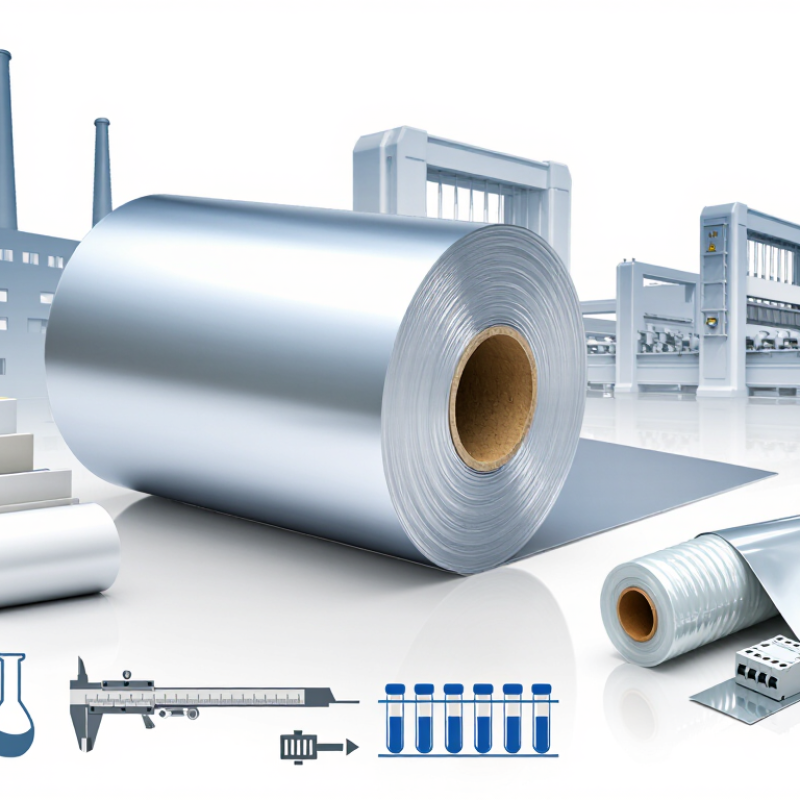
What Is PET Polyester Film? Density 1.39 g/cm³ and Melting Point 255–260°C
China Best PET Polyester Film Manufacturer Supplier
What Is PET Polyester Film? Density 1.39 g/cm³ and Melting Point 255–260°C
PET polyester film is a transparent, strong sheet made from polyethylene terephthalate resin. Its typical density is about 1.39 g/cm³, according to ISO 1183-1 test methods. This compact structure supports stable thickness, good tensile strength, and reliable dimensional control. It feels light, but not fragile.
Its melting point usually falls between 255 and 260°C. ASTM D3418 identifies melting behavior through differential scanning calorimetry, although test conditions can shift the measured value. That detail matters during extrusion and heat-setting. Excessive heat may cause shrinkage, haze, or edge distortion. Practical production experience shows that uniform heating is as important as the nominal temperature.
PET film is widely used for electrical insulation, packaging, labels, solar modules, and industrial laminates. PlasticsEurope’s Plastics—the Facts 2023 confirms packaging as the largest plastics-use sector in Europe, supporting sustained demand for high-performance films. Industry analyses also report continued growth in polyester film applications, especially where barrier strength and clean surfaces are required. However, performance depends on grade, orientation, coating, and humidity. Density alone cannot predict every result. That is an easy mistake.
A qualified supplier should provide technical data sheets, batch records, and test results from recognized methods. Buyers should also verify thickness tolerance, shrinkage, haze, tensile strength, and surface treatment before production. Some specifications look precise. They still need testing.
How PET Film Is Manufactured: From Polymerization to 1.5–350 μm Thickness
China Best PET Polyester Film Manufacturer Supplier
How PET Film Is Manufactured: From Polymerization to 1.5–350 μm Thickness
PET film begins with purified terephthalic acid and ethylene glycol. Polymerization forms polyethylene terephthalate, usually at 250–280°C under controlled vacuum. The melt then passes through filtration and pelletization. Moisture matters greatly. PET resin often requires drying below 50 ppm moisture before extrusion. Otherwise, hydrolysis can reduce molecular weight and weaken the film.
The dried resin enters an extruder and becomes a thin molten sheet. Chill rolls quickly solidify it. A tenter frame then stretches the sheet in machine and transverse directions, commonly three to four times per direction. Heat setting controls shrinkage and dimensional stability. This stage supports thicknesses from about 1.5 μm for capacitor and specialty applications to 350 μm for rigid industrial sheets. Processing windows are narrow.
The PET Film Market Outlook published by Smithers identifies packaging, electrical insulation, and imaging as important demand areas. Its 2024 analysis also highlights thinner gauges and higher-performance structures as continuing development priorities. Film density remains close to 1.38 g/cm³, a practical value for converting calculations. Actual results vary with resin viscosity, stretching speed, and cooling uniformity. A small temperature drift can create haze, gauge variation, or edge defects. The process looks precise, but it is not perfectly tidy. Skilled operators still inspect rolls, adjust tension, and question data that appears too clean.
Key PET Film Properties: Tensile Strength, Shrinkage, Clarity, and Barrier Data
A reliable PET polyester film supplier should report measured properties, not broad claims. For 12-micron biaxially oriented PET film, industry technical surveys commonly show tensile strength near 200–250 MPa in the machine direction and 220–300 MPa transversely. Testing under ISO 527 improves comparison. Values still change with thickness, stretching ratio, and humidity.
Shrinkage matters during sealing and lamination. Data from standard packaging studies often place heat shrinkage below 2% at 150°C for stabilized grades, although poorly controlled films may distort more. Clarity is usually assessed with ASTM D1003. Premium clear film can achieve haze below 2%, while recycled content, additives, or surface treatment may increase haze. This is easy to overlook.
Barrier results need careful conditions. A typical untreated PET film may show oxygen transmission around 30–70 cc/m²/day and water vapor transmission near 5–10 g/m²/day, measured at controlled temperature and humidity. Coated or metallized structures can reduce oxygen transmission to below 1 cc/m²/day. These figures are indicative, not universal. One weakness remains: laboratory data can flatter a film. Real converters should test finished laminates, sealing temperatures, web tension, and storage aging before approval. A supplier’s report should include test standards, specimen direction, conditioning time, and actual film thickness. Without those details, impressive numbers mean little.
China Best PET Polyester Film Manufacturer Supplier - Key PET Film Properties: Tensile Strength, Shrinkage, Clarity, and Barrier Data
| Property | Test Direction | Typical Value | Unit | Typical Test Condition | Standard Test Method |
| Mechanical Properties |
| Tensile Strength | Machine Direction (MD) | 180–230 | MPa | 23°C; conditioned sample | ASTM D882 / ISO 527-3 |
| Tensile Strength | Transverse Direction (TD) | 200–260 | MPa |
| Elongation at Break | Machine Direction (MD) | 100–140 | % | 23°C; conditioned sample | ASTM D882 / ISO 527-3 |
| Elongation at Break | Transverse Direction (TD) | 80–120 | % |
| Young’s Modulus | MD / TD | 3,000–4,500 | MPa | 23°C; conditioned sample | ASTM D882 / ISO 527-3 |
| Puncture Resistance | Flat film | 10–25 | N | Typical 12–50 μm biaxially oriented film | ASTM D5748 or equivalent |
| Dimensional Stability and Thermal Properties |
| Thermal Shrinkage | MD | 1.0–2.5 | % | 150°C for 30 minutes | ASTM D1204 |
| Thermal Shrinkage | TD | 0.2–1.5 | % |
| Melting Point | Not direction-dependent | 250–260 | °C | Indicative value for PET resin | DSC, ASTM D3418 |
| Continuous Use Temperature | Not direction-dependent | −60 to 120 | °C | Application-dependent; short-term exposure may be higher | Typical engineering reference |
| Density | Not direction-dependent | 1.38–1.40 | g/cm³ | 23°C | ASTM D1505 / ISO 1183 |
| Optical Properties |
| Total Light Transmittance | Through-film | 88–91 | % | Clear, untreated film; visible light range | ASTM D1003 / ISO 13468-1 |
| Haze | Through-film | 0.8–3.0 | % | Clear, untreated film | ASTM D1003 / ISO 14782 |
| Gloss at 60° | Film surface | 120–160 | GU | Glossy surface; surface treatment can change the value | ASTM D523 / ISO 2813 |
| Barrier and Surface Properties |
| Water Vapor Transmission Rate (WVTR) | Through-film | 1.5–5.0 | g/m²·day | 38°C; 90% relative humidity; 23–50 μm film | ASTM F test methods / ISO 15106-3 |
| Oxygen Transmission Rate (OTR) | Through-film | 40–100 | cm³/m²·day | 23°C; dry condition; 23–50 μm film | ASTM D3985 / ISO 15105-2 |
| Carbon Dioxide Transmission Rate | Through-film | 150–300 | cm³/m²·day | 23°C; dry condition; 23–50 μm film | Gas permeability testing |
| Static Coefficient of Friction | Film-to-film | 0.35–0.60 | — | 23°C; conditioned sample; treatment-dependent | ASTM D1894 |
| Surface Energy | Film surface | 40–54 | dyn/cm | Untreated or corona-treated surface; treatment-dependent | ASTM D2578 or dyne solution method |
| Common Film Construction Reference |
| Typical Thickness Range | Commercial PET film | 12–250 | μm | Specialty grades may be thinner or thicker | ASTM D374 / ISO 4593 |
| Common Packaging Thickness | Biaxially oriented PET | 12–50 | μm | Used for laminates, labels, and flexible packaging | Thickness measurement by micrometer |
| Common Electrical Grade Thickness | Insulation film | 25–125 | μm | Used for insulation, motor slot liners, and flexible circuits | Thickness measurement by micrometer |
How to Evaluate a PET Film Manufacturer: ISO 9001, RoHS, REACH, and Quality Control
Choosing a PET polyester film manufacturer requires more than comparing prices. A reliable supplier should provide a valid ISO 9001 certificate, issued by an accredited certification body. Ask whether the certificate covers the actual production site. In factory audits, this detail is often missed. That can weaken confidence.
RoHS and REACH documents should match the film grade, production date, and intended market. Request recent test reports from qualified laboratories, not generic declarations. Quality control should include resin inspection, thickness measurement, tensile testing, haze checks, and surface treatment verification. Ask how operators record defects during coating and slitting. Clear records reveal real process discipline. Certificates alone are not proof of consistent performance.
Tips: Request production samples and test them under your actual conditions. Check roll width, winding tension, splices, packaging, and storage labels. Ask for batch traceability from raw material to shipment. A capable manufacturer should explain corrective actions when results fail. Do not expect perfection; even strong factories can have occasional defects. What matters is whether they detect, document, and correct them quickly. Evaluate communication, too. Slow or vague answers may become costly after mass production begins.