7 Best Temperature Thermistors for Global Buyers
Choosing a Temperature Thermistor is not just a matter of finding the lowest price. Buyers need a sensor that fits the measurement range, installation space, and control system. A small bead may suit a compact circuit, while a stainless-steel probe can be easier to mount in a pipe or enclosure. Details matter. Resistance at a reference temperature, tolerance, beta value, lead length, and insulation material all affect suitability. This guide compares seven options for different purchasing needs, from general equipment maintenance to more demanding temperature monitoring. It also highlights the specifications worth checking before requesting samples or placing a bulk order.
Global sourcing adds another layer of care. Product descriptions can use similar terms while hiding important differences in response time, probe construction, or operating limits. Ask suppliers for current datasheets, stated test conditions, and clear details about customization and production consistency. Where a thermistor must work with existing electronics, confirm its resistance curve and connector requirements rather than relying on a product name alone. Check packaging and shipping arrangements too, especially when long leads or delicate probes are involved. There is no single best choice for every buyer. A comparison can simplify the shortlist, but it cannot replace testing the sensor in its actual assembly. That step is easy to overlook. And sometimes, the cheapest option is not the least costly one over time.
How Temperature Thermistors Sense and Measure Heat
A temperature thermistor senses heat through a change in electrical resistance. Its sensing element is made from a material whose resistance shifts as temperature changes. Most common types are NTC thermistors: resistance falls as the element warms. PTC types behave differently, with resistance rising over a useful temperature range. Small changes matter. A measuring circuit detects these shifts and converts them into a temperature reading.
In practice, the thermistor is often paired with a fixed resistor in a voltage divider. A controller reads the resulting voltage and uses a calibration curve to estimate temperature. That curve matters because resistance and temperature do not usually change in a straight line. Contact is everything. A bead pressed against a warm pipe may respond differently from one suspended nearby, because airflow and surface contact affect heat transfer. Installers should also consider lead resistance, moisture protection, and the sensor’s specified operating range. Excessive measuring current can warm the element itself, creating a reading that is slightly too high. This effect can be easy to overlook. For reliable comparisons, keep the mounting method consistent and verify readings against a suitable reference thermometer. Even careful measurements have limits. Calibration, placement, and response time all shape what the displayed number actually represents.
Key Factors for Choosing a Thermistor Across Global Markets
7 Best Temperature Thermistors for Global Buyers
Choosing a thermistor across global markets starts with the real operating conditions, not the catalogue headline. Check the required temperature range, resistance at 25°C, tolerance, and response time. A sensor beside a battery cell faces different heat and vibration from one inside a room thermostat. Packaging matters too: a glass bead, coated probe, or surface-mount part can behave differently under moisture and mechanical stress. IEC 60539-1 describes requirements for direct-heated negative-temperature-coefficient thermistors, offering a useful technical reference.
Demand for dependable temperature monitoring is growing. The International Energy Agency’s Global EV Outlook 2024 reports nearly 14 million electric cars sold in 2023, about 18% of all car sales that year. That figure is not a thermistor-market estimate, but it highlights why buyers should verify sensor stability in battery-related applications. Compare calibration methods, traceability, and test conditions across suppliers; identical resistance curves do not guarantee identical performance in a finished assembly. Regional availability also matters. A theoretically ideal part is less useful if replacement stock takes months.
Tips: Ask for tolerance across the full operating range, not only at 25°C. Request sample data under your actual mounting conditions. Small details matter. Lead length, adhesive, and airflow can shift readings, and these effects are easy to underestimate.
Seven Best Temperature Thermistors for Different Applications
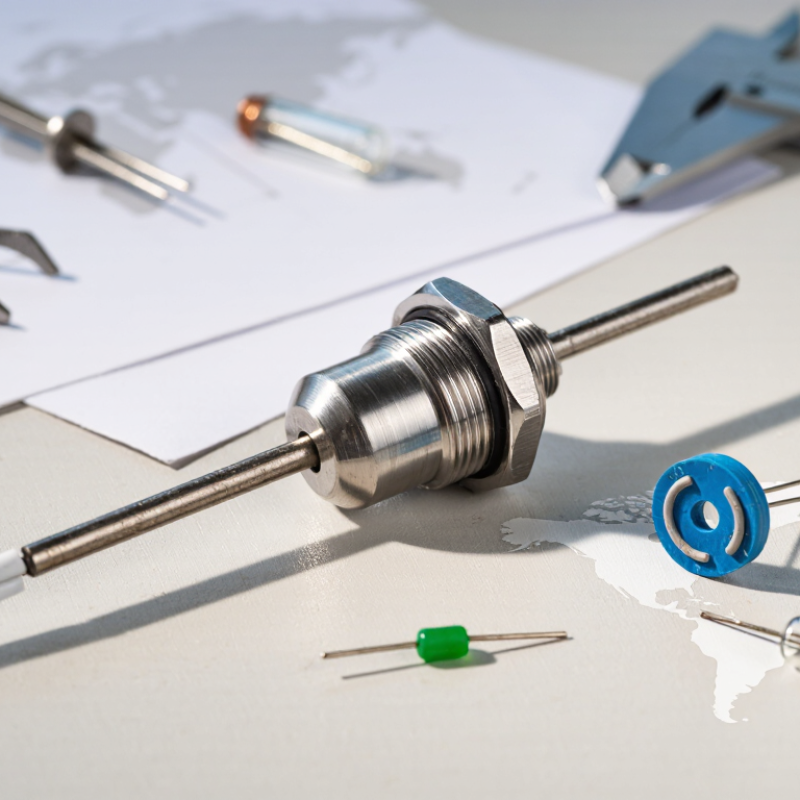
Seven thermistor formats suit different jobs. Bead thermistors respond quickly in compact probes, while glass-encapsulated versions tolerate moisture and harsher environments. Epoxy-coated probes fit general equipment monitoring. Chip thermistors suit circuit boards and battery packs. Ring or washer types mount against motors and heat sinks. Surface-mount parts monitor electronics directly. Probe assemblies protect sensors in liquids and ducts. Small details matter.
For vaccine refrigerators, a calibrated probe thermistor can track air or buffered temperatures; the CDC Vaccine Storage and Handling Toolkit specifies 2°C to 8°C for refrigerated vaccines. That narrow band makes calibration, placement, and alarm response as important as sensor choice.
NIST’s thermistor calibration guidance also emphasizes traceable measurement and uncertainty, useful when readings support process control.
For HVAC ducts, choose a probe suited to airflow and expected exposure. For battery packs, favor compact chips with stable contact to the cell. For wet or corrosive settings, sealed glass or robust probes are safer bets.
No format wins everywhere. I’d still verify response time in the actual installation, because catalog figures can mislead.
Comparing Thermistor Accuracy, Range, and Response Time
When comparing the seven temperature thermistors, look beyond the accuracy figure on the datasheet. A stated tolerance may apply only at one reference temperature, while readings can drift across a wider operating range. Check the calibration curve and the temperature points that matter in your application. For a chilled pipe, a small error near freezing may matter more than performance at room temperature. Confirm whether the quoted accuracy includes the measurement circuit, not just the sensing element. That detail is easy to miss.
Range sets the boundaries; response time shapes how quickly a sensor follows change. A small bead often reacts faster than a probe with a thick metal sheath, but it may be more exposed to airflow or physical contact. Compare response-time figures under similar test conditions, since airflow, mounting, and surrounding material can change them. Fast is not always better. In a slowly changing tank, stability may matter more. A tidy ranking can still mislead if the test setup differs from yours. Bench-test shortlisted sensors in their intended mounting position, and record how readings behave during a real temperature change.
Global Sourcing, Standards, and Installation Considerations
Global sourcing starts with a specification that travels well. Compare resistance at 25°C, tolerance, beta value, operating range, and the full resistance-temperature curve. A matching nominal resistance does not guarantee matching readings. Request calibration data and confirm how each supplier defines test conditions. Small details matter. For equipment exposed to moisture or dust, specify the required enclosure protection and verify any IP rating against IEC 60529. Standards and documentation can vary by application, so confirm requirements before placing a large order.
Ask suppliers to state lead-wire material, probe dimensions, insulation rating, and permitted temperature range. These details affect fit, safety, and measurement stability. Check whether the stated response time was measured in air, liquid, or another medium; results may differ greatly. A certificate alone is not enough. Review sample data, lot traceability, and incoming inspection methods. It is tempting to choose the lowest quoted cost, but inconsistent batches can create more expense later.
Installation can shift readings even when the thermistor itself is sound. Press the sensing tip firmly against the measured surface, using a suitable thermal interface when needed. Keep it away from heat sources that do not represent the target temperature. Route leads away from motors and power cables, and avoid bending them sharply at the probe. In liquid applications, check the sheath seal and immersion depth. One point deserves a second look: a neat specification cannot replace testing in the actual assembly. A short trial often reveals mounting problems early.