
Financing

If you are interested in financing to fund your Bay-Lynx purchase, we recommend that you connect with Easylease Corp., a Canadian-based leasing and finance company that offers premier equipment leasing and financial services. They are focused on making it easier than ever before for companies to overcome cash flow and resource constraints to acquire the assets they need to grow their business.

Leasing through Easylease Corp. can offer several benefits:

  • Conserve Cash Leasing
  • 100% Financing
  • No Pre-Payment of Taxes
  • Preserve Lines of Credit
  • Potential Income Tax Benefits
  • Pay as You Profit
  • Match Revenue with Expenditures
  • Simple, Convenient Process
  • Tailored Payments

Click here for your Canadian instant lease quote >>

For US customers, Click here for your instant lease application >>

10 Best Lifting Sockets for Global Buyers?

Choosing the 10 Best Lifting Sockets for Global Buyers requires more than comparing prices or catalog photographs. A Lifting Socket must match the approved lifting system, concrete strength, load direction, and installation method. Small differences matter. Thread size, anchor length, steel grade, and surface protection can affect safe handling on site.

This guide examines lifting sockets through practical purchasing questions. Can the socket support the stated working load? Is the matching lifting clutch readily available? Does the supplier provide traceable material certificates, test evidence, installation instructions, and clear load charts? Buyers should also inspect thread protection, weld quality, packaging, and corrosion resistance, especially when products travel through humid ports or remain outdoors.

Real projects rarely follow perfect conditions. Concrete may gain strength slowly. Sockets may be placed near edges, or reinforcement may restrict the planned embedment. These details deserve engineering review before ordering. A low-cost product can become expensive when compatible hardware is unavailable. It can also create delays when documentation is incomplete.

This ranking aims to help international contractors, precast manufacturers, distributors, and engineers compare reliable options. It considers performance, compatibility, quality control, supplier communication, and long-term availability. However, no universal winner exists. Local standards, project specifications, and lifting plans can change the decision. That limitation matters. Buyers should verify every recommendation with a qualified engineer and the manufacturer’s current technical data before use. Safety depends on the complete system, not the socket alone.
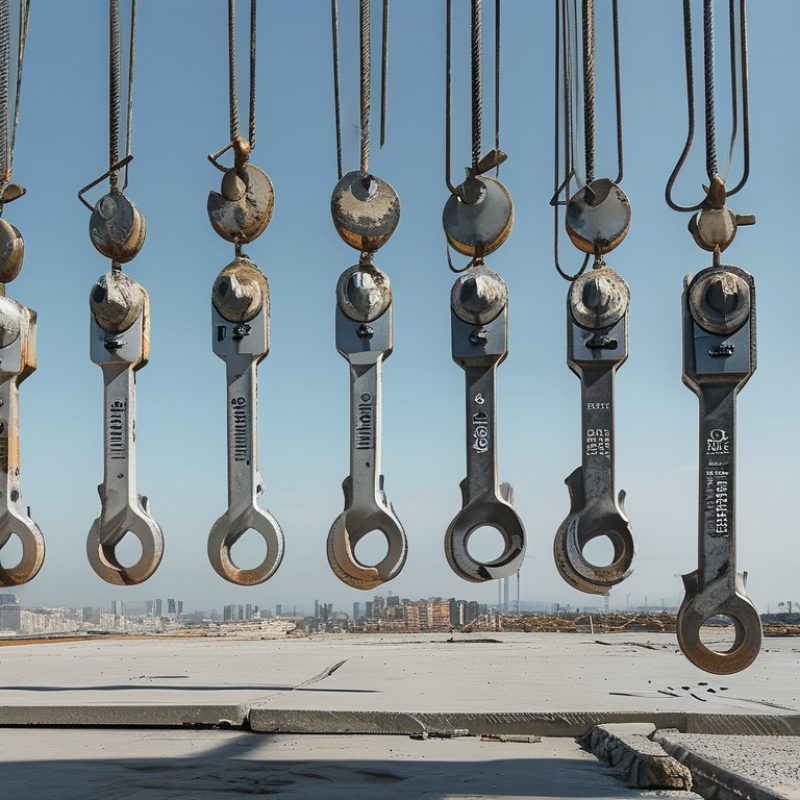
10 Best Lifting Sockets for Global Buyers?

What Are Lifting Sockets and How Do They Work?

Lifting sockets are embedded anchoring devices used to move precast concrete panels, beams, stairs, and other heavy components.

A steel socket sits inside the concrete, while a matching lifting clutch connects to its opening. When the clutch turns and locks, the load travels from the hook into the clutch, socket, reinforcement, and concrete. Simple in appearance. Not simple in use.

Correct installation matters more than appearance. The socket must have enough embedment depth, suitable reinforcement, and accurate alignment with the planned lifting direction.

Workers should check the rated load, concrete strength, edge distance, and lifting angle before attaching equipment. A socket designed for vertical lifting may not safely handle angled forces. That detail is often missed on busy sites.

A socket designed for vertical lifting may not safely handle angled forces.

Global buyers should request technical drawings, traceable material information, test records, and clear instructions for installation and inspection.

Corrosion resistance also deserves attention, especially near coastlines or chemical-processing areas. Look for visible deformation, damaged threads, cracking concrete, or unusual rust before every lift.

Do not improvise with mismatched hardware.

Experienced teams still make mistakes when schedules become tight, and a familiar socket can create false confidence. A qualified engineer should verify unusual loads and temporary lifting plans.

Some specifications remain unclear until the actual concrete and reinforcement layout are reviewed. That is where careful questioning becomes part of safe purchasing.

Key Types and Applications of Lifting Sockets

Lifting sockets are embedded or attached hardware used to move concrete panels, beams, pipes, and heavy fabricated components. Their design determines how loads transfer into the structure. Choosing the right type matters.

Cast-in lifting sockets are placed inside fresh concrete before curing. They suit precast wall panels, stairs, and utility chambers. Their anchorage depends on embedment depth, reinforcement, and concrete strength. Through-bolt sockets pass through prepared holes and work well for reusable handling points. They are practical for steel frames, maintenance access, and temporary lifting tasks. Weld-on sockets attach to qualified steel members, but weld quality and heat effects require careful control. Small details matter.

Applications vary with load direction. Some sockets handle vertical lifting, while others support angled pulls or panel rotation. Always check the working load limit, sling angle, edge distance, and concrete condition. Inspect threads, pins, welds, and protective coatings before use. Corrosion can hide serious damage. Never assume a higher-rated socket makes a weak structure safe. Field inspections often find mismatched accessories or unclear markings. That is a costly mistake. Selection is not always perfect on the first attempt. Project drawings, manufacturer data, local lifting rules, and a competent engineer should guide the final choice. A socket may look robust. Its surrounding concrete may not be.

10 Best Lifting Sockets for Global Buyers: Key Types and Applications

Comparative application suitability of common lifting socket types used in precast concrete and heavy-duty lifting systems.

Score guide: 5 = highly suitable for the application, 1 = limited or less typical use. Scores indicate common application fit only and are not safe working load ratings. Final selection must follow the socket manufacturer’s technical data, concrete strength requirements, reinforcement design, and applicable lifting standards.

Safety Standards for Global Lifting Socket Buyers

10 Best Lifting Sockets for Global Buyers?

Safety starts with the correct lifting socket, not its appearance. Buyers should confirm the working load limit, thread engagement, material grade, and intended load direction. ISO 3266 and ASME B30.26 provide useful references for lifting hardware selection. However, standards do not make an unsuitable design safe. A socket rated for vertical loading may fail during side loading. Even a clean thread can hide internal damage.

Global purchasing also requires traceable evidence. Request test certificates, batch numbers, dimensional drawings, and proof-load records before shipment. The WHO and ILO estimated 2.93 million work-related deaths worldwide in 2019, with many risks linked to unsafe work systems. This figure is broad, but it shows why small lifting components deserve serious control. Check corrosion resistance, weld quality, installation torque, and compatibility with the anchor material. Do not rely on photographs alone.

Tips: Ask for the exact standard edition and certification scope. Inspect the socket before every lift. Keep the load centered. Replace parts after deformation, severe corrosion, or uncertain history. A checklist helps, but it is not perfect. Local regulations may also differ from the test standard. Buyers should obtain competent engineering advice for unusual angles, repeated lifting, high temperatures, or dynamic loads. Small details matter.

How to Compare the 10 Best Lifting Sockets

Comparing the 10 Best Lifting Sockets for Global Buyers

A “best” lifting socket is not simply the strongest-looking option. Compare ten candidates by working load limit, material grade, socket depth, thread engagement, and installation method. Check whether the stated capacity applies to vertical lifting, angled loading, or both. These details can change the safe working load significantly.

Look for independent test records and clear traceability. Documents should identify batch numbers, proof-test results, inspection intervals, and applicable standards, such as EN 1677 or ASME B30.26 where relevant. The International Labour Organization reported 2.93 million work-related deaths and 395 million non-fatal injuries globally in 2023. That figure reinforces a practical lesson: paperwork is part of the lifting system, not decoration.

Inspect the ten options in person when possible. Measure thread fit with a calibrated gauge. Examine welds, locking features, bearing surfaces, and protective coatings. Ask how each socket performs after repeated loading, salt exposure, and low temperatures. A cheap unit may fail the total-cost test if inspections are difficult or replacement parts are unavailable. Review supplier response times and technical support across your destination market. Do not compare capacity alone. Some published ratings appear precise, yet installation errors can reduce real performance. That limitation deserves honest attention. A field trial with a controlled load may reveal more than a polished catalogue.

Choosing the Right Lifting Socket for Your Project

10 Best Lifting Sockets for Global Buyers?

Choosing the right lifting socket starts with the concrete element, not the catalog image. Confirm the required working load, lifting direction, concrete strength, and edge distance. A socket rated for vertical lifting may not suit angled loading. Fit matters. Check the thread size, socket length, recess depth, and compatible lifting clutch before placing an order. Do not guess.

For international projects, request material certificates, production batch records, dimensional drawings, and independent test results. Verify the stated safe working load against local regulations and the engineer’s design calculations. Galvanized or stainless options may help in damp environments, but coating choice should match the concrete, storage conditions, and exposure level. Keep it traceable. During installation, secure the socket firmly and prevent concrete from entering the thread. Inspect for distortion, cracks, heavy corrosion, or damaged threads before every lift. Any doubtful component should be removed from service and assessed by a qualified professional. A small site detail can change the load path. That is easy to overlook. One practical mistake is selecting by maximum capacity alone. Geometry, embedment, and real lifting angles often matter more than the largest number on the page. A careful buyer also checks delivery packaging, marking clarity, replacement procedures, and technical support across borders. My view is not perfect: field conditions can defeat a clean calculation, so installation records and on-site judgment still deserve serious attention.

10 Best Lifting Sockets for Global Buyers? – Choosing the Right Lifting Socket for Your Project

Rank Lifting Socket Type Typical Working Load Range Common Thread or Connection Primary Load Direction Best Application Main Advantages Important Selection Checks
1 Recessed Threaded Lifting Socket Approximately 0.5–5 tonnes per socket, depending on design and embedment Metric internal thread, commonly M12–M36 Axial or near-axial lifting Precast wall panels, beams, slabs, and architectural concrete units Clean surface finish; lifting hardware can be removed after installation; suitable for repeated project designs Confirm thread compatibility, concrete strength at lifting time, embedment depth, edge distance, and approved lifting accessory
2 Threaded Socket with Reinforcement Tail Approximately 1–10 tonnes per socket in reinforced precast applications Internal thread with welded or formed rebar tail Axial, diagonal, or limited lateral loading when specifically designed Heavy precast panels, columns, beams, and infrastructure components Transfers load into surrounding reinforcement; useful where higher anchorage capacity is required Check reinforcement layout, tail orientation, concrete cover, minimum edge distance, and the design engineer’s anchorage calculations
3 Wire-Rope or Cable Loop Socket Approximately 0.5–5 tonnes per lifting point Permanent wire-rope loop or cable eye integrated with an anchor body Axial and controlled angled lifting Thin precast elements, façade panels, utility products, and units requiring a low-profile lifting point Compact installation; can reduce surface recess size; useful where threaded access is inconvenient Inspect rope condition, bend radius, corrosion protection, concrete breakout risk, and whether the loop is rated for the planned sling angle
4 Plate Anchor Lifting Socket Approximately 1–12 tonnes per socket, subject to plate size and anchorage design Steel plate with integrated lifting opening or connector Axial and angled loading according to the certified configuration Large precast panels, floor units, tunnel segments, and heavily reinforced concrete products Large bearing area; can distribute forces across reinforcement and concrete Verify plate thickness, weld quality, reinforcement connection, concrete breakout resistance, and the permitted loading angle
5 Swivel or Articulated Lifting Socket Approximately 1–10 tonnes per socket Threaded or pin-connected swivel lifting attachment Axial loading with controlled multi-directional alignment Units lifted from different orientations or products requiring flexible sling alignment Helps align the lifting accessory with the load direction; can reduce unintended bending in the connection Confirm permitted swivel range, locking method, working load limit, wear allowance, and compatibility with the lifting clutch or eye
6 Flush-Mount Lifting Socket Approximately 0.5–5 tonnes per socket Internal thread, recessed eye, or removable connector Primarily axial lifting Architectural precast, finished surfaces, paving units, and products where exposed hardware is undesirable Minimal projection; improved appearance and reduced risk of snagging during transport or installation Check recess dimensions, access for the lifting tool, concrete cover, local reinforcement, and protection against debris entering the thread
7 Heavy-Duty Forged Lifting Socket Approximately 5–25 tonnes per socket in engineered heavy-lift systems Large metric thread, pin connection, or dedicated lifting attachment Axial or angled lifting when specifically approved Bridge girders, large beams, heavy machinery bases, and major infrastructure components High strength-to-weight ratio; suitable for demanding lifting operations when supported by engineered anchorage Require certified working load limits, lifting-point calculations, concrete maturity data, proof testing where specified, and a documented lifting plan
8 Stainless-Steel Lifting Socket Approximately 0.5–5 tonnes per socket, depending on alloy and geometry Metric internal thread or integrated eye Axial lifting; direction limits depend on the design Marine, coastal, wastewater, chemical, and other corrosive environments Improved corrosion resistance compared with ordinary carbon steel in suitable environments Confirm stainless grade, chloride exposure, galvanic compatibility, thread condition, concrete chemistry, and the reduced capacity that may apply to some designs
9 Hot-Dip Galvanized Lifting Socket Approximately 0.5–10 tonnes per socket Threaded socket, rebar-tail socket, or plate-anchor configuration Axial or approved angled lifting Outdoor construction, infrastructure, transport, and general precast production Provides a zinc coating for improved resistance to atmospheric corrosion and storage exposure Inspect coating damage, thread fit, drainage, storage conditions, and whether the galvanizing process affects dimensional tolerances
10 Reusable Mechanical Lifting Socket System Approximately 1–10 tonnes per socket, based on the complete system rating Socket with removable lifting clutch, eye, pin, or threaded connector Axial and controlled angled lifting Repeated handling of standardized precast products and factory production lines Can reduce disposable hardware consumption; provides consistent connection geometry for recurring operations Inspect every reusable component, verify locking indicators, record service life, remove damaged parts, and never exceed the lowest-rated component
Safety and purchasing note: The load ranges shown are typical project-level references rather than universal ratings. The actual working load limit depends on socket geometry, steel grade, reinforcement, concrete strength, embedment, edge distance, loading angle, lifting speed, and the complete lifting assembly. Always use the certified rating for the exact socket system and follow applicable local regulations, engineering calculations, and lifting instructions.