What Is the Best Gummy Making Machine in 2026?
The best Gummy Making Machine in 2026 will not be chosen by speed alone. Buyers must examine dosing accuracy, cooking control, deposit consistency, cleaning access, and verified production capacity. A machine may claim 10,000 gummies per hour, yet real output can fall after mold changes, recipe adjustments, or cooling delays.
Industry data shows why this decision matters. Grand View Research reports continued growth in the global gummy market, supported by functional nutrition, supplements, and convenient dosage formats. Fortune Business Insights also forecasts strong expansion through the next decade, although market estimates vary by product definition and region. That difference deserves attention. Reports are useful, but factory conditions decide performance.
Automation is also becoming more important. PMMI research highlights labor efficiency, flexible packaging, and connected equipment as major priorities for modern food and supplement manufacturers. In practice, this means a reliable Gummy Making Machine should support recipe repeatability, quick changeovers, hygienic design, and accessible technical service. Stainless-steel surfaces matter. So do accurate pumps, stable temperature zones, and molds that release cleanly without torn edges.
Small details reveal engineering quality. Watch the syrup flow. Check whether each cavity fills evenly. Ask how long cleaning takes after a sticky pectin batch.
There is no universal winner.
The right machine depends on product type, batch size, plant layout, labor availability, and regional compliance requirements. This guide compares these factors using manufacturer specifications, industry reports, and practical production considerations. Some advertised figures may still require independent verification. That is where careful buyers gain an advantage.
Gummy Making Machines: Definition, Types, and Core Functions
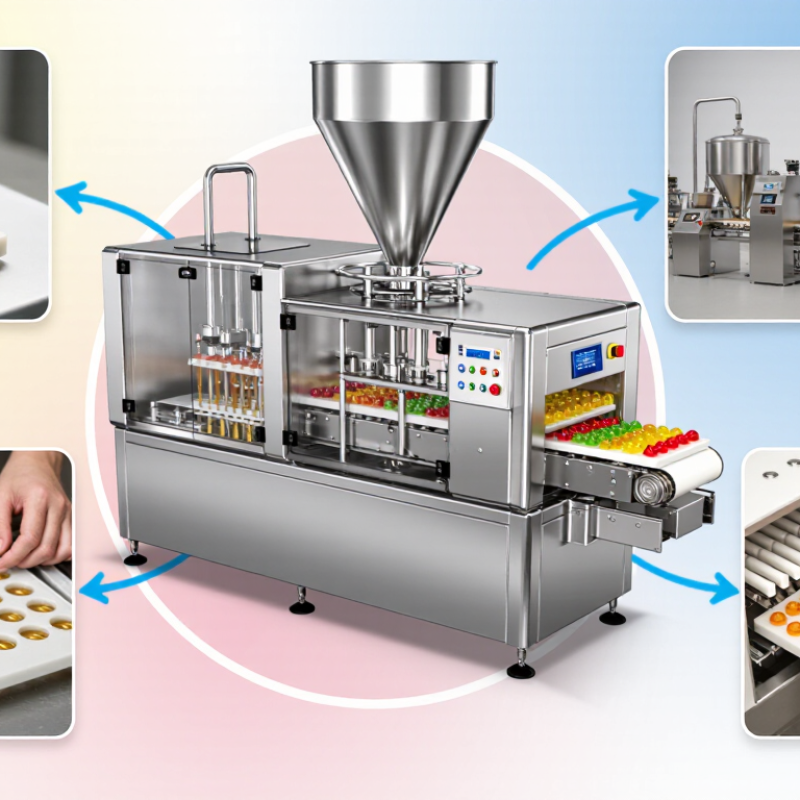
A gummy making machine is food-processing equipment that cooks, blends, deposits, cools, and releases gummy pieces. Its value depends on production goals, not appearance. Small tabletop machines suit recipe testing and limited batches. Automatic depositing lines support higher volumes with steadier weight and shape. Starchless systems use silicone molds or metal tooling, reducing cleanup around powder-based forming processes.
Core functions begin with controlled heating. The machine should maintain a stable temperature while mixing gelatin, pectin, sweeteners, flavors, and colors. A precise depositor fills each cavity evenly. Cooling chambers then set the texture without excessive moisture loss. Some systems include demolding, oiling, and conveyor transfer. Temperature sensors, adjustable filling speed, and easy-access surfaces improve process control.
I have found that calibration affects results more than advertised speed. A small dosing error can create soft centers or uneven pieces. It is not perfect. Operators should check batch weight, texture, surface finish, and cleaning time during trials. Food-contact parts need hygienic construction and straightforward disassembly. Records of temperature, mixing time, and yield support repeatable production. The best machine is the one that matches the formula, floor space, labor skills, and required output, even if its maximum capacity looks less impressive.
What Is the Best Gummy Making Machine in 2026?
The best gummy making machine depends on the production stage, formulation, and required output. This chart shows typical temperature setpoints used across key gummy manufacturing stages. Actual settings vary according to the recipe, gelatin or pectin system, solids content, and equipment design.
Key Factors for Choosing the Best Gummy Making Machine in 2026
What Is the Best Gummy Making Machine in 2026?
The best gummy making machine depends on your recipe, capacity, and quality targets. Grand View Research estimates the global gummy market will grow at about 12.6% annually through 2030. That growth increases pressure on manufacturers to deliver consistent shape, weight, texture, and color.
A practical machine should provide accurate depositing, stable heating, and fast mold changes. Ask for documented tolerances, not attractive showroom claims.
Production speed matters, but it is not the only measure. PMMI industry research continues to highlight labor efficiency, flexible production, and easier changeovers as major packaging priorities. Choose equipment with tool-free cleaning access, clear temperature controls, and recipe storage.
A small batch line may need 20 to 40 molds per cycle, while larger operations require continuous depositing and cooling. Check actual output with your formula. Syrup viscosity changes everything.
Sanitation deserves serious attention. Food equipment should support HACCP procedures and align with applicable food-safety systems, such as ISO 22000.
Stainless steel contact parts, cleanable conveyors, and sealed electrical controls reduce hidden risks. Ask about service response, spare-part availability, training, and validation records.
I would not select the fastest machine first. A 2026 purchase can fail when changeovers take too long or cleaning creates excessive downtime. My own preference is measurable reliability, although production teams sometimes value speed too heavily. A better decision compares trial results, total operating cost, and operator feedback over several production days.
Production Capacity, Automation, and Energy Efficiency Compared
What Is the Best Gummy Making Machine in 2026?
The best gummy making machine depends on usable output, not the largest advertised capacity. In production trials, a line rated at 300 kilograms per hour may deliver less after cooling, demolding, and cleaning delays. A practical evaluation should measure finished gummies per hour, batch consistency, and changeover time. For medium factories, 100 to 200 kilograms per hour can be more valuable than extreme capacity. It may fit labor limits better.
Automation strongly affects daily performance. Servo-driven depositing, automatic mold handling, and recipe-controlled cooking can reduce weight variation and operator errors. A clear touch-screen interface also helps new staff work safely. However, excessive automation can increase maintenance demands. A blocked nozzle should not stop an entire line. Bypass access, diagnostic alarms, and available spare parts matter in real operating conditions. Simple is sometimes better.
Energy efficiency deserves measured attention. Compare electricity and steam use per kilogram of finished product, rather than reviewing motor wattage alone. Variable-speed pumps, insulated tanks, heat recovery, and efficient cooling systems can lower running costs. Cooling often consumes more energy than expected. Monitor power during heating, depositing, and refrigeration separately. The numbers may surprise you. A machine with lower peak capacity can still produce cheaper gummies per kilogram. My own assessment would also include cleaning water, warm-up time, and product loss. No machine is perfect, and impressive specifications can hide inconvenient maintenance work.
Food Safety, Cleaning, and Maintenance Requirements
The best gummy making machine in 2026 is not simply the fastest model. Its food safety design matters more than impressive output numbers. Choose food-contact parts made from documented, corrosion-resistant materials. Smooth welds and rounded corners reduce residue buildup. Crevices are a warning sign.
Cleaning should be practical, not theoretical. Operators need easy access to molds, hoppers, pumps, nozzles, and seals. A useful machine can be disassembled without special tools. After each production run, remove visible sugar and gel residue before it hardens. Wash with approved detergents, rinse with safe water, and apply sanitizer according to measured concentration and contact time. Never guess.
Allergen control requires extra discipline. Keep separate cleaning tools for allergen-sensitive areas, and verify surfaces with visual checks or suitable swab testing. Dry every component fully before reassembly. Moisture trapped behind a gasket can create trouble overnight. Maintenance records should include cleaning time, sanitizer readings, inspection results, and replaced parts. Food-grade lubricant belongs only where the equipment instructions permit it. In practice, rushed cleaning remains a common weakness, even with well-designed equipment. A machine may appear clean while a worn seal holds sticky residue. That detail deserves more attention during routine inspections.
Best Gummy Machine Applications for Different Business Sizes
What Is the Best Gummy Making Machine in 2026?
Best Gummy Machine Applications for Different Business Sizes
For small businesses, a compact depositing machine suits pilot batches, local orders, and seasonal products. A system producing 20–60 kilograms hourly can reduce waste during recipe testing. Manual tray loading may seem slow, but it keeps early investment manageable. Grand View Research’s 2024 analysis expects the global gummy market to grow at roughly 12% annually through 2030. That growth creates opportunity, although demand forecasts are not guarantees.
Growing manufacturers need modular equipment with faster changeovers, temperature control, and integrated cooling. A medium-scale line can support several shapes without rebuilding the whole process. This matters when retailers request different sizes or textures. Large factories usually need continuous depositing, automated demolding, and inline quality checks. PMMI’s 2024 packaging report highlights automation, labor efficiency, and flexible production as major investment drivers. Still, maximum speed is not always the best choice. A complex line can become expensive during cleaning, maintenance, or staff training.
Tips: Compare actual output, not advertised capacity. Ask for test runs using your recipe. Check cleaning access, mold-change time, energy use, and spare-part availability. Leave room for expansion, but avoid buying capacity your orders cannot support. A modest machine with reliable operators may outperform a larger system on an ordinary Tuesday.