If you are interested in financing to fund your Bay-Lynx purchase, we recommend that you connect with Easylease Corp., a Canadian-based leasing and finance company that offers premier equipment leasing and financial services. They are focused on making it easier than ever before for companies to overcome cash flow and resource constraints to acquire the assets they need to grow their business.
Leasing through Easylease Corp. can offer several benefits:
Click here for your Canadian instant lease quote >>
For US customers, Click here for your instant lease application >>
Choosing the best concrete mixer pump for 2026 requires more than comparing engine power or advertised pumping distance. Real job sites expose weaknesses quickly. A machine that looks impressive on paper may struggle with stiff concrete, narrow access, or repeated daily use. The right choice depends on project scale, concrete mix design, site layout, maintenance support, and operator experience.
This guide examines the practical features that influence performance, including pumping pressure, output capacity, hopper design, cleaning access, fuel efficiency, and control systems. It also considers conditions contractors face on site: uneven ground, limited water supply, changing weather, and delivery delays. A compact concrete mixer pump may suit residential foundations, while larger commercial work may require stronger output and longer operating endurance. Small details matter. A difficult-to-reach grease point can waste valuable minutes every shift.
Reliable selection also requires evidence beyond promotional claims. Manufacturer specifications should be checked against independent reviews, service records, warranty terms, and the availability of replacement parts. Experienced operators often notice problems that brochures ignore, such as unstable feeding, excessive vibration, or awkward hose handling. No model is perfect. Even a well-built pump can perform poorly when maintained carelessly or matched with the wrong mix. This comparison therefore focuses on balanced judgment, practical ownership costs, and long-term job-site reliability. The “best” machine may not be the most powerful one. It may be the one that starts consistently, cleans quickly, and keeps the crew moving when conditions become difficult.
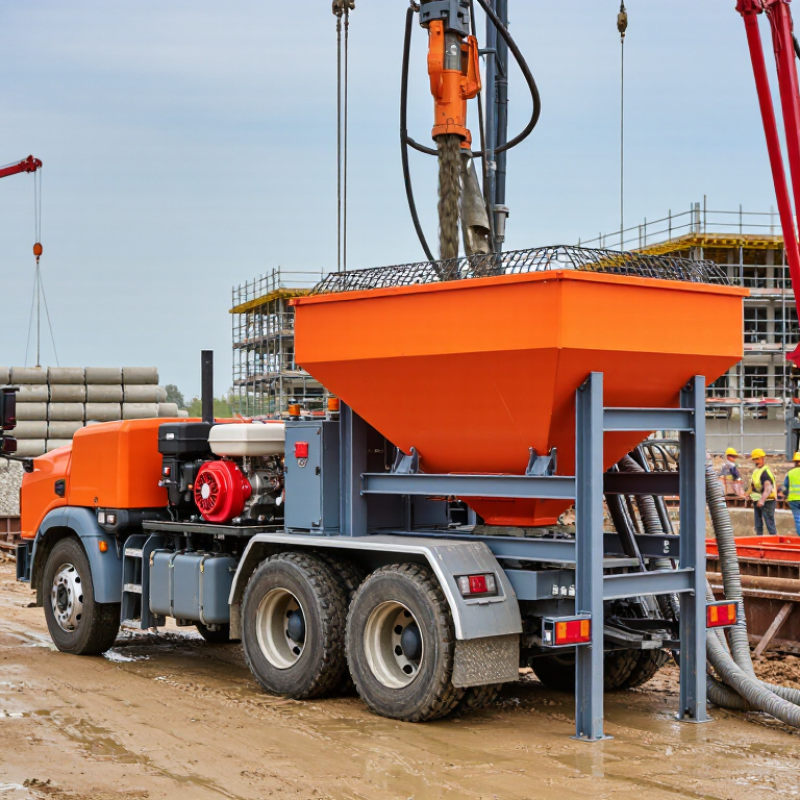
A concrete mixer pump combines concrete mixing and placement in one mobile machine. It stores cement, water, sand, and aggregate in a hopper. An agitator keeps the mixture moving. Hydraulic pistons then push concrete through a delivery pipe. This system suits foundations, slabs, walls, and narrow urban sites. The best choice for 2026 depends on output, pumping distance, aggregate size, and site access. Bigger is not always better.
The American Concrete Institute’s ACI 304.2R guidance stresses consistent batching, suitable slump, and controlled delivery. These factors reduce blockages and uneven strength.
A practical pump may deliver around 10 to 40 cubic metres per hour, depending on mix design and line length. The Global Cement and Concrete Association reports that concrete contributes about 7% of global carbon dioxide emissions.
Efficient placement can reduce rejected loads, cleanup, and unnecessary material use. Still, equipment efficiency cannot repair poor mix proportioning. That point deserves more attention.
Tips: Check the aggregate size against the pipe diameter.
Inspect seals, hoses, and hydraulic oil before pouring.
Keep a trained operator near the controls.
Prime the line correctly, but avoid excessive water.
Record pressure, output, and stoppages after each job.
Field experience shows that small delays often reveal larger maintenance problems.
Allow space for safe washout and cleaning. A muddy site can change the plan quickly.

In 2026, concrete mixer pumps fall into several practical types: trailer-mounted line pumps, truck-mounted boom pumps, mixer-pump trucks, and stationary pumps. Each design serves a different jobsite rhythm. A line pump fits narrow residential sites, where hoses cross a compact slab and reach around corners. A boom pump suits tall walls, bridges, and multi-storey work. Its articulated boom places concrete with less manual hose movement. Mixer-pump trucks combine batching and pumping, which can reduce transfer delays on remote projects. Stationary pumps remain useful for long pours and fixed construction zones.
The Grand View Research report, Concrete Pumps Market Size, Share and Trends, 2024–2030, estimated the global market at about USD 4.9 billion in 2023. It also projected roughly 4.8% annual growth through 2030. That growth reflects rising urban construction and demand for faster placement, not one universal machine. The wrong type still wastes fuel, labor, and setup time. A trailer pump may seem economical, but extended hose runs can increase cleaning and pressure-control demands. Small detail. Operators should check aggregate size, required output, pipeline length, access width, and daily pour volume before choosing.
Field experience also exposes a weakness in simple comparisons. Rated output is not actual output. Slump, traffic, hose bends, and crew coordination can reduce performance. ASTM C94 guidance supports controlling ready-mixed concrete quality, while local pump manuals define safe operating limits. In 2026, the best mixer pump is therefore the type matching the pour, site, and trained operator—not merely the model with the largest number.
The best concrete mixer pump for 2026 should match real site conditions, not just impressive specifications. A reliable unit keeps cement, sand, aggregate, and water evenly blended during continuous work. Consistent output matters more than a high peak capacity. Uneven mixes create weak spots and expensive repairs.
Pump pressure is another defining feature. It should move the required concrete through the planned hose length and height without excessive strain. A practical machine offers adjustable output, responsive controls, and clear pressure readings. Operators need control. Sudden surges can damage hoses or disturb formwork. I have found that simple controls are often safer than crowded digital panels, especially in dust or rain.
Mobility also deserves careful attention. Strong tires, stable outriggers, and balanced weight help the pump work on uneven ground. Easy access to the hopper, valves, and washout points reduces cleaning time. Safety guards, emergency stops, and protected moving parts should be standard, not optional extras. Fuel efficiency and low maintenance costs affect the real purchase value. Service records and available replacement parts provide useful evidence of long-term reliability. Still, no machine fits every project. A compact pump may struggle with dense concrete, while a larger model can waste fuel on small residential work. Choosing only by price is a mistake worth reconsidering.
What Is the Best Concrete Mixer Pump for 2026?
Choosing the best concrete mixer pump for 2026 starts with job conditions, not brochure claims. A reliable comparison should examine output, pressure, aggregate size, and operating range. A small housing project may need 20 cubic meters per hour, while a bridge pour demands steadier delivery. Check actual output under hose length, elevation, and mix slump. Rated capacity alone can mislead. I have seen machines lose speed when wet concrete travels through a long, narrow line. That detail matters.
Cost comparison needs more than purchase price. Record fuel or electricity use, labor requirements, cleaning time, and planned maintenance. A cheaper pump may require two operators and frequent seal replacement. A costlier unit may recover its price through faster placement and fewer stoppages. Ask for service intervals, spare-part availability, warranty terms, and test data from similar jobs. Request a demonstration with your intended mix. Concrete containing coarse aggregate can behave differently from a smooth laboratory sample. I would also calculate cost per placed cubic meter, although this figure is never perfectly stable.
Tips: Measure your usual pour before choosing capacity. Test the pump with real aggregate and hose lengths. Inspect wear parts after demanding shifts. Keep a written log of output, fuel, delays, and repairs. Do not ignore operator feedback. It often reveals awkward controls or difficult cleaning points. Leave a safety margin, but avoid paying for capacity your projects rarely use. A spreadsheet helps. Human judgment still matters.
How should you compare concrete mixer pump performance and cost? The chart compares representative equipment classes using typical rated concrete output and estimated 2026 purchase-price midpoints. Higher output is useful for larger pours, while total value also depends on maintenance, labor, transport, and operating conditions.
Indicative industry benchmark values for new equipment, excluding taxes, delivery, financing, and site-specific accessories. Actual performance varies with mix design, aggregate size, pipeline length, and jobsite conditions.
What Is the Best Concrete Mixer Pump for 2026?
The best concrete mixer pump depends on the project, not a single specification. For residential slabs, villas, and small extensions, choose a compact unit with simple controls and reliable maneuverability. A 20–30 meter delivery line often suits narrow sites and short pours. Keep the machine close to the work area. Excess hose creates pressure loss and slows placement.
Large foundations and commercial floors require stronger output, larger hoppers, and steady pumping pressure. Projects with long vertical or horizontal distances need careful pressure calculations. Check the required aggregate size before purchasing. Some mixtures contain coarse stone that smaller systems cannot handle efficiently. On high-rise sites, confirm the pump’s rated height, pipeline layout, and cleaning procedure. A small mismatch can cause expensive delays.
Road repairs and remote construction sites need mobility and dependable power. A trailer-mounted mixer pump may be practical where access changes daily. Diesel power can help in areas with unstable electricity, but fuel use and ventilation need attention. I have seen crews focus on maximum output and overlook washout space. That decision created avoidable cleanup problems. My own early estimates were too optimistic when hose bends were ignored. Ask operators to test the pump with the intended mix, not plain water. Review service access, wear parts, emergency controls, and operator training before approval. The right machine should match the concrete mix, site distance, crew skill, and daily volume.
| Concrete Mixer Pump Type | Typical Output | Typical Maximum Pressure | Recommended Aggregate Size | Typical Horizontal / Vertical Reach | Best-Fit Construction Projects | Main Advantages | Key Limitations |
|---|---|---|---|---|---|---|---|
| Small Trailer-Mounted Mixer Pump | 3–15 m³/h | 40–80 bar | Up to approximately 20–25 mm | 100–200 m / 40–80 m | Residential slabs, driveways, repairs, small foundations, and low-rise renovation work | Compact, easy to transport, lower fuel consumption, and suitable for restricted sites | Lower production rate and limited suitability for large continuous pours |
| Truck-Mounted Mixer Pump | 20–60 m³/h | 70–120 bar | Up to approximately 25–40 mm | 200–400 m / 80–150 m | Multi-story buildings, commercial foundations, retaining walls, and medium-sized infrastructure projects | Good mobility, high pumping capacity, and fast setup between work areas | Higher operating cost, larger turning radius, and greater access requirements |
| Stationary Concrete Mixer Pump | 20–80 m³/h | 80–160 bar | Up to approximately 25–40 mm | 300–600 m / 100–250 m | High-rise construction, tunnels, bridges, dams, and projects requiring long-distance delivery | Strong pressure capability, stable long-duration operation, and flexible pipe layouts | Requires a separate mixer or ready-mix supply and is less mobile on site |
| Concrete Mixer Pump with Boom | 30–90 m³/h | 70–120 bar | Up to approximately 25–40 mm | Boom radius of approximately 20–45 m; vertical reach of approximately 25–50 m | High-rise floors, large slabs, bridges, industrial buildings, and congested construction sites | Rapid concrete placement, reduced manual hose handling, and broad working coverage | Higher purchase and maintenance cost; requires adequate setup space and ground stability |
| Shotcrete Mixer Pump | 3–20 m³/h | 40–100 bar | Generally up to approximately 10–16 mm | 100–250 m / 50–120 m | Tunnel linings, slope stabilization, swimming pools, mine support, and structural repair | Designed for sprayed concrete, precise application, and difficult or uneven surfaces | Not optimized for high-volume conventional concrete placement |
| Electric Mixer Pump | 5–30 m³/h | 50–100 bar | Up to approximately 20–30 mm | 100–300 m / 50–120 m | Indoor construction, urban projects, residential work, and sites with reliable electrical power | Lower local emissions, reduced operating noise, and simplified maintenance in suitable environments | Dependent on electrical capacity, cable length, and weather protection requirements |