
If you are interested in financing to fund your Bay-Lynx purchase, we recommend that you connect with Easylease Corp., a Canadian-based leasing and finance company that offers premier equipment leasing and financial services. They are focused on making it easier than ever before for companies to overcome cash flow and resource constraints to acquire the assets they need to grow their business.
Leasing through Easylease Corp. can offer several benefits:
Click here for your Canadian instant lease quote >>
For US customers, Click here for your instant lease application >>
Global buyers are reassessing packaging automation in 2026. Labor shortages, tighter quality demands, and faster product changes are reshaping factory investment. PMMI’s 2024 State of the Industry Report highlights workforce pressure, equipment integration, and productivity as major packaging concerns. These factors directly influence the selection of an Automatic Bag Feeding Machine.
Smithers’ The Future of Global Packaging to 2028 also reports continued packaging growth, driven by food, healthcare, personal care, and e-commerce. However, forecasts differ by region and application. That matters. A machine designed for flat pouches may perform poorly with gusseted bags or uneven materials.
Sean Riley, Senior Director of Media and Industry Communications at PMMI, has said, “Automation is becoming a necessity, not a luxury.” His observation reflects what many plants now experience. Operators need stable feeding, quick changeovers, simple controls, and measurable uptime. They also need safer workflows around repetitive loading tasks.
The best Automatic Bag Feeding Machine is not always the fastest model. It should match bag dimensions, material friction, line speed, sealing equipment, and sanitation requirements. A practical evaluation includes factory acceptance testing, sample-bag trials, spare-parts support, and local service capability.
Small details matter. A misaligned bag can stop an entire line. A poorly tuned sensor can create waste. The machine may look impressive. Its real value appears during long production shifts.
This guide compares leading 2026 options for global buyers. It considers performance, integration, maintenance, compliance, and total ownership cost. No machine wins everywhere. That limitation deserves honest attention.
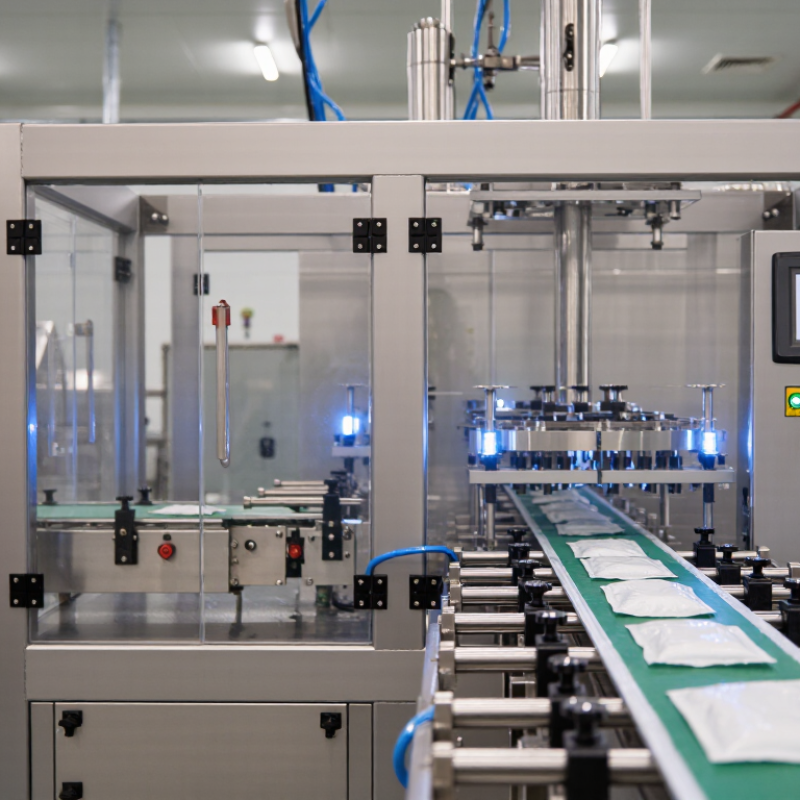
An automatic bag feeding machine is a packaging device that supplies empty bags to a filling line. It stores bags in a magazine, separates them, and positions each one for accurate filling. Sensors detect bag presence and confirm correct placement. A gripper or vacuum system moves the bag without constant manual handling. The machine may also open the bag before filling begins. Simple in principle. However, stable feeding depends on bag material, thickness, size, and surface condition.
In daily operation, the machine works with weighing, filling, sealing, or coding equipment. Operators load a stack of empty bags into the magazine. A conveyor or robotic arm then transfers each bag at a controlled speed. For powder products, dust control and gentle suction are important. For granular products, stronger gripping may be necessary. Adjustable guides help support different bag widths. This flexibility matters for factories with varied packaging orders. But no machine fits every bag perfectly. In practical commissioning, settings may require several adjustments. Static electricity, folded edges, and uneven bags can still cause misfeeds.
For global buyers, check the machine’s compatible bag range, output capacity, safety guarding, and electrical requirements. Ask for clear installation drawings and maintenance instructions. A trial using real bags and products can reveal problems that brochures rarely show. Reliable equipment should provide accessible wear parts, sensor diagnostics, and safe cleaning access. Operators also need practical training, not only technical documents. Speed should not be the only target. A faster feeder with frequent stoppages may reduce real production. The better question is whether it feeds consistently during long shifts and changing bag conditions.
2026 Best Automatic Bag Feeding Machine for Global Buyers
How Automatic Bag Feeding Machines Work
An automatic bag feeding machine separates empty bags, opens them, and presents them for filling. A magazine stores flat bags in a controlled stack. A vacuum cup removes one bag at a time. Sensors check its position before the opening cycle begins. Servo-driven belts then transfer the bag toward the filling station.
The sequence depends on timing. Vacuum pressure must match the bag material and surface texture. Too much pressure may deform thin film. Too little pressure can cause double picks. Photoelectric sensors detect missing, skewed, or overlapping bags. PLC controls coordinate motors, air valves, and safety interlocks. Operators usually adjust speed, suction, and guide width during commissioning.
PMMI’s 2024 State of the Industry report valued U.S. packaging machinery shipments at about 11.3 billion dollars in 2023. The report also identified automation and labor efficiency as continuing investment drivers. These figures explain buyer interest, but they do not guarantee performance. Real production floors are less tidy than test rooms. Dust, humidity, and inconsistent bag dimensions still create stoppages. A practical acceptance test should measure pick accuracy, changeover time, compressed-air use, and rejected bags. One overlooked detail matters: a machine can run quickly while feeding poorly. Careful trials with the actual bag material remain essential.
| Evaluation Dimension | Typical Specification or Data | How It Works | Buyer Considerations |
|---|---|---|---|
| Machine Function | Automatic pickup, opening, filling, sealing, and discharge of pre-made bags | A bag magazine supplies empty bags to a gripper or vacuum pickup system. The bag is opened, positioned at the filling station, sealed after filling, and transferred to the outfeed conveyor. | Confirm whether the machine is designed for pre-made bags rather than forming bags from a roll of film. |
| Typical Output | 20–60 bags per minute | One complete operating cycle normally handles one bag, while faster configurations use multiple filling lanes or optimized indexing. | Actual output depends on product characteristics, bag size, filling method, sealing time, and the number of filling heads. |
| Bag Size Range | Approximately 80–450 mm wide and 120–700 mm long | Servo-driven positioning devices adjust the bag grippers and filling station to match the selected bag dimensions. | Provide the minimum and maximum bag width, length, gusset depth, and opening style before selecting a machine. |
| Compatible Bag Styles | Flat pouches, stand-up pouches, zipper bags, three-side-seal bags, four-side-seal bags, and gusseted bags | Different gripper jaws, vacuum cups, opening tools, and sealing assemblies are used according to the bag construction. | Bag samples should be tested because very flexible, dusty, or static-sensitive bags may require special handling components. |
| Common Bag Materials | PE, PP, PET laminates, aluminum-laminated films, paper laminates, and other heat-sealable structures | Heating bars or impulse sealing systems melt compatible thermoplastic sealing layers to create a closed package. | Sealing temperature, dwell time, pressure, and cooling requirements must match the actual packaging material. |
| Filling Technologies | Volumetric cup, auger, linear weigher, multihead weigher, liquid pump, and piston filler | The filling system measures the target product quantity and releases it into the opened bag before sealing. | Dry powder, granules, liquids, viscous products, and fragile products require different filling systems. |
| Typical Filling Range | Approximately 5 g to 5 kg, depending on the filler and bag format | The dosing device controls the product quantity through weighing, volume measurement, screw rotation, pumping, or piston movement. | Accuracy should be evaluated using the actual product, especially when the product has irregular particles, moisture, or poor flowability. |
| Dosing Accuracy | Commonly within ±0.5% to ±2% of target weight for suitable products and properly calibrated systems | Load cells, timed dosing, or volumetric controls regulate the amount released into each bag. | Accuracy is not a fixed machine value; it depends on product density, particle size, flow behavior, target weight, and operating speed. |
| Bag Pickup Method | Mechanical grippers, vacuum cups, or combined gripping and vacuum systems | Vacuum cups separate the front and back panels, while grippers hold the bag during transport, filling, and sealing. | Porous paper bags, dusty surfaces, and bags with strong static electricity may require modified vacuum or gripping arrangements. |
| Control System | PLC-based control with a touchscreen operator interface, servo drives, sensors, and recipe storage | Photoelectric sensors and position sensors verify bag presence, opening, filling position, and sealing conditions during each cycle. | Useful functions include automatic fault alarms, multilingual menus, password levels, data logging, and recipe management. |
| Compressed Air Requirement | Typically 0.6–0.8 MPa supply pressure; approximately 300–800 NL/min consumption | Pneumatic cylinders operate grippers, opening devices, clamps, and other actuators. | Air consumption varies with cycle rate, bag size, actuator count, and vacuum generation method. Clean, dry air is recommended. |
| Electrical Supply | Common configurations include 220–240 V or 380–415 V, 50/60 Hz, three-phase power | Electrical power runs the control system, motors, heaters, sensors, conveyors, and filling equipment. | Power requirements must be matched to the destination country, local electrical code, installed options, and total line equipment. |
| Installed Power | Approximately 4–15 kW for the main bagging machine, excluding some upstream and downstream equipment | Most installed power is used by sealing heaters, servo motors, conveyors, pumps, and the selected dosing system. | Actual operating consumption is usually lower than the rated installed power and depends on heater duty cycle and machine speed. |
| Sealing Temperature | Typically 120–220°C for many heat-sealable plastic laminates | Temperature-controlled sealing jaws apply heat and pressure for a defined time, followed by cooling or stabilization when required. | The correct temperature must be established through testing because each film structure has its own sealing window. |
| Changeover Time | Approximately 15–45 minutes for common size changes after tooling and recipe preparation | Operators adjust guides, grippers, filling height, sealing width, and software parameters for the new bag format. | Tool-free adjustment, digital position displays, and stored recipes can reduce changeover time and setup errors. |
| Machine Footprint | Approximately 2,000–4,500 mm long, 1,200–2,000 mm wide, and 1,800–2,400 mm high | The footprint includes the bag magazine, filling area, sealing station, control cabinet, and discharge conveyor. | Allow additional space for product feeding, finished-bag handling, maintenance access, electrical cabinets, and operator movement. |
| Product Contact Materials | Commonly stainless steel for product-contact parts; 304 stainless steel is widely used, with 316 stainless steel for more corrosive applications | Hoppers, chutes, filling tubes, and other contact parts are designed to minimize contamination and simplify cleaning. | Material selection should reflect product acidity, salt content, moisture, cleaning chemicals, and hygiene requirements. |
| Safety Features | Guard doors, emergency stops, interlock switches, overload protection, and fault alarms | The control system stops or inhibits hazardous motion when a guard is opened, an emergency stop is pressed, or a critical fault occurs. | Verify compliance with applicable local machinery safety rules and request a documented risk assessment for the complete production line. |
| Typical Applications | Pet food, snacks, grains, seeds, powders, detergents, chemicals, hardware, agricultural products, and household goods | The same basic bag-handling sequence is adapted with different dosing, sealing, cleaning, and dust-control equipment. | Food, pharmaceutical, chemical, and dusty products may require additional hygiene, containment, extraction, or washdown provisions. |
| Recommended Acceptance Tests | Capacity test, weight-accuracy test, seal-strength test, bag-drop test, leak test, and continuous-run test | The machine is evaluated with the buyer’s bags and product under agreed operating conditions before final approval. | Use the actual packaging materials and product whenever possible; define pass criteria for speed, accuracy, rejects, and seal integrity. |
| Maintenance Requirements | Daily cleaning and inspection; regular checks of vacuum cups, grippers, belts, sensors, heaters, lubrication points, and sealing jaws | Routine maintenance prevents bag misfeeds, unstable vacuum, poor sealing, product buildup, and unexpected downtime. | Keep common wear parts and sealing components available, and train operators to identify abnormal noise, temperature, and pressure. |
For global buyers, an automatic bag feeding machine should be judged by measurable performance, not attractive claims. Start with bag format: flat, gusseted, stand-up, or pre-opened bags. Check width range, length range, and material thickness. A machine handling 120 to 180 bags per minute may suit high-volume packing, but real output depends on product shape and operator loading. Ask for a recorded factory test. Brochure numbers can be optimistic.
Compare feeding accuracy carefully. A practical target is 99.5% or higher under stable conditions. Confirm servo-driven indexing, vacuum control, sensor response, and jam detection. The feeder should reject double bags without stopping the full line. That detail matters. Review changeover time, too. Tool-free adjustments can reduce downtime, although “tool-free” does not always mean effortless. Ask whether operators can change sizes in under 15 minutes. Safety doors, emergency stops, and guarded moving parts should meet applicable regional standards. Request test reports and electrical documentation before purchase.
Technical compatibility often decides success. Verify conveyor height, communication signals, power supply, compressed-air demand, and available floor space. Stainless steel contact surfaces support cleaning, while sealed bearings protect moving components from dust. Check air consumption at peak speed, not idle speed. Spare sensors, belts, and vacuum cups should be listed with service intervals. Remote diagnostics are useful, but trained local support remains important. Inspect noise, access panels, and cleaning time during a live trial. A fast machine that is difficult to maintain may become expensive. Leave room for imperfect products, because bags rarely behave identically in production.
2026 Best Automatic Bag Feeding Machine for Global Buyers
How to Choose the Best Machine for Global Applications
Choosing an automatic bag feeding machine starts with the bag, not the advertised speed. Measure bag width, length, thickness, opening style, and material. Include filled and empty bag samples. Small errors matter. A machine that handles paper bags may struggle with woven or laminated materials. Ask for feeding tests using your real bags, especially when dust, static, or humidity affects separation.
Production targets also need careful review. Confirm the stable feeding rate, not only the maximum rate shown in a brochure. Check changeover time, adjustment methods, sensor accuracy, and access for cleaning. Operators should understand the controls without lengthy training. Clear manuals, spare-parts lists, electrical drawings, and remote support improve reliability across different regions. Voltage, frequency, language settings, and local safety requirements must be verified before purchase.
Global applications often expose weaknesses that factory demonstrations hide. A perfect specification rarely exists. Leave room for future bag sizes, seasonal humidity, and unexpected material variation. I would request a documented acceptance test, maintenance schedule, and response plan for common faults. Verify applicable conformity documents with qualified local professionals. The cheapest machine may become expensive when operators stop production for simple adjustments. Select equipment that can be inspected, repaired, and operated safely in the destination environment.
Typical planning ranges for automatic premade-bag feeding applications. The suitable machine depends on bag format, product characteristics, filling accuracy, local power standards, hygiene requirements, and required output.
Indicative engineering ranges: actual speed varies with bag size, product flowability, sealing method, changeover frequency, and automation level. Validate the final specification with product and packaging tests.
2026 Best Automatic Bag Feeding Machine for Global Buyers
Installation begins with a site survey, not a purchase order. Confirm floor level, power frequency, compressed-air quality, and operator access. A practical factory test should use the buyer’s actual bags, including dusty, curled, or slightly warped samples. Test it empty. Then test it under normal production speed. This exposes feeding errors that brochures rarely mention.
Maintenance should be measurable. Check suction cups, belts, sensors, grippers, and air filters at defined intervals. Keep common wear parts locally, because a small vacuum leak can stop an entire line. PMMI’s 2024 Packaging Machinery Economic Report identifies labor availability and automation efficiency as continuing industry concerns. Therefore, buyers should request remote diagnostics, clear fault codes, and multilingual maintenance instructions. High speed is not always the best choice. Stable changeovers may create greater value.
Safety must be verified during installation and after adjustments. Guards, interlocks, emergency stops, and lockout procedures should follow ISO 12100 risk-assessment principles and applicable local regulations. The U.S. Bureau of Labor Statistics recorded 5,283 fatal occupational injuries in 2023, reinforcing the cost of weak safety controls. The International Federation of Robotics reported 541,302 industrial robots installed worldwide in 2023, showing stronger automation adoption. However, automation does not remove human risk. A buyer should inspect FAT records, noise levels, pinch points, documentation, and training quality. I would also question optimistic output claims. Actual performance changes with bag material, dust, operator skill, and cleaning discipline.