If you are interested in financing to fund your Bay-Lynx purchase, we recommend that you connect with Easylease Corp., a Canadian-based leasing and finance company that offers premier equipment leasing and financial services. They are focused on making it easier than ever before for companies to overcome cash flow and resource constraints to acquire the assets they need to grow their business.
Leasing through Easylease Corp. can offer several benefits:
Click here for your Canadian instant lease quote >>
For US customers, Click here for your instant lease application >>
Choosing the right Amino Liquid manufacturer in China takes more than comparing prices or browsing product photos. Buyers need to understand what each supplier actually makes, how its formula is documented, and whether it fits the intended application. Product names can sound similar while specifications differ. Details matter.
A useful supplier review starts with clear technical information: amino acid profile, concentration, recommended use, packaging options, and storage conditions. Ask for current product specifications and representative batch documents, then check that the information matches the quotation and label. For example, a buyer comparing two liquid products should confirm whether stated content refers to total amino acids or free amino acids. That distinction can affect product selection. It is easy to miss.
Manufacturing capability also deserves careful attention. A credible supplier should explain its production process, quality checks, traceability practices, and available export support without making vague promises. Buyers can request samples, review independent test results where appropriate, and clarify lead times before placing larger orders. Communication is part of the evaluation, too; delayed or incomplete answers may signal avoidable sourcing friction. Still, documents alone cannot show how a supplier handles every issue. Real performance needs checking.
This guide explores how global buyers can compare Chinese Amino Liquid manufacturers using practical, verifiable criteria. It considers product fit, quality evidence, customization, logistics, and communication—not just headline pricing. The “best” supplier will depend on the buyer’s needs, market, and order size. There is no universal winner, and a shortlist should be treated as a starting point, not a guarantee.
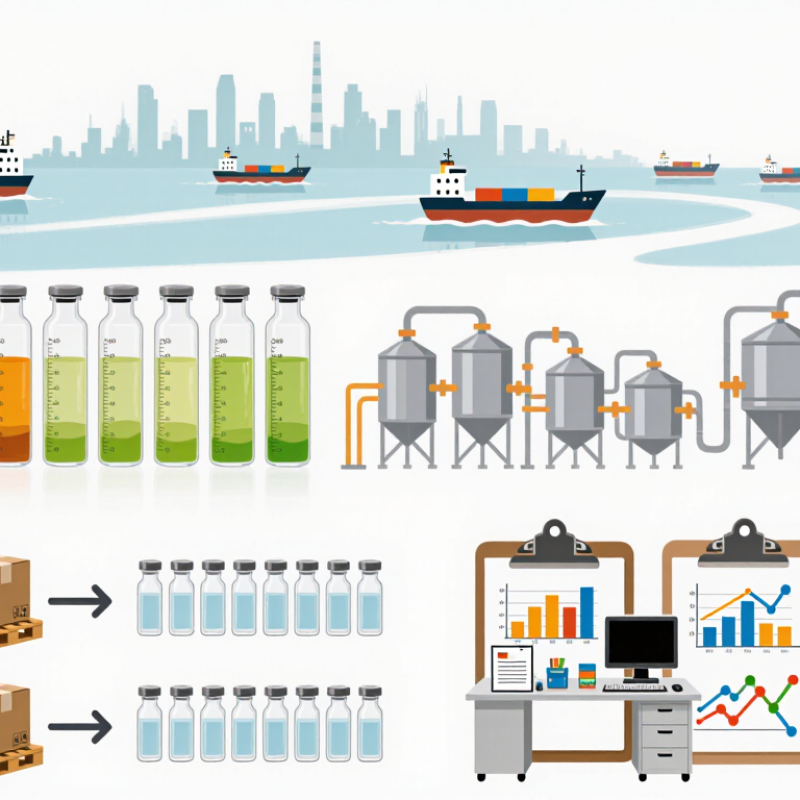
Amino liquid usually refers to a water-based concentrate containing amino acids and small peptides, often used in agricultural products. Its exact composition depends on the protein source and processing method. The label alone tells only part of the story.
Production commonly begins with plant or animal proteins, such as soybean meal or other approved protein materials. Enzymes can break proteins into smaller peptides and amino acids under controlled conditions. Some producers use acid hydrolysis, while fermentation may create amino acids through microbial activity. These methods are not interchangeable. They can produce different amino-acid profiles, salt levels, and degrees of breakdown.
After hydrolysis or fermentation, the mixture is filtered to remove larger solids. It may then be concentrated and adjusted for pH and stability. A reliable specification should state key details, including total amino acids, free amino acids, soluble solids, and moisture. Ask for recent test results, not just a product brochure. Small differences matter. A dark, viscous sample may look concentrated, but appearance cannot confirm its composition. Even good documentation has limits, so buyers should compare samples with the stated specifications before making a larger purchase.
| Comparison Dimension | What Buyers Should Know | Production or Verification Details | Questions to Ask a Supplier |
|---|---|---|---|
| Product definition | “Amino liquid” is a broad commercial term, not one single standardized product. It may refer to an amino-acid solution, a protein hydrolysate, or a formulated liquid fertilizer. | Composition depends on the raw material, hydrolysis or fermentation route, and any nutrients or additives included in the formulation. | Is the product based on free amino acids, peptides, or both? What is its intended application and exact composition? |
| Enzymatic protein hydrolysate | Produced by using enzymes to break proteins into smaller peptides and amino acids. Plant, animal, or other protein materials may be used, depending on the product. | The process commonly includes raw-material preparation, enzymatic hydrolysis, solid–liquid separation, and product adjustment. Enzyme choice and process conditions affect the resulting composition. | What raw material and enzymes are used? Can the supplier provide a specification for amino-acid content and the product’s source materials? |
| Acid-hydrolyzed product | Made by breaking down protein with acid. The resulting amino-acid profile and processing residues depend on the source material and process controls. | Production generally involves hydrolysis followed by neutralization and clarification. Ask how the manufacturer controls residual salts and other process-related parameters. | What hydrolysis and neutralization controls are used? Which parameters are tested in the finished-product batch? |
| Fermentation-derived amino acids | Some amino acids are produced by microbial fermentation and then recovered into a liquid product. This route is distinct from hydrolyzing whole proteins. | Fermentation products may undergo separation, purification, and formulation. The supplier should identify whether the product contains individual amino acids or a broader mixture. | Which amino acids are present, and are they fermentation-derived? Is the product a single-amino-acid solution or a blended formulation? |
| Finished-product specifications | Specifications vary by grade and intended use. Relevant items can include total and free amino acids, total nitrogen, pH, density, appearance, and solubility. | Request a current technical data sheet and a batch-specific certificate of analysis (COA). Confirm the test methods and units used for each stated value. | Are results reported as free amino acids or total amino acids? Can the supplier share representative batch COAs and explain the analytical methods? |
| Raw-material traceability | Source materials can affect composition, consistency, suitability, and market acceptance. Requirements differ according to the buyer’s application and destination market. | Ask for raw-material descriptions and documented controls for receiving, storage, and batch traceability. Confirm any restrictions relevant to the intended use. | Can the supplier trace finished batches to raw-material lots? Are source and processing details available for regulatory or customer review? |
| Quality and safety documentation | Documentation should match the product’s intended application. A certificate or management-system claim does not, by itself, establish that a product meets every destination-market requirement. | Depending on the application, request a COA, safety data sheet (SDS), product specification, and applicable manufacturing or compliance documents. | Which documents are available for this specific product and manufacturing site? Can they be provided in English and kept current? |
| Manufacturing consistency | Consistent composition and appearance matter for formulation and repeat purchasing. Evaluate evidence from multiple batches rather than relying only on a sample. | Review batch records or multiple COAs where available, and clarify how the manufacturer handles out-of-specification results and product changes. | How is batch-to-batch consistency monitored? Will the supplier notify buyers before changing raw materials or process conditions? |
| Packaging and transport | Packaging should be compatible with the liquid, intended storage conditions, transport route, and import requirements. | Confirm container material, closure, net weight or volume, labeling, storage guidance, and whether the product requires any special handling. | What packaging options and export documents are available? What are the recommended storage conditions and stated shelf life? |
| Supplier evaluation | A reliable comparison should be based on documented product fit, production capability, quality controls, communication, and export experience—not an unsupported ranking. | Compare quotations against the same specification, request samples where appropriate, and verify that the quoted product matches the documents and intended application. | Can the supplier demonstrate relevant production experience, provide a clear quotation against your specification, and support pre-shipment quality checks? |
