If you are interested in financing to fund your Bay-Lynx purchase, we recommend that you connect with Easylease Corp., a Canadian-based leasing and finance company that offers premier equipment leasing and financial services. They are focused on making it easier than ever before for companies to overcome cash flow and resource constraints to acquire the assets they need to grow their business.
Leasing through Easylease Corp. can offer several benefits:
Click here for your Canadian instant lease quote >>
For US customers, Click here for your instant lease application >>
In construction projects, efficiency and precision are crucial. The use of a concrete lorry with pump plays a significant role in achieving these goals. This powerful machinery not only transports concrete but also delivers it directly to the desired location. By incorporating this equipment, builders can enhance their workflow and reduce labor costs significantly.
Concrete lorries with pumps offer a range of benefits. They streamline the pouring process, minimizing the time needed to complete tasks. This leads to faster project completion. Additionally, these trucks improve job site safety by reducing manual handling. However, it's essential to consider the specific requirements of each project. Not all sites may be compatible with this equipment.
While the advantages are clear, there are potential downsides to remember. For instance, some operators may lack experience with the machinery, leading to operational challenges. Understanding these nuances is vital for professionals. Ultimately, using a concrete lorry with pump can transform project execution, but careful consideration and expertise are necessary for optimal results.
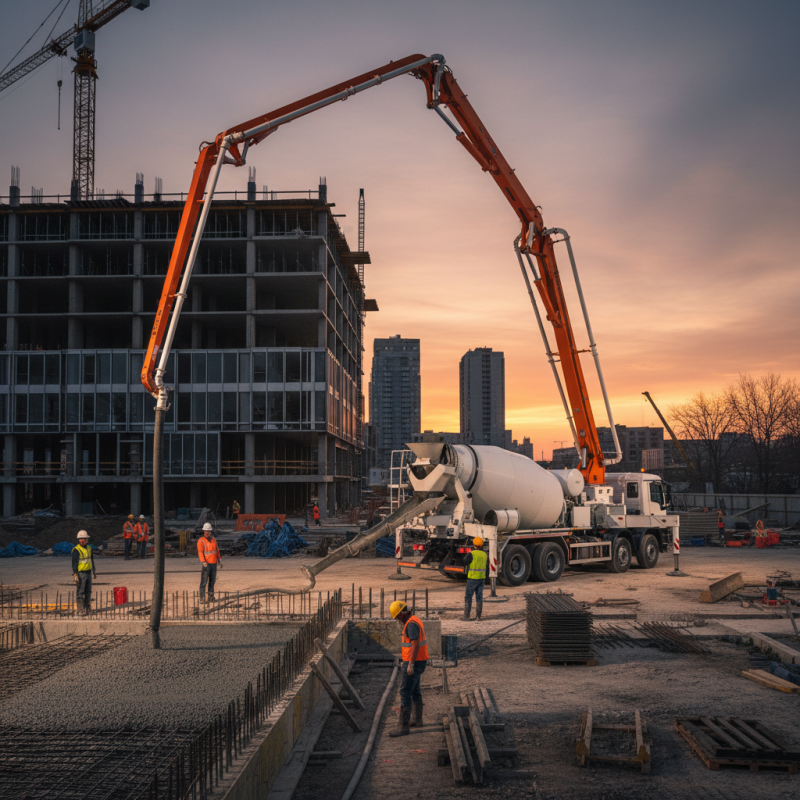
Concrete lorries equipped with pumps have transformed the construction industry. Their effectiveness in transporting and pouring concrete makes them invaluable. The primary advantage lies in their ability to deliver concrete directly to hard-to-reach areas. This means fewer workers laboriously moving the material by hand, reducing injury risks.
Using these lorries speeds up project timelines. Pouring concrete becomes more efficient, allowing contractors to meet deadlines. Plus, the precision of pumping ensures an even distribution of concrete. This minimizes wastage and enhances the quality of the finished structure. By using a pump, you can achieve an exact flow rate, reducing errors.
**Tips:** Ensure the site is accessible for large vehicles. Clear pathways can prevent delays. Investing in proper training for operators can enhance safety and efficiency. Consider the weather conditions, as extreme temperatures can affect concrete setting. Regular maintenance checks for the lorry and pump are essential too.
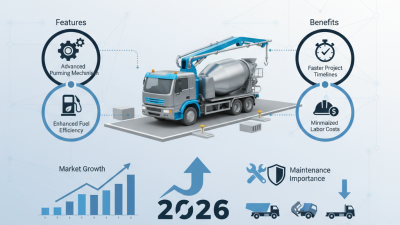
Concrete lorries equipped with pumps revolutionize construction projects, enhancing efficiency significantly. These vehicles minimize the manual labor usually associated with concrete placement. The pump technology allows concrete to be delivered directly to hard-to-reach areas, reducing transportation time. This targeted delivery means that labor can focus on other essential tasks the project may require.
Using a concrete lorry with a pump also improves consistency in pouring. The automated process ensures a uniform flow of concrete, reducing the chances of air bubbles or inconsistencies. This precision is crucial for structural integrity, especially in large-scale builds. Yet, challenges remain. If the pump malfunctions, it can cause delays. Regular maintenance is vital to keep the pump in optimal condition, avoiding unexpected setbacks.
Moreover, employing this technology can be more economical in the long run. Time saved on labor and the reduction in material wastage can lead to lower overall project costs. However, the initial investment in such equipment may be daunting for smaller contractors. This hesitance might limit the benefits for some, yet those who embrace this method often find it transformative.
Using a concrete lorry with a pump can significantly reduce labor costs in construction projects. Traditional concrete delivery often requires a large team for mixing and pouring the material. This increases both manpower and time spent on site. When using a lorry with a pump, one or two operators can manage the entire process. As a result, businesses can cut down on wages and alleviate the strain on human resources.
However, it’s essential to consider the learning curve involved. Not every team is familiar with operating these vehicles. Proper training is needed to maximize efficiency and safety. Investing time in training can save money later by minimizing mishaps and delays.
Tips: Always review your workforce capabilities before transitioning to using concrete pumps. Engage with professionals to understand the best practices. Monitor the operations closely during initial uses to identify areas needing improvement. Over time, you’ll find that the integration of concrete lorries enhances productivity and reduces unexpected costs.
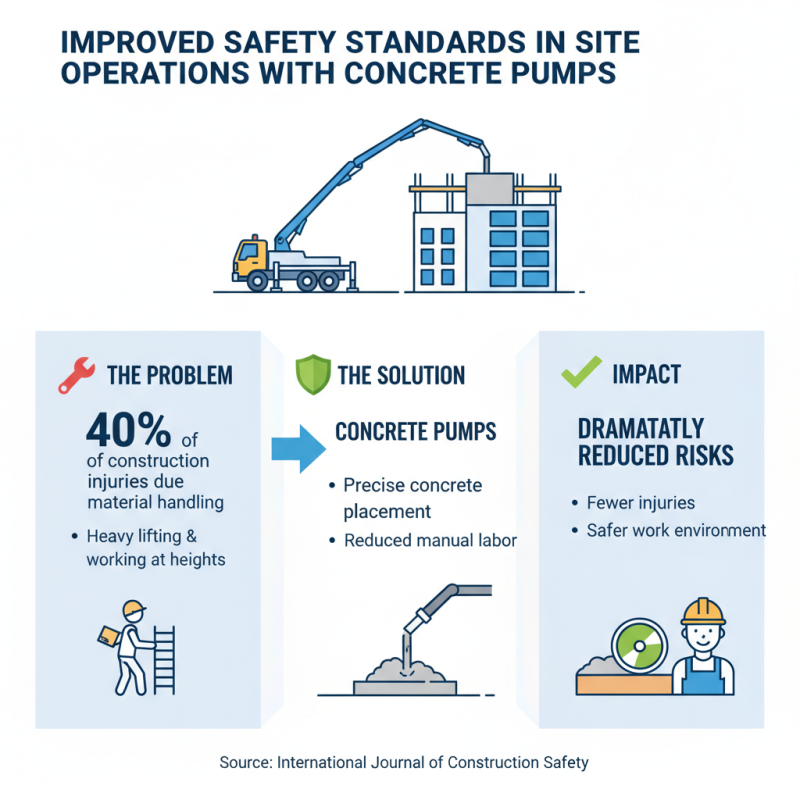
The use of concrete lorries equipped with pumps has significantly enhanced safety standards on construction sites. According to a report from the International Journal of Construction Safety, approximately 40% of construction injuries occur due to material handling issues. By utilizing concrete pumps, these risks can be dramatically reduced. The pumps allow for precise placement of concrete, minimizing the need for workers to engage in heavy lifting or working at heights.
In a recent survey, 75% of construction managers reported fewer accidents after implementing concrete pumping systems. This technology enables workers to remain at ground level, reducing the potential for falls and injuries. Moreover, effective training programs for operators further bolster safety. A study by Safety and Health Magazine stated that companies with regular training saw a 25% decrease in worker injuries.
However, it's crucial to reflect on challenges associated with these systems. Not all operators are fully trained, which can lead to mishaps. There are instances where lack of proper maintenance results in equipment failures. Concrete pumps require regular checks to ensure they function correctly. Investments in training and maintenance are essential for reaping the full benefits of improved safety standards in site operations.
Using a concrete lorry with a pump can notably enhance project flexibility. This equipment is especially useful for sites with limited access. For instance, pouring concrete on a steep hillside can be challenging. The pump simplifies this process, allowing precise placement of concrete. Various terrain types become manageable with this technology.
Another aspect to consider is the speed of operation. With a concrete pump, projects can move forward without lengthy delays. This efficiency saves time and labor costs. However, not all projects may benefit equally from this approach. Some sites may encounter complications due to terrain that is too rugged or inaccessible.
Moreover, managing the flow of concrete is crucial. Operators need to be experienced to ensure materials are mixed correctly and pumped efficiently. Poor handling can lead to inconsistencies in the final structure. In some cases, a lack of expertise can result in wasted resources. Thus, while the advantages are substantial, careful planning and execution are needed for optimal results.