
Financing

If you are interested in financing to fund your Bay-Lynx purchase, we recommend that you connect with Easylease Corp., a Canadian-based leasing and finance company that offers premier equipment leasing and financial services. They are focused on making it easier than ever before for companies to overcome cash flow and resource constraints to acquire the assets they need to grow their business.

Leasing through Easylease Corp. can offer several benefits:

  • Conserve Cash Leasing
  • 100% Financing
  • No Pre-Payment of Taxes
  • Preserve Lines of Credit
  • Potential Income Tax Benefits
  • Pay as You Profit
  • Match Revenue with Expenditures
  • Simple, Convenient Process
  • Tailored Payments

Click here for your Canadian instant lease quote >>

For US customers, Click here for your instant lease application >>

7 Tips for Buying a Scuter Electric Scooter?

Buying a Scuter Electric Scooter can feel simple until specifications become real daily decisions. A bright display looks attractive, but range, braking, charging time, and rider comfort matter more after several weeks. This guide introduces seven practical checks for choosing a model that fits your commute, storage space, and riding habits.

Horace Dediu, a respected micromobility analyst, has said, “Micromobility is about moving people, not merely moving vehicles.” That idea changes the buying process. A scooter should handle your actual route, including rough pavement, hills, rain exposure, and crowded streets. Measure your commute before trusting the advertised range. Manufacturers usually test under controlled conditions. Cold weather, rider weight, hills, and frequent stops can reduce it noticeably.

Small details reveal quality. Check whether the folding latch feels firm, whether the deck has enough room, and whether the tires suit your roads. Test the brake response gently, not dramatically. Confirm replacement-parts availability and warranty terms before paying. Battery safety certification also deserves attention, even when the product looks polished.

No single scooter wins for everyone. I once underestimated charging access and treated a convenient outlet as guaranteed. It was not. That mistake made a lightweight model less useful than expected. The following seven tips examine performance, safety, comfort, maintenance, and total ownership cost. They may not eliminate every uncertainty. They can, however, help you ask sharper questions before choosing a Scuter Electric Scooter.
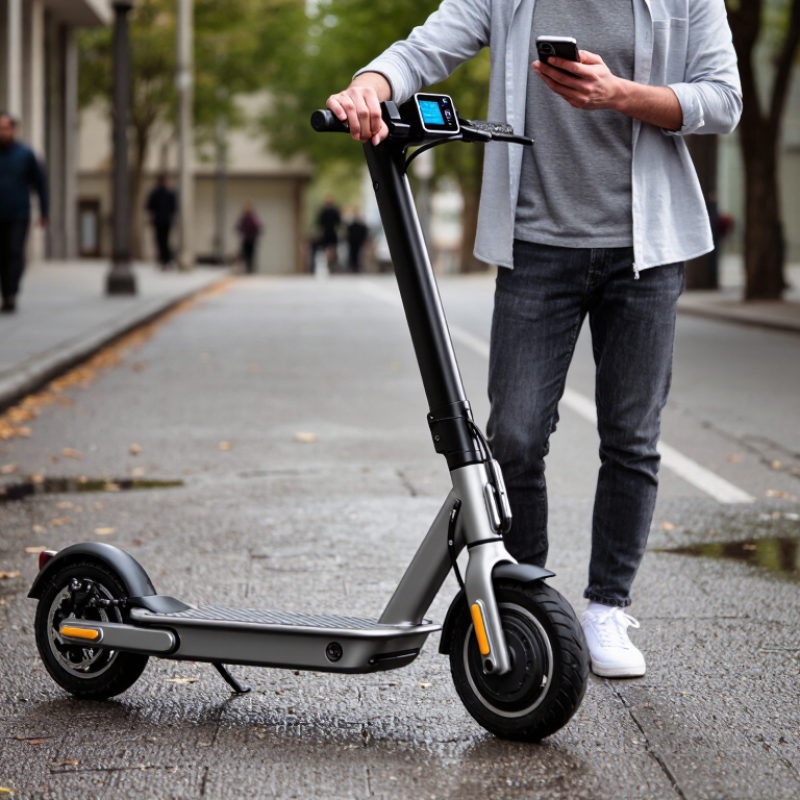
7 Tips for Buying a Scuter Electric Scooter?

Define Your Daily Riding Needs and Scooter Use Cases

7 Tips for Buying an Electric Scooter

Before comparing motors, define how you will ride each day. Measure your usual route, including distance, hills, road surfaces, and traffic conditions. A short, smooth commute may need less range than a longer trip with steep slopes. Remember your return journey, not only the trip to work. My first range estimate was too optimistic because I ignored cold weather and frequent stops.

Think about real use cases.
Will you carry the scooter upstairs, store it under a desk, or use it for grocery trips? Weight, folding size, deck space, and maximum load matter more than impressive advertising numbers. Check the braking system, tire design, lights, and riding position. These details affect control when roads are wet or visibility changes. Test the controls if possible.

Match charging habits to your schedule.
A scooter with a large battery may be inconvenient if charging takes all night. Confirm whether replacement parts and qualified service are available in your area. Read the manual before purchase, and check local rules for speed limits, helmets, lighting, and permitted riding areas. Do not assume every public path allows scooters. A realistic weekly plan helps: count your riding days, average distance, storage location, and backup transport. You may discover that your ideal scooter is not the fastest one. It may simply fit your routine better.

Compare Motor Power, Battery Range, and Charging Requirements

7 Tips for Buying an Electric Scooter

Tip one: Match motor power to your daily route. A 250-watt motor suits flat streets and lighter riders. Steeper hills need more power. Tip two: Check peak power, not only the advertised rating. Peak output helps during hills, starts, and heavy traffic. Still, greater power can reduce battery range.

Tip three: Treat the claimed battery range as an estimate. I once expected a long ride from one charge, but hills, cold weather, and frequent stops changed everything. Tip four: Compare battery capacity in watt-hours. A larger capacity usually travels farther, although rider weight and tire pressure matter. Tip five: Leave a safety buffer. Using only 70 to 80 percent of the stated range feels more realistic. My first calculation was too optimistic.

Tip six: Inspect the charging requirements before buying. Confirm the charging time, adapter type, and household voltage. A scooter needing eight hours may not fit a busy commute. Tip seven: Ask about battery protection and charging guidance. Use the supplied charger, keep connections dry, and avoid charging near heat or damaged cables. Manufacturer instructions deserve careful attention. Also check whether replacement batteries and authorized service are available. A powerful motor is attractive, but balanced performance may serve you better.

Evaluate Safety Features, Braking Systems, and Rider Protection

7 Tips for Buying a Scuter Electric Scooter

Tip 1: Treat braking as a safety system, not a sales feature.

Choose a scooter with independent front and rear brakes. Mechanical disc brakes offer clear feedback, while electronic braking can improve control. However, regeneration should not be your only stopping method. Test both levers at low speed before purchasing. Check whether the brake cuts motor power immediately.

The U.S. Consumer Product Safety Commission reported an estimated 190,600 micromobility injuries and 233 deaths from 2017 to 2022. These figures cover several product types, including electric scooters. They show why rider protection deserves serious attention. Select bright front and rear lights, side reflectors, a working bell, and wide pneumatic tires. A secure stem lock matters too. Small faults become serious at speed.

Tip 2

Measure stopping distance on dry pavement, then imagine rain, loose gravel, and poor visibility.

Tip 3

Wear a properly fitted helmet, gloves, and visible clothing. A helmet cannot prevent every injury, but the World Health Organization links correct helmet use with major reductions in head injury risk.

Tip 4

Inspect the deck, handlebar, cables, and tire pressure before every ride.

Tip 5

Read the load rating honestly. Extra weight lengthens braking distance.

Tip 6

Look for tested electrical protection and clear charging instructions.

Tip 7

Do not trust a smooth showroom ride completely. I would also question my own habits, because confidence often grows faster than skill.

Check Build Quality, Portability, Comfort, and Weather Resistance

7 Tips for Buying a Scuter Electric Scooter?

Build quality should be your first close inspection. Look for even welds, firm folding joints, and a deck that does not flex under pressure. Hold the handlebars and gently twist them. Excessive movement signals poor alignment or loose components. Check the brake cables, fasteners, and display for a clean, secure finish. A low price can hide costly weaknesses.

Portability matters every day, not only in a showroom. Lift the scooter with one hand and carry it several meters. Check whether the folded shape fits your car trunk or apartment corner. A lighter frame may feel convenient, but it can sacrifice stability. Comfort also depends on handlebar height, deck length, tire size, and suspension. Stand naturally before buying. Small discomfort becomes obvious after a long commute.

Weather resistance deserves careful attention. Look for a clearly stated water-resistance rating and sealed charging-port cover. However, water-resistant does not mean waterproof. Avoid deep puddles, heavy rain, and storage on wet floors. Test the brake levers and throttle for smooth control, preferably during a supervised trial ride. I once underestimated tire grip on painted road markings. That mistake changed my view of “all-weather” claims. Read the manual, inspect the warranty terms, and ask how replacement parts are supported. Safety details are easy to ignore until something feels wrong.

Review Warranty Coverage, Maintenance Costs, and Legal Requirements

7 Tips for Buying a Scuter Electric Scooter

Warranty coverage deserves careful reading. A reliable warranty should state its duration, battery coverage, labor terms, and exclusions. Batteries often lose capacity faster than other components. Ask whether water damage, brake wear, and accidental impacts are excluded. The U.S. Consumer Product Safety Commission recommends using certified charging equipment and following battery instructions. That advice matters beside a hallway outlet. NACTO’s 2024 Shared Micromobility Report recorded 157 million shared trips in the United States and Canada during 2023. More riders mean more real-world wear.

Maintenance costs can quietly reshape your budget. Expect periodic tire, brake, bearing, and folding-mechanism checks. Solid tires reduce punctures, but they may feel harsh on broken pavement. Pneumatic tires ride better, though replacement is less convenient. My first estimate ignored labor and delivery time. That was a mistake. Request prices for common repairs before buying, and check whether replacement parts remain available. A scooter that costs less initially may become expensive after one damaged wheel.

Legal requirements vary by city and country. Check local rules for maximum speed, minimum rider age, helmet use, lighting, registration, insurance, and sidewalk access. Some authorities restrict scooters to bike lanes or specific roads. Do not rely on a seller’s general statement. Read your transport department’s current guidance. Rules can change, and online advice may already be outdated. Keep the manual, purchase receipt, and warranty terms in one digital folder.

7 Tips for Buying a Scooter Electric Scooter? - Review Warranty Coverage, Maintenance Costs, and Legal Requirements

Tip What to Check Typical or Verified Information Why It Matters Buyer Action
1. Match the scooter to your route Motor power, hill performance, wheel size, suspension, deck length, and carrying weight Entry-level scooters commonly use motors around 250–500 W; larger motors generally provide better acceleration and hill performance. Solid tires resist punctures, while pneumatic tires usually offer more comfort but require air-pressure checks. A scooter suitable for flat pavement may perform poorly on hills, rough surfaces, or wet roads. Measure your daily route, identify slopes and surface conditions, and leave a safety margin below the advertised maximum rider weight and range.
2. Assess the battery and real-world range Battery capacity in watt-hours (Wh), charging time, charger certification, replacement availability, and range conditions Battery energy can be estimated as volts × amp-hours. Advertised range is usually measured under controlled conditions and decreases with rider weight, hills, cold temperatures, wind, speed, and frequent acceleration. A larger battery may increase range but also adds weight, cost, and charging time. Choose a model whose stated range is at least 1.3–1.5 times your normal round-trip distance, and confirm that replacement batteries are available.
3. Read the warranty terms carefully Coverage period, battery coverage, exclusions, labor costs, shipping responsibility, proof of purchase, and service location Limited warranties often cover manufacturing defects for a stated period, while consumable items such as tires, brake pads, grips, and cosmetic damage are commonly excluded. Battery coverage may have separate time or capacity conditions. A warranty may not cover normal wear, water damage, unauthorized modifications, misuse, or damage from accidents. Save the receipt, warranty document, serial number, and maintenance records. Ask who pays for diagnostic, return, and shipping costs.
4. Estimate maintenance costs Tire type, brake system, replacement parts, service labor, battery replacement, and cleaning requirements Routine tasks include tire-pressure checks, brake inspection, fastener checks, charging-port inspection, and cleaning. Pneumatic tires may require more maintenance than solid tires; brake pads and tires are wear items. Low purchase prices can be offset by difficult-to-source parts, specialized labor, or an expensive battery replacement. Request current prices for tires, tubes, brake pads, chargers, and batteries before buying. Budget for periodic inspection and wear-item replacement.
5. Confirm legal requirements Local speed limits, minimum age, helmet rules, road and sidewalk access, lighting, reflectors, registration, and insurance Rules vary substantially by country, state, province, city, and road type. Some jurisdictions restrict scooters on sidewalks, require front and rear lights at night, or impose equipment and speed limits. A scooter that is legal in one location may be restricted or prohibited in another. Check the official transport or local-government website before purchase. Do not rely only on seller descriptions or general online reviews.
6. Verify safety and charging features Battery-management system, charger certification, braking performance, lights, reflectors, bell or horn, folding mechanism, and water-resistance guidance Lithium-ion batteries should be charged with the specified charger, kept away from extreme heat and moisture, and inspected for swelling, damage, unusual odor, or overheating. Water-resistance ratings do not mean the scooter is waterproof. Battery faults, inadequate braking, loose folding mechanisms, and poor visibility can create serious safety risks. Inspect the scooter before every ride, charge it on a hard nonflammable surface, and stop using it if the battery or charger shows damage.
7. Calculate total ownership value Purchase price, accessories, electricity, maintenance, replacement parts, warranty support, storage, and expected service life Electricity cost per charge can be estimated as: battery kWh × local electricity price. Actual energy use is higher than the battery’s nominal capacity because of charging losses and riding conditions. The cheapest model may cost more over time if it needs frequent repairs or has poor parts availability. Compare the estimated two-year cost of purchase, charging, maintenance, parts, safety equipment, and likely battery replacement—not just the initial price.

Note: Legal requirements, warranty conditions, service prices, and electricity rates vary by location and product. Verify current local regulations and the seller’s written terms before purchasing.