
If you are interested in financing to fund your Bay-Lynx purchase, we recommend that you connect with Easylease Corp., a Canadian-based leasing and finance company that offers premier equipment leasing and financial services. They are focused on making it easier than ever before for companies to overcome cash flow and resource constraints to acquire the assets they need to grow their business.
Leasing through Easylease Corp. can offer several benefits:
Click here for your Canadian instant lease quote >>
For US customers, Click here for your instant lease application >>
A discharge line can look uncomplicated: hose, pump, and outlet. Yet the connection between them often determines whether a transfer runs smoothly or becomes a maintenance issue. A well-chosen Discharge Hose Coupler must match the hose diameter, working pressure, fluid, temperature, and connection style. Small mismatches matter. A coupling that fits on the bench may loosen under vibration or prove awkward to inspect in the field. For example, a dusty worksite, frequent hose movement, or repeated cleaning may affect which seal and body material make sense.
For global buyers, the “best” option is not one universal product. It is the coupler whose documented specifications fit the actual system and operating conditions. Compare materials such as aluminum, stainless steel, or engineered polymers only after checking chemical compatibility and expected wear. Review sealing design, locking method, flow requirements, and available replacement parts. Look closely at handling, too. Gloves, limited clearance, and hurried changeovers affect usability. Ask suppliers for clear data sheets, test information, and traceable product details; then confirm that ratings apply to the complete assembly, not just one component. Regional connection preferences and documentation needs can also differ, so verify them with the project team and supplier. This guide examines practical checks, common trade-offs, and questions worth asking before purchase. No checklist removes every uncertainty. Real installations can surprise even experienced buyers, and that is a reason to verify—not guess.
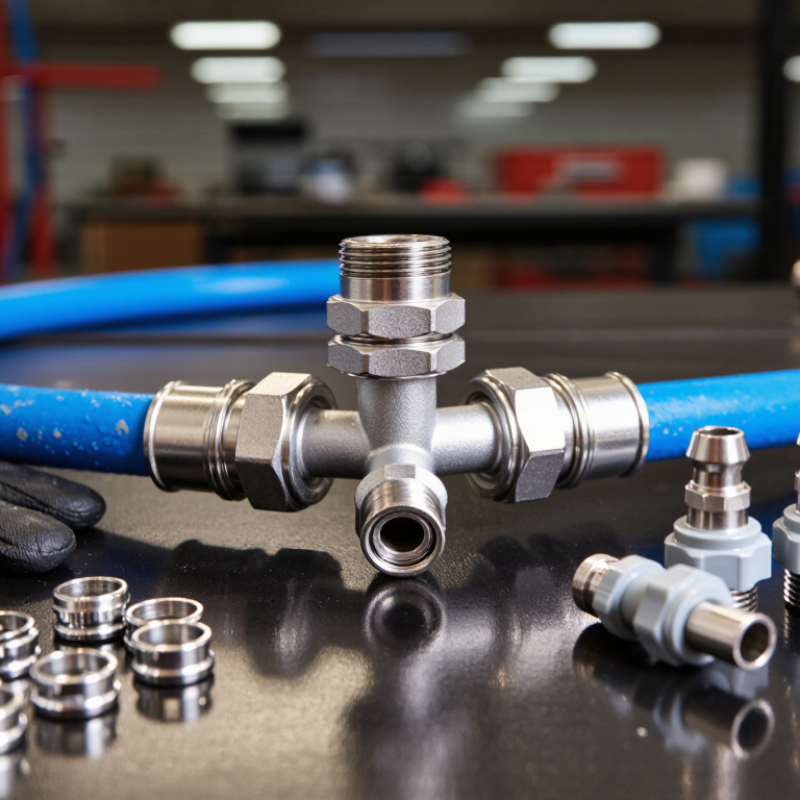
A discharge hose coupler is a fitting that connects a hose to a pump, pipe, tank, or another hose. It creates a joined path for moving water or other compatible fluids. Couplers may use threaded ends, cam-and-groove arms, or other connection styles. The two mating parts must match. A familiar-looking fitting can still have the wrong thread or diameter.
Small details matter. Before ordering, measure the hose’s inside diameter and identify its end fitting. Check the fluid, operating pressure, temperature, and exposure conditions against the coupler’s material and rating. Also inspect the gasket and sealing surface; a nicked gasket can cause leaks even when the fitting appears secure. The system’s pressure limit is governed by its lowest-rated component.
To connect a coupler, make sure the hose end is clean and undamaged. Fit the correct gasket or seal, then align the mating ends without forcing them. Tighten threaded connections as specified, or close the locking arms evenly on a compatible cam-and-groove fitting. Secure the hose with a suitable clamp where required. Check for movement and leaks during a controlled test. Still, this check is not foolproof; re-inspect connections after use, especially when hoses are moved or exposed to vibration.
| Coupler Type | How It Connects | Common Applications | Key Selection Checks | Practical Advantage |
|---|---|---|---|---|
| Cam-and-groove (camlock) | A grooved adapter fits into a coupler; cam arms close over the adapter to compress a gasket. No tools are normally needed for the coupling action. | Water transfer, general industrial liquids, and temporary hose connections where the service and applicable rules permit. | Confirm size, compatible camlock part style, material, gasket compatibility, temperature, and the manufacturer’s pressure limits. | Quick connection and disconnection for frequent hose changes. |
| Threaded hose coupling | Mating male and female threads are screwed together. Sealing may use a gasket, an O-ring, or a suitable thread-sealing method, depending on the design. | Fixed or semi-permanent connections to pumps, manifolds, and pipework. | Match thread standard and size; check whether threads are parallel or tapered and identify the intended sealing method. | Widely used connection style with many available hose-tail and pipe-end configurations. |
| Flanged hose connection | Two flanges are aligned and bolted together, usually with a gasket between their faces. | Larger-diameter discharge lines, pumps, and installations requiring a bolted connection. | Match flange standard, nominal size, pressure class, facing, bolt pattern, gasket, and hose movement requirements. | Provides a bolted connection that can be suited to larger pipe and hose assemblies. |
| Grooved coupling | A housing engages grooves at the pipe or fitting ends and compresses a gasket around the joint. | Compatible grooved piping systems and some industrial water-discharge installations. | Check groove dimensions, coupling and gasket compatibility, operating conditions, and whether the hose-end fitting is designed for this system. | Allows a mechanically joined connection that can be assembled without welding. |
| Hose-tail (barbed) fitting with clamp | The hose is pushed over a ribbed or barbed tail and secured with a clamp or another specified retention method. | Connecting a flexible hose to a pump, pipe, or separate coupling where the fitting is suitable for the hose construction. | Match hose inside diameter and wall construction; use the specified clamp and verify pressure, temperature, and pull-off resistance. | Creates a direct hose-end connection with a relatively simple assembly process. |
| Universal selection checks | A discharge hose coupler is the fitting used to connect a hose end to another hose, pump, pipe, or equipment connection. The assembled joint depends on compatible mating parts and an appropriate seal. | Verify fluid compatibility, hose and fitting sizes, working pressure, temperature range, connection standard, gasket material, and any local or application-specific requirements. The complete assembly is limited by its lowest-rated component. | A correctly matched coupler helps create a secure, serviceable connection; inspect seals and retention parts before use. | |
